Post by : Sami Jeet
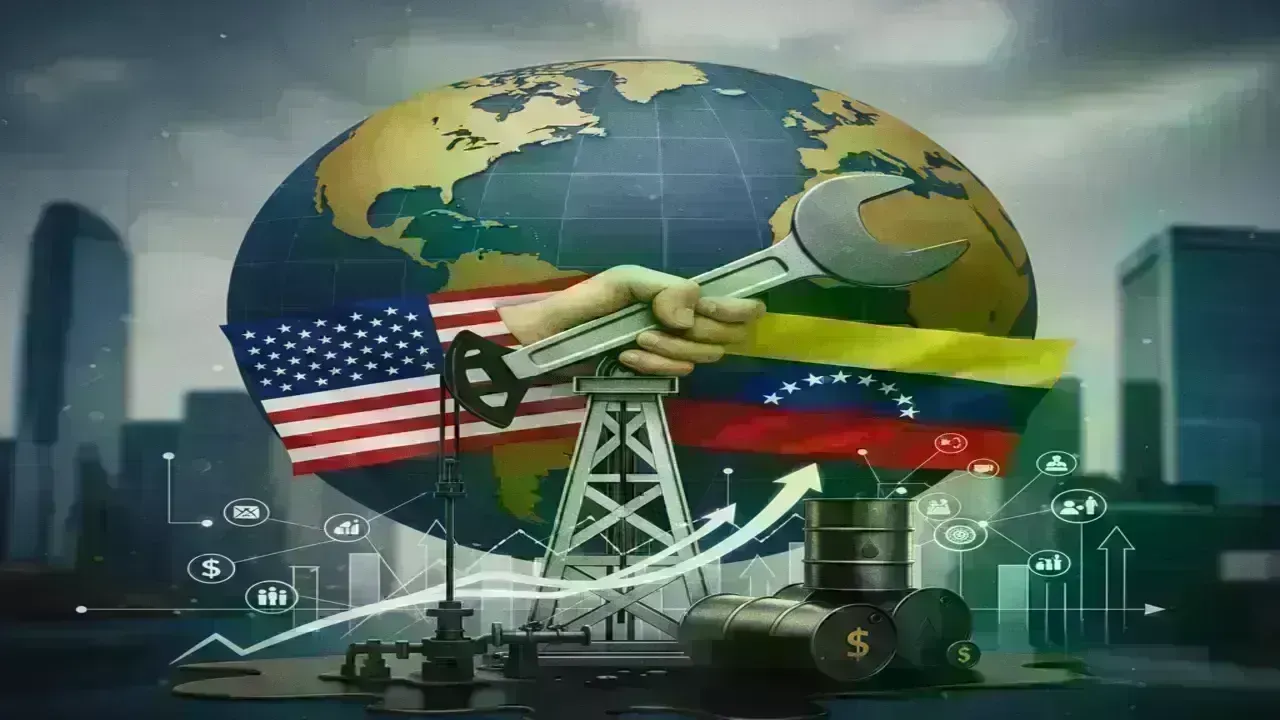
The term “US influence over Venezuela’s oil sector” signifies a significant shift in strategic control encompassing licensing authority, sanctions management, financial oversight, and trade regulation. This influence allows the US to dictate how Venezuela’s oil is extracted, marketed, and valued internationally. Thus, energy distribution and geopolitical alliances are being redefined globally.
Understanding this influence necessitates an examination of what it truly entails, the reasons for its current prominence, and its ramifications for global oil markets and fuel prices.
Venezuela possesses the largest confirmed oil reserves worldwide, surpassing even Saudi Arabia. Although its reserves are primarily heavy crude requiring specialized refining, they remain crucial as global supply diminishes.
Despite this vast potential, Venezuela's oil production has dramatically fallen in the last decade due to:
Export and payment restrictions from sanctions
Mishandling of the state-owned PDVSA
Insufficient foreign investment and technology
Degrading infrastructure
With peak production once exceeding 3 million barrels per day, recent outputs have plummeted below 800,000 barrels per day, resulting in a notable supply deficit in the global market.
The US does not directly possess Venezuela’s oil assets. Rather, control rests on economic mechanisms, avoiding outright ownership.
Historically, US sanctions have limited:
Buyers of Venezuelan oil
Payment processing methods
Company operations in the oil sector
Through selective easing or tightening these sanctions, the US dictates the volume and conditions of Venezuelan oil entering the global market.
The US grants licenses to select corporations, particularly American and allied entities, to enable them to:
Extract crude oil
Export oil
Legally receive payments
This forms a structure that directs oil flow through sanctioned channels, effectively transferring control of trade to the US.
Transactions in the global oil market are predominantly reliant on dollar-denominated systems. Even when Venezuela engages in oil sales to third-party countries, US-influenced financial systems determine settlement, insurance, and compliance.
The incrementation of oil exports is linked to political stipulations, election cycles, or reforms. This grants the US sustainable leverage beyond fleeting production figures.
This strategic shift is driven by global energy volatility, rather than altruism.
Ongoing conflicts involving Russia, the Middle East, and logistical routes have hampered oil availability. Westward sanctions on Russia have effectively stripped millions of barrels from the market.
OPEC and OPEC+ have frequently curtailed output to sustain prices, heightening vulnerability among consuming nations.
With fuel costs impacting inflation and electoral outcomes, the US necessitates stable and manageable sources of supply.
Venezuela presents a nearby, resource-abundant alternative that can be activated under controlled circumstances.
Even a modest resurgence in Venezuelan production could rebalance the market.
Adding 300,000 to 500,000 barrels per day can:
Mitigate supply tightness
Stabilize price fluctuations
Reduce reliance on emergency reserves
Market reactions are influenced by both actual barrels available and anticipated future supply.
Venezuelan oil lessens reliance on:
Shipping routes in the Middle East
Russian oil exports
Unstable transit areas
This bolsters energy security for the US and allied nations.
Prices in oil markets are influenced as much by psychological factors as by physical realities.
Even a cautiously managed Venezuelan output can:
Prevent drastic price hikes
Limit speculative price surges
Create a price threshold
Investors consider future supply when pricing today’s oil.
Despite the potential increase in supply:
Production recovery may be slow
Infrastructure challenges persist
OPEC can adjust output accordingly
This suggests that Venezuelan oil will influence prices more towards moderation than total collapse.
The reintegration of Venezuela reshapes existing power dynamics.
Several OPEC members depend heavily on elevated prices. Increased supply:
Weakens collective price control
Differentiates internal negotiations
Heightens competition
Saudi Arabia and other Gulf producers might:
Reassess quotas
Postpone expansions
Prioritize long-term market share
Venezuela could serve as a balancing factor rather than an overpowering force.
Previously, Venezuela sold oil at discounted rates to circumvent sanctions.
As exports begin flowing through sanctioned pathways:
Discounts will diminish
Contractual terms may tighten
Political leverage may shift
Countries that benefited from low-priced oil may need to adjust to market rates.
Emerging economies will encounter:
Increased scarcity
More aggressive bidding
Stringent payment regulations
This situation could impact fuel subsidies and inflation in developing economies.
Large multinational energy corporations tread carefully.
Companies must comply with:
Strict compliance protocols
Limited rights for expansion
Oversight on political matters
This ensures reduced risk but modifies profit potentials.
Incremental upgrades may:
Enhance extraction efficiency
Minimize environmental concerns
Boost long-term output capacity
Yet, comprehensive recovery will extend over years.
Consumers may not see immediate shifts.
Price surges could be less severe during times of supply stress.
Greater supply diversification can reduce sudden shortages, though factors such as taxes, refining costs, and regional policies will continue to dictate retail prices.
Influence-based control involves inherent risks.
Transitions in governance or compliance might:
Re-impose sanctions
Suddenly discontinue exports
Disrupt market stability
Years of neglect result in:
Equipment malfunctions
Environmental hazards
Delays in production
Investors may misjudge the pace of recovery, leading to mispricing.
Venezuela's oil now serves as a geopolitical tool.
Each barrel obtained from Venezuela reduces Western dependence on Russian energy.
Regional politics evolve as Venezuela:
Engages in economic activity
Seeks selective recognition
Loses unilateral dominance
This energy influence fortifies diplomatic leverage in commerce and security dialogues.
For Venezuela, full recovery remains elusive.
Increased financial resources
Investment in infrastructure
Partial economic recovery
Restricted sovereignty over oil policies
Reliance on external validation
Gradual social rebuilding
Though control yields revenue, it does not allow autonomy.
Markets aren't anticipating a Venezuelan oil surge; they’re pricing in:
Minimized volatility
Enhanced availability predictions
Fewer interruptions
This elucidates the moderate reactions of oil prices.
The significance isn't solely about the oil itself; it underscores how energy governance in contemporary geopolitics is influenced through finance, regulations, and trade agreements, rather than through outright ownership.
This approach could establish a pattern for future involvement in resource-rich regions.
The US's influence on Venezuela's oil dynamics indicates a transition from isolation toward managed integration. This enhances supply security for consuming nations while mitigating price volatility, but it also redefines the notion of sovereignty in the energy arena.
Oil is no longer just about reserves; it's about control over accessibility, regulatory compliance, and distribution.
This article is solely for informational purposes and does not serve as financial, investment, legal, or geopolitical guidance. The intricacies of energy markets and global policies may change rapidly. Readers are advised to consult relevant experts before making decisions based on geopolitical or economic shifts.




The Impact of Consistent Small Investments on Wealth Building
Discover how investing small amounts regularly can positively transform your financial future over t

7.5 Magnitude Earthquake Strikes Japan, Tsunami Alerts Issued
Japan experiences a hefty 7.5 quake, prompting tsunami alerts and safety measures. Stay updated on a

Reopening of the Strait of Hormuz: New Regulations to Impact Global Trade
Iran reopens the strategic Strait of Hormuz with new regulations affecting oil transport and global

Top 10 Must-See Attractions in NYC for First-Time Explorers
Discover essential experiences for first-time visitors to NYC, including attractions, culture, and i

Starbucks Engages Boyu Capital for Major Chinese Expansion
Starbucks teams up with Boyu Capital, selling a majority stake to boost growth and adapt to the Chin

Three Individuals Charged in Massive Meth Trafficking Case in Malaysia
In Malaysia, a married couple and another suspect are charged with trafficking 510kg of meth, facing