Post by : Saif Nasser
U.S. President Donald Trump hosted the leaders of the Democratic Republic of Congo and Rwanda in Washington as part of a new effort to calm the long-running conflict in eastern Congo. The meeting brought Rwandan President Paul Kagame and Congo’s President Felix Tshisekedi together to show their support for two key agreements: a peace deal backed by the United States and an economic plan meant to link the two countries more closely.
Both agreements were discussed earlier this year, but neither has been fully carried out. The goal of this new meeting was to push both sides to take real steps toward peace and prepare the region for large-scale Western investment, especially in minerals.
Eastern Congo has seen serious violence for decades. Armed groups, ethnic tensions, and struggles over minerals have made the area one of the most unstable in the world. Earlier this year, the M23 rebel group, which Congo says is supported by Rwanda, captured two major cities during a fast and surprising offensive. This created fear that the region might move toward a bigger war.
Trump’s administration is trying to end these tensions, not only for peace but also to open doors for foreign companies. The region is rich in minerals such as cobalt, copper, gold, tin, tungsten, and lithium. Many of these are used in batteries, electronics, and electric vehicles. The U.S. wants to secure access to these resources because China already holds strong influence in the global mineral market.
Even though the meeting took place in Washington, many experts say peace is still far away. Jason Stearns, a well-known regional expert, said U.S. efforts have helped stop the fighting from getting worse, but they have not solved the real causes behind the conflict. According to him, both sides remain stuck on old issues, and there is no clear plan yet to fix them.
One major problem is that the M23 rebels are not part of the Washington talks. They are a powerful force on the ground and continue to fight Congo’s army. Without their involvement, any agreement between Congo and Rwanda may be harder to enforce. On Tuesday, both the rebel group and Congo’s army accused each other of breaking the latest ceasefire. Congo’s spokesperson, Patrick Muyaya, said these clashes show Rwanda “does not want peace,” an accusation Rwanda denies.
Rwanda says it does not support M23. It argues its forces have only acted to protect Rwandan borders from Hutu militias linked to the 1994 genocide. However, a United Nations report released in July said Rwanda has strong control over the M23 leadership and operations. M23 claims it is defending Tutsi communities in Congo, but its actions have caused thousands of deaths and forced many families to leave their homes.
From 1996 to 2003, two major wars in the Great Lakes region killed millions of people. Today’s fighting is a painful reminder of that history. Many families in eastern Congo live in fear, often forced to move to crowded camps where food and medicines are limited.
The Trump-backed deal says Congo must take stronger action against a militia called the FDLR, which Rwanda sees as a threat. In return, Rwanda must pull its own troops out of Congo. But so far, both steps have seen very little progress. Rwandan Foreign Minister Olivier Nduhungirehe told Reuters that he hopes things will improve after the signing ceremony, but many are unsure if real change will follow.
Trump also wants to use this meeting to strengthen his reputation in global diplomacy. Since taking office in January, he has tried to play a major role in conflicts in the Middle East, Ukraine, and other regions. Some of these efforts have worked, while others have drawn criticism. Many Americans believe he should pay more attention to problems at home, especially rising living costs and economic stress.
Before the meeting, Trump added his name to a sign outside the United States Institute of Peace, where the agreement is expected to be signed. His administration earlier tried to take control of the institute, an unusual move for a government organization focused on neutral peace work.
Despite the ceremony and headlines, the real test will happen in eastern Congo. Families are waiting to see whether this new promise will bring safety to their villages. For now, the situation on the ground remains fragile, and many experts warn that the conflict could flare up again unless all sides commit fully.
The Washington gathering was an important moment, but it will take more than one meeting to fix decades of mistrust. Peace in eastern Congo is possible, but it will require careful work, honest cooperation, and consistent pressure from the international community.




Mattel Revives Masters of the Universe Action Figures Ahead of Film Launch
Mattel is reintroducing Masters of the Universe figures in line with its upcoming film, tapping into
China Executes 11 Members of Criminal Clan Linked to Myanmar Scam
China has executed 11 criminals associated with the Ming family, known for major scams and human tra

US Issues Alarm to Iran as Military Forces Deploy in Gulf Region
With a significant military presence in the Gulf, Trump urges Iran to negotiate a nuclear deal or fa

Copper Prices Reach Unprecedented Highs Amid Geopolitical Turmoil
Copper prices soar to all-time highs as geopolitical tensions and a weakening dollar boost investor
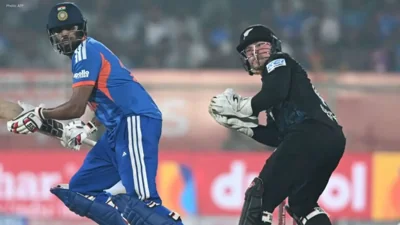
New Zealand Secures First Win Against India, Triumph by 50 Runs
New Zealand won the 4th T20I against India by 50 runs in Vizag. Despite Dube's impressive 65, India