Post by :
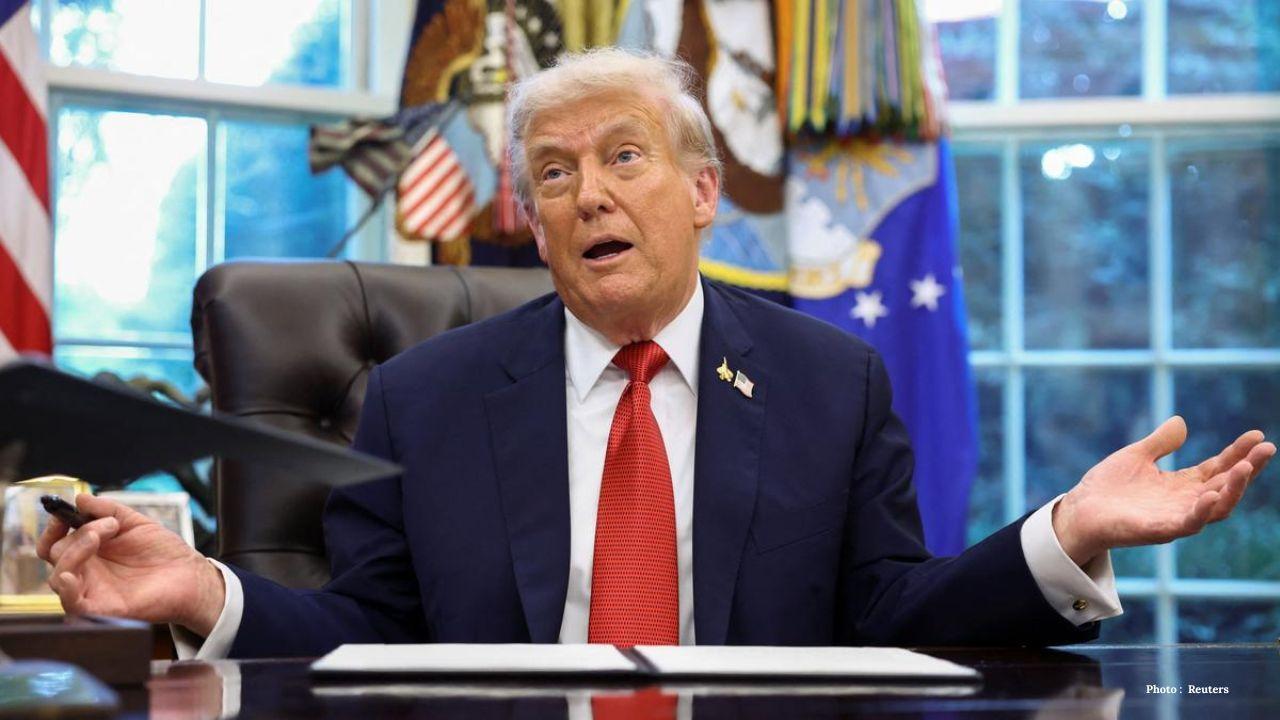
U.S. President Donald Trump made a very firm statement on September 25, 2025, regarding the growing debate about the future of the West Bank. Speaking to reporters while signing executive orders at the White House, Trump said in clear terms that he would not allow Israel to annex the occupied West Bank. His words came at a time when Israeli leaders were openly discussing the possibility of taking control of certain parts of the territory, especially after several major countries had decided to officially recognize Palestinian statehood. Trump’s response left no room for doubt. He said, “I will not allow Israel to annex the West Bank. I will not allow it. It’s not going to happen.”
Trump also shared that he had spoken to Israeli Prime Minister Benjamin Netanyahu about the matter. While Trump has always highlighted his close ties with Netanyahu, this time he put forward a boundary that he would not cross. He added that it was time to stop further escalation, stressing, “It’s been enough. It’s time to stop now.” His message was strong, particularly since many within Netanyahu’s ruling coalition in Israel had been pushing for deeper control over the West Bank. This government, widely seen as the most nationalist in Israel’s history, was counting on Trump’s earlier record of support for Israel to open the door for annexation. However, this firm rejection from the U.S. president showed that Washington was not ready to back such a step.
Arab leaders in the Middle East had also been watching the developments closely. The United Arab Emirates had already warned that any move by Israel to annex the West Bank would be considered a “red line.” Other Arab governments shared the concern that annexation would kill any remaining hope for peace talks and would further destabilize an already tense region. For many years, Arab nations have warned that expanding settlements or annexing land would only deepen the conflict between Israelis and Palestinians. Trump’s position, therefore, seemed to take into account both the growing pressure from these countries and the risk of new unrest.
The West Bank has always been at the center of the Israeli-Palestinian conflict. Israel captured the West Bank, along with East Jerusalem and the Gaza Strip, during the 1967 Middle East war. Since then, Palestinians have said that these territories must be part of their future state. The current Israeli government, however, has made it clear that it does not support Palestinian statehood and instead favors annexing large parts of the West Bank. The area has seen the steady growth of Jewish settlements, with more than 500,000 settlers now living in about 130 communities. Most countries in the world consider these settlements illegal, and many say they are one of the biggest barriers to reaching peace.
This debate over annexation comes at a very sensitive time, as Israel continues its military campaign in Gaza against Hamas. The fighting has drawn sharp criticism from Western nations, who argue that the scale of civilian suffering is unacceptable. In reaction to the war and the lack of progress in peace talks, several countries have stepped forward this week to officially recognize Palestine as a state. Britain, France, Canada, and Australia are among those who made this move, hoping it would revive efforts to bring peace. Israel and the United States have strongly rejected these recognitions, saying that Palestinian statehood must only come through direct negotiations and not outside pressure.
Germany, one of Israel’s closest allies in Europe, did not join the group of nations recognizing Palestine. However, Germany has begun limiting some of its military exports to Israel, which shows its growing discomfort with the situation. This is another sign that Israel is facing more global pressure over both its actions in Gaza and its long-term plans for the West Bank.
Trump’s rejection of annexation is seen as especially significant because of his past decisions that strongly favored Israel. He had previously moved the U.S. Embassy to Jerusalem and recognized Israel’s sovereignty over the Golan Heights, both of which were celebrated by Israel but condemned by Palestinians and Arab nations. For this reason, many people were surprised by his latest stance. By blocking annexation, Trump sent a message that while he supports Israel, there are limits to how far that support will go. He also signaled to Arab allies that the U.S. does not want further instability in the region.
The future of the West Bank remains uncertain. Netanyahu’s government continues to face pressure from right-wing allies who believe Israel should expand control permanently. Palestinians, on the other hand, are encouraged by the new international recognitions of their state and are calling for more countries to join the movement. For now, Trump’s words have created a barrier against immediate annexation, but the political struggle is far from over.
Many observers believe that the coming months will be crucial. If Israel pushes ahead with settlement activity or annexation attempts, tensions will rise even further. If Palestinians continue to gain international recognition, it could change the dynamics of future negotiations. Trump’s strong rejection of annexation has, at least for the moment, slowed down one of the most controversial plans in Israeli politics and opened the possibility for renewed diplomatic efforts.
This development comes at a time when the Middle East is already under intense stress from the war in Gaza, rising civilian casualties, and growing international frustration. Trump’s intervention may not end the conflict, but it has set new boundaries on how far Israel can go with its territorial ambitions. The decision is also being closely watched by Arab nations, global powers, and ordinary people across the region who are hoping that peace, though still distant, might not be entirely out of reach.









DAE Achieves Remarkable Growth in Q1 2026 With Record Revenue
Dubai Aerospace Enterprise announces impressive financial results for Q1 2026, reflecting a surge in

Price Increase for Sony PS5 in Southeast Asia Effective May 1
Sony announces a price increase for the PS5 across Southeast Asia starting May 1, 2026, impacting ga

Potential ‘Super El Niño’ in 2026: Understanding the Climate Risks
Could a Super El Niño emerge in 2026? Discover its implications and potential global climate impacts

Global Energy Crisis Intensifies: Markets React to Oil Supply Challenges
Markets are on edge as oil disruptions escalate, influencing prices and economic stability. Explore

Must-See Tourist Spots in London You Can't Overlook
Explore London's essential attractions, from royal landmarks to vibrant markets, ensuring an unforge

Ultimate Guide to Snagging Cheap Flights in 2026
Unlock the secrets to booking affordable flights in 2026 with insightful tips and strategies tailore




