Post by : Saif Nasser
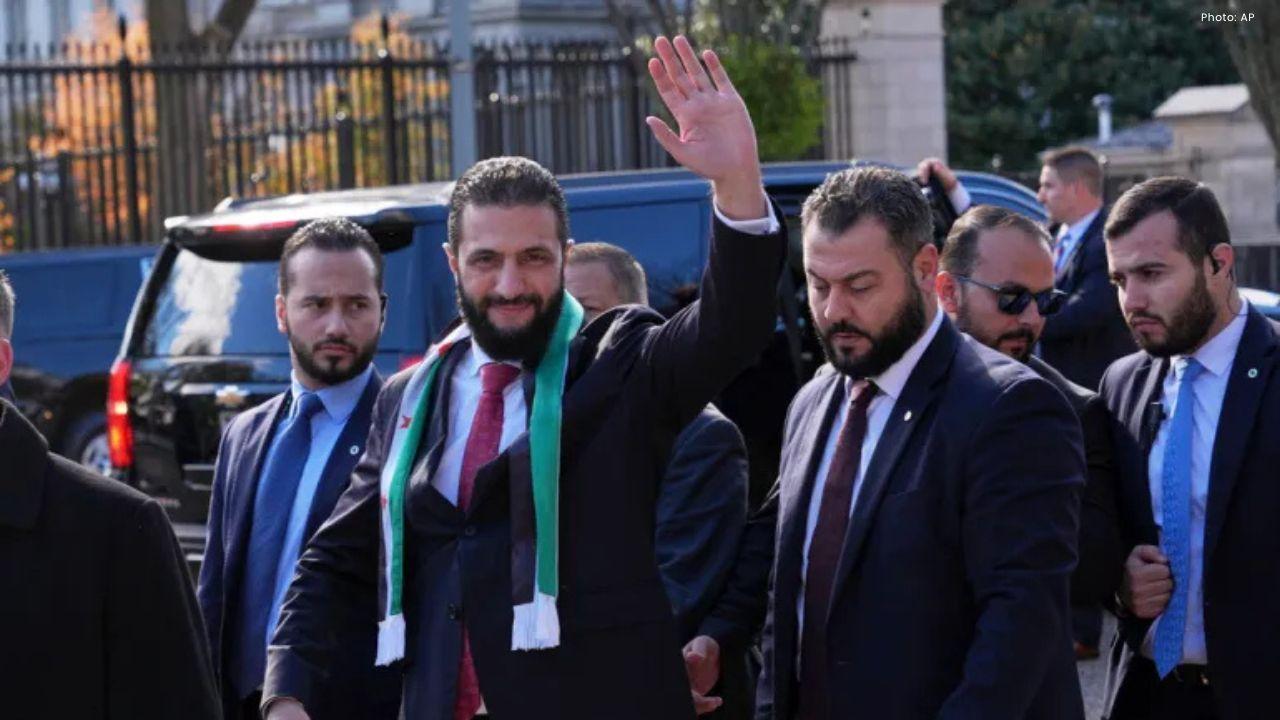
A new United Nations report has revealed that Syria’s president, Ahmed al‑Sharaa, and two of his top ministers were targeted in multiple assassination plots over the past year. These attempts were foiled before they could succeed, but they highlight ongoing security risks in Syria as armed groups continue to try and destabilize the country.
According to the UN Office of Counter‑Terrorism, five separate assassination attempts were aimed at President al‑Sharaa, Interior Minister Anas Hasan Khattab, and Foreign Minister Asaad al‑Shaibani. While the report does not provide detailed specifics, it underscores the persistent danger faced by Syria’s leadership.
The report identifies a group called “Saraya Ansar al‑Sunnah” as being behind the plots. Experts believe the group is a front for the Islamic State (ISIL). Using such front organizations allows ISIL to carry out attacks secretly while hiding direct links to the main organization.
Some of the attempts reportedly took place in Aleppo and Daraa, provinces that have experienced long-term instability. President al‑Sharaa assumed office in December 2024 after the country’s prolonged civil war, and his government has since collaborated with international coalitions against extremist groups. This cooperation has made him a target for militants seeking to weaken Syria’s fragile stability.
Despite losing its territorial control, ISIL remains active in parts of Syria and Iraq. The UN report warns that the group continues to carry out attacks, primarily targeting security forces and high-profile political figures. These assassination attempts indicate ISIL’s ongoing efforts to exploit weak security in vulnerable areas.
The foiled attacks are significant because they targeted the people responsible for leading and rebuilding Syria. Had the plots succeeded, they could have caused political chaos and delayed efforts to restore peace.
The report also raises concerns about Syria’s security systems. While ceasefires and power-sharing arrangements exist in some regions, large parts of the country still face weak governance, which allows militant groups to operate with relative freedom.
Moving forward, Syrian authorities and international partners must focus on strengthening security and counter-terrorism measures. Protecting leaders and institutions should complement efforts to rebuild the economy, enforce rule of law, and unite communities. Such measures are crucial to reduce the influence of extremist groups and prevent future violent plots.
For the Syrian people, ensuring safety, justice, and effective governance is essential to secure lasting peace and recovery after years of conflict. The UN report serves as a reminder that even after major battles end, the fight against terrorism and instability continues.






Starbucks Engages Boyu Capital for Major Chinese Expansion
Starbucks teams up with Boyu Capital, selling a majority stake to boost growth and adapt to the Chin

Three Individuals Charged in Massive Meth Trafficking Case in Malaysia
In Malaysia, a married couple and another suspect are charged with trafficking 510kg of meth, facing

Singapore Police Revisit Geylang Murder Scene with Suspect
In Geylang, police return a murder suspect to the scene of a crime involving the fatal stabbing of a

Mattel Revives Masters of the Universe Action Figures Ahead of Film Launch
Mattel is reintroducing Masters of the Universe figures in line with its upcoming film, tapping into

China Executes 11 Members of Criminal Clan Linked to Myanmar Scam
China has executed 11 criminals associated with the Ming family, known for major scams and human tra