Post by : Saif Nasser
The recent demolitions in Makoko, a large waterfront community in Lagos, Nigeria, have started a serious national debate about housing rights, class inequality, and how cities should grow. Many families have lost their homes. Community leaders say the action shows unfair treatment of the poor. Government officials say the move was needed for safety and city planning. The truth likely sits in the difficult space between safety concerns and social justice.
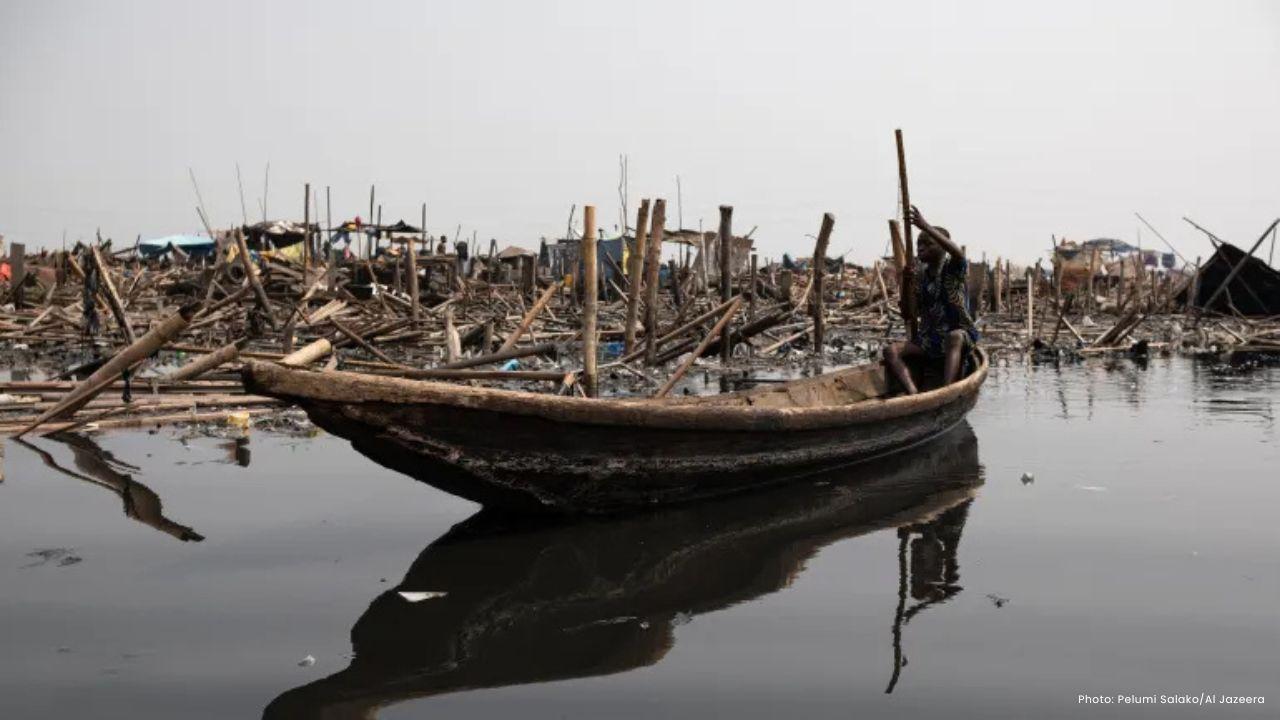
Makoko is one of the most well-known informal settlements in Lagos. It has existed for many decades and is often called a floating community because many homes stand on wooden stilts above the lagoon. Fishing, boat making, and small trading are the main sources of income there. Generations of families have grown up in this area. For them, Makoko is not just a settlement — it is their history and identity.
Authorities say the demolitions were carried out because buildings were too close to power lines and unsafe zones. According to officials, homes built near major infrastructure create danger for residents and the wider city. Fires, flooding, and structural collapse are real risks in crowded informal settlements. From a planning point of view, governments have a duty to reduce these dangers.
But residents tell a different story. Many say the demolitions went far beyond the marked danger areas. They claim houses, schools, shops, and workshops were destroyed without proper notice. Some families say they returned from work to find their homes already torn down. Belongings, tools, and savings were lost in the process. For daily wage earners, this kind of shock can destroy years of effort overnight.
Another major concern is the lack of clear resettlement plans. When governments remove communities, experts say there should be proper consultation, written notice, and alternative housing support. Without this, demolition becomes displacement. Displacement often pushes poor families deeper into poverty. Children stop going to school. Health conditions worsen. Social networks break apart.
Civil rights groups argue that Makoko’s case shows a pattern seen in many big cities. Poor communities are often removed in the name of development, while wealthier areas rarely face such sudden action. Critics call this a form of class bias in urban policy. They say development should not mean removing the poor to make cities look modern.
There is also the cultural side of the story. Makoko is not just a cluster of houses. It is a living cultural zone with unique water-based lifestyles, crafts, and local systems. Urban planners around the world now speak about preserving community heritage while upgrading safety and services. Demolition without preservation planning can erase valuable social history.
Supporters of redevelopment argue that keeping unsafe settlements unchanged is also unfair. They say residents deserve stronger homes, clean water, sanitation, and safer electricity systems. From this view, redevelopment — if done properly — can improve lives. The key phrase here is “if done properly.” Process matters as much as purpose.
Good urban policy should include dialogue, surveys, fair compensation, and relocation options close to people’s workplaces. Communities should be partners in planning, not obstacles to be removed. When people are included, redevelopment projects are more successful and more humane.
Makoko’s situation should become a learning moment for city leaders, not just in Nigeria but across the developing world. Fast-growing cities face real pressure on land and infrastructure. But growth without fairness creates anger and instability. Progress should lift citizens, not scatter them.
The path forward must balance safety with dignity, planning with participation, and development with justice. Cities become truly modern not when the poor are pushed away, but when every resident is given a safe and respected place within them.








Elevate Your Mornings: 7 Protein-Packed Breakfast Ideas
Discover 7 quick and nutritious high-protein breakfasts to keep you energized and focused throughout
Unlocking Wellness in the UAE: 7 Transformative Habits
Explore 7 effective wellness practices inspired by the UAE lifestyle for a healthier, happier life.

Starbucks Engages Boyu Capital for Major Chinese Expansion
Starbucks teams up with Boyu Capital, selling a majority stake to boost growth and adapt to the Chin

Three Individuals Charged in Massive Meth Trafficking Case in Malaysia
In Malaysia, a married couple and another suspect are charged with trafficking 510kg of meth, facing
Singapore Police Revisit Geylang Murder Scene with Suspect
In Geylang, police return a murder suspect to the scene of a crime involving the fatal stabbing of a