Post by : Saif Nasser
Fresh Russian drone and missile attacks on Ukraine have once again damaged power and heating systems across major cities, leaving tens of thousands of civilians without basic services in the middle of winter. The latest strikes hit Kyiv, Odesa, Dnipro and other areas, disrupting electricity, water supply, and heat for many families. These attacks show how strongly the war continues to affect ordinary people far from the battlefield.
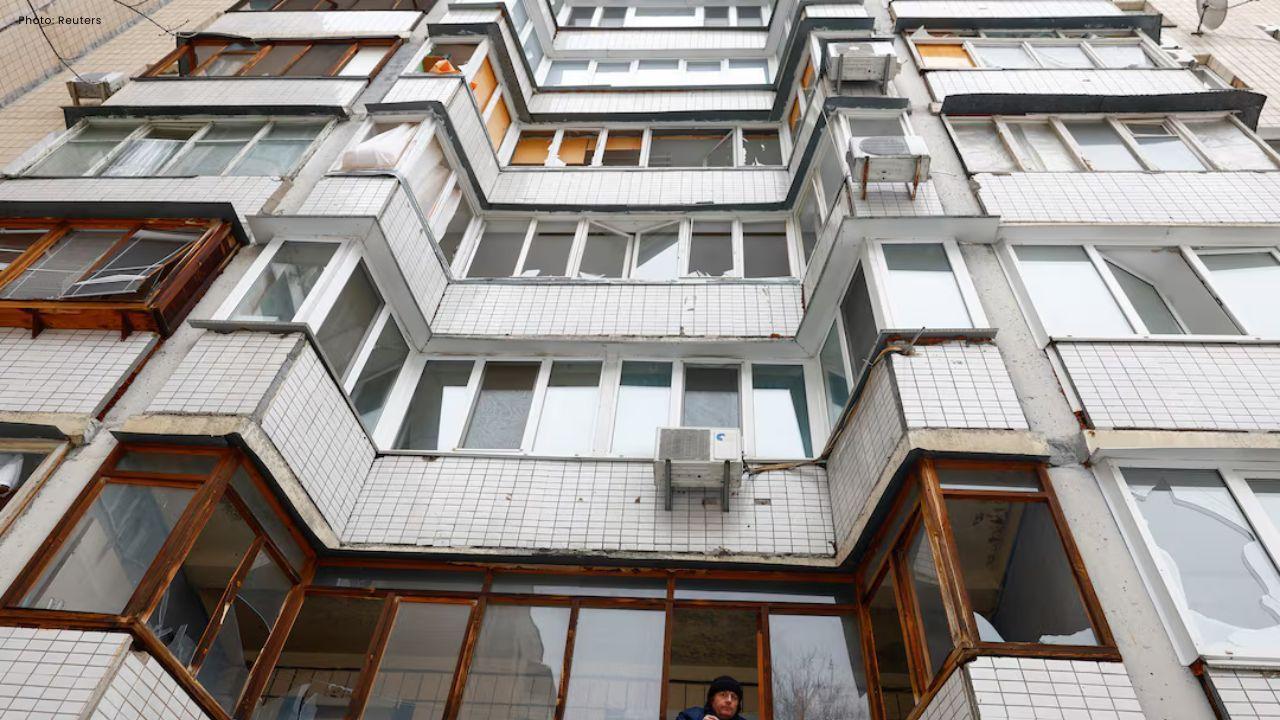
According to Ukrainian officials, the overnight assault included ballistic missiles and hundreds of drones. Air defense systems stopped many of them, but several still reached their targets. Energy facilities and residential buildings were among the sites hit. City leaders reported broken heating networks, damaged apartment blocks, fires, and civilian injuries.
In Kyiv, thousands of apartment buildings lost heating after key systems were knocked out. Local authorities said more than 100,000 families were left without electricity. Repair crews were sent out quickly, but fixing large energy networks during freezing weather is slow and difficult. For families with children and elderly members, even a few hours without heat can be dangerous.
Odesa, a major port city, also faced serious problems. Power failures there cut water supplies for hundreds of thousands of residents. Many buildings were left without heating. In Dnipro, regional officials said missiles and drones injured several civilians, including very young children. Other regions also reported deaths and injuries after strikes on transport and rail centers.
Russia has repeatedly targeted Ukraine’s energy system since the war began. These attacks often increase during winter months, when people depend most on heat and electricity. Moscow says it aims at military and infrastructure targets, not civilians. However, when energy grids are hit, the direct effect is felt most by ordinary residents in homes, hospitals, and schools.
From a humanitarian point of view, attacks on energy systems during winter raise serious concerns. Modern cities depend on electricity for almost everything — heating, water pumps, medical equipment, traffic control, and communication. When power fails, daily life quickly becomes unsafe. Hospitals must switch to backup generators. Water systems stop working. Food storage becomes harder. The weakest people suffer first.
The strikes also come at a sensitive political moment. There are ongoing diplomatic efforts, supported by the United States, to push both sides toward talks. Ukrainian leaders say attacks on civilian infrastructure damage trust and make peace harder to reach. Each new wave of strikes increases anger and reduces hope among the public.
At the same time, the battlefield situation remains tense. Fighting continues along several front lines. Military experts say both sides are trying to gain advantage before any serious settlement talks begin. In such moments, attacks often increase instead of slowing down.
This pattern creates a painful cycle. Military pressure leads to infrastructure attacks. Infrastructure attacks increase civilian suffering. Civilian suffering hardens public opinion. Harder public opinion makes compromise more difficult. Breaking this cycle is one of the biggest challenges for diplomats.
There is also a wider lesson for the world. Modern wars no longer affect only soldiers. They affect entire urban systems. Power grids, water plants, rail lines, and data networks have become central targets. That means future conflict rules and international law may need stronger protections for civilian infrastructure.
Ukraine’s emergency workers continue repairs under dangerous conditions. Crews often work during follow-up strike risks and freezing temperatures. Their work keeps cities functioning, even when systems are badly damaged. Still, emergency repair is not a long-term solution. Stability can only return when attacks stop.
For now, many Ukrainian families are again facing cold homes, dark streets, and uncertain days. Their situation is a reminder that behind every headline about missiles and drones are real people trying to live through another winter of war.









Starbucks Engages Boyu Capital for Major Chinese Expansion
Starbucks teams up with Boyu Capital, selling a majority stake to boost growth and adapt to the Chin

Three Individuals Charged in Massive Meth Trafficking Case in Malaysia
In Malaysia, a married couple and another suspect are charged with trafficking 510kg of meth, facing

Singapore Police Revisit Geylang Murder Scene with Suspect
In Geylang, police return a murder suspect to the scene of a crime involving the fatal stabbing of a

Mattel Revives Masters of the Universe Action Figures Ahead of Film Launch
Mattel is reintroducing Masters of the Universe figures in line with its upcoming film, tapping into

China Executes 11 Members of Criminal Clan Linked to Myanmar Scam
China has executed 11 criminals associated with the Ming family, known for major scams and human tra