Post by : Saif Nasser
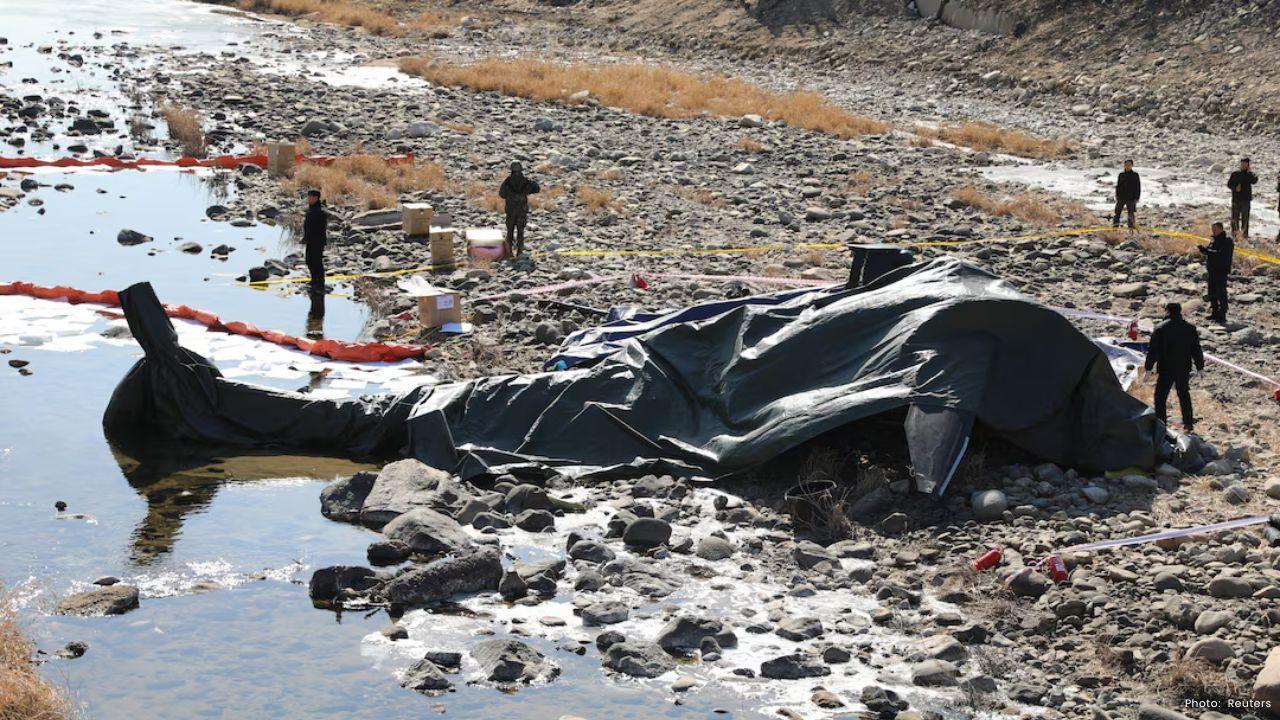
A routine military training exercise in South Korea turned fatal when an AH-1S Cobra attack helicopter crashed in Gapyeong county, killing both crew members on board. The accident happened during a scheduled practice flight, raising fresh concerns about training safety and aircraft maintenance.
Military officials said the helicopter went down late in the morning during a drill. Rescue teams reached the crash site quickly and moved the injured crew to nearby hospitals. Despite emergency treatment, both were later declared dead. Authorities have not yet confirmed the exact cause of the crash and say a full investigation is underway.
Training missions are a key part of military operations. Pilots must practise difficult landing and control situations so they can react correctly in real emergencies. Reports said this particular flight included emergency landing practice without turning off the engine. Such exercises are useful but also involve higher risk because they test both machine limits and pilot judgment at the same time.
Soon after the accident, the Army ordered all AH-1S Cobra helicopters to stop flying until further notice. Grounding a fleet after a crash is a common safety measure. It allows engineers and investigators to inspect aircraft systems, review maintenance history, and check if any common fault may exist. Officials have also formed a special response team to examine the wreckage and collect technical evidence.
Air crash investigations usually study several factors. These include the helicopter’s mechanical condition, recent repairs, weather conditions, and pilot actions. Training flights often involve low altitude and repeated manoeuvres, which leave little room for error if a system fails. Investigators will also review radio communication and flight planning details.
The AH-1S Cobra is a long-serving attack helicopter that has been used by several armed forces around the world. While older aircraft can remain safe with proper care, they require strict inspection schedules and part replacements. When an accident occurs, it often leads to renewed debate about whether older platforms should be upgraded or replaced sooner.
This tragedy also shows the everyday risks faced by military personnel. Danger is not limited to combat zones. Training grounds can also be hazardous because they involve testing skills under pressure. Pilots accept these risks as part of their duty, but each loss is deeply felt within the armed forces and the wider community.
From a public interest point of view, careful and open reporting of investigation results is important. Clear answers help improve safety rules and prevent similar accidents. Reviews of training methods, aircraft age, and inspection systems may follow once the inquiry is complete.
For now, the focus remains on understanding what happened and supporting the families of the crew members. Safety improvements often come from lessons learned after hard events. This crash is a strong reminder that preparation for security must always go hand in hand with strict safety standards.









Anticipated Dates for UAE Eid Al Adha 2026 Unveiled by Astronomical Experts
Experts predict Eid Al Adha 2026 in the UAE to start on May 27, prompting early holiday planning amo

DAE Achieves Remarkable Growth in Q1 2026 With Record Revenue
Dubai Aerospace Enterprise announces impressive financial results for Q1 2026, reflecting a surge in

Price Increase for Sony PS5 in Southeast Asia Effective May 1
Sony announces a price increase for the PS5 across Southeast Asia starting May 1, 2026, impacting ga

Potential ‘Super El Niño’ in 2026: Understanding the Climate Risks
Could a Super El Niño emerge in 2026? Discover its implications and potential global climate impacts

Global Energy Crisis Intensifies: Markets React to Oil Supply Challenges
Markets are on edge as oil disruptions escalate, influencing prices and economic stability. Explore

Must-See Tourist Spots in London You Can't Overlook
Explore London's essential attractions, from royal landmarks to vibrant markets, ensuring an unforge




