Post by : Monika
Photo: Reuters
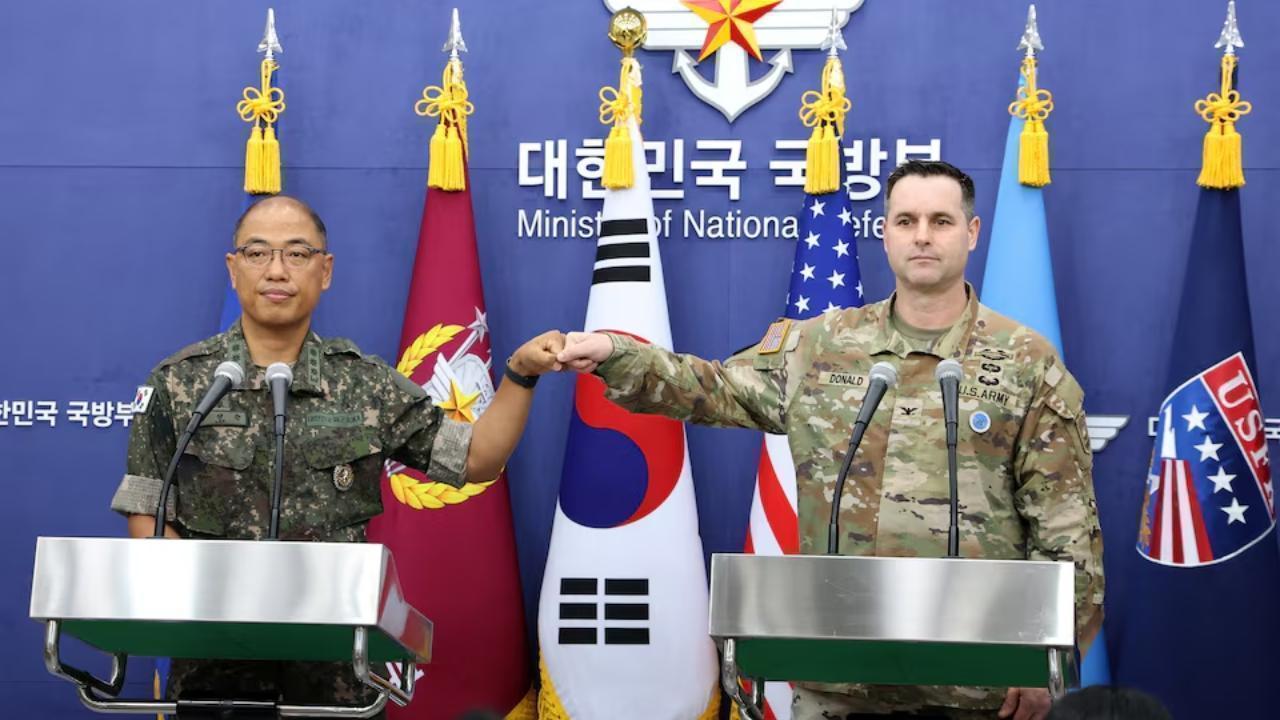
On August 18, 2025, South Korea and the United States will start their important annual military exercise called Ulchi Freedom Shield. This event is a key part of their defense strategy, lasting for 11 days.
The goal is to help both countries practice working together to respond quickly and effectively to threats, especially from North Korea. These exercises are a reminder of how serious the security situation is on the Korean Peninsula.
However, this year, not all parts of the training will happen on time. Out of 40 field exercises originally planned, 20 will be postponed and pushed into September. Officials say this change is mainly because of the extreme heat during the summer months and also to spread out the training exercises over the entire year. This adjustment is a practical move to keep soldiers safe and ready throughout the year, while still making sure the military is well-prepared.
What Is Ulchi Freedom Shield?
Ulchi Freedom Shield is a yearly military exercise that South Korea and the United States conduct together. It is a defensive training operation that focuses on how the two countries will respond if North Korea launches an attack, especially missile strikes. These drills test the combined forces' ability to quickly respond and defend against threats.
The exercise simulates various attacks from North Korea, but it does not include nuclear test scenarios. Instead, the focus is on the more likely threats like missile launches or cyber attacks. In recent years, this training has been updated to include new military tactics learned from current conflicts in other parts of the world, such as Ukraine and the Middle East.
This means the drills are not just about traditional warfare but also include modern warfare techniques, such as defending against cyber attacks and missile attacks using the latest technology.
Why Are Some Exercises Being Postponed?
Military officials, including Lee Sung-jun from South Korea’s Joint Chiefs of Staff, explained the decision to split the training schedule. The summer heat in South Korea can be dangerously high, making it risky to conduct all the drills during this time.
Spreading the exercises out helps protect the health and safety of the troops while maintaining their readiness. This also allows the military to stay well-prepared throughout the year, not just during one short period.
The South Korean Ministry of Unification, which is responsible for matters related to North Korea, also mentioned that this change in schedule might help reduce tension between South Korea and North Korea. Although the government said this was not a political decision, some experts believe it sends a message to North Korea that South Korea wants to ease the ongoing tensions.
However, not everyone agrees that this change will be enough. Some experts, such as Cheong Seong-chang from the Sejong Institute, believe that North Korea wants more than just a delay. They want the drills to be completely canceled, seeing them as a threat or provocation. According to these experts, North Korea is unlikely to be satisfied with the change in dates alone.
What Are the Main Goals of These Military Drills?
1. Stay Alert to North Korea’s Nuclear Threats
North Korea’s development of nuclear weapons and missiles is a serious concern for both South Korea and the United States. These exercises are meant to prepare the two countries to work closely together if there is ever a threat or attack. The drills cover how to defend the countries through different forces, including land troops, air forces, and digital defenses such as cybersecurity.
2. Use Advanced Warfare Techniques
The Ulchi Freedom Shield exercises are not just about old-fashioned battlefield fights. The training now includes new military tactics that have been seen in recent conflicts around the world. For example, cyber attacks and missile strikes used in the wars in Ukraine and the Middle East have taught many lessons about modern warfare. South Korea and the U.S. incorporate these lessons to improve their own defense systems.
3. Balance Defense with Peace Efforts
This year’s change in the schedule shows a careful balance. The military wants to remain ready for any threat but also wants to reduce tensions with North Korea. By delaying some of the exercises, South Korea hopes to send a message that it is interested in peace and less conflict, while still keeping strong defenses.
How Will the Postponement Affect the Military Training?
Even with some exercises postponed, the overall training will continue and maintain its strength. The drills scheduled from August 18 to August 28 will happen as planned. The remaining 20 field exercises will take place later in September. This split schedule allows the soldiers to avoid the worst heat of summer and recover between sessions.
How Might North Korea React?
North Korea has always been strongly against joint military drills between South Korea and the United States. These drills are seen by Pyongyang as a threat and a provocation. Although the postponement might be a small gesture toward reducing tensions, it is unlikely to satisfy North Korea’s demands for canceling the drills completely.
Analysts believe that North Korea may continue to demand that these exercises stop entirely. There could be further threats or military tests from North Korea as a way to pressure South Korea and the United States.
What Are the Political Messages Behind This?
While the South Korean government insists the schedule change is practical, many see it as a diplomatic move as well. Adjusting the timing of the drills might be intended to show North Korea and the international community that South Korea is serious about peace and stability in the region.
At the same time, South Korea and the United States remain committed to strong defense cooperation. The drills demonstrate that they will not lower their guard against possible attacks.
What Is the Importance of These Exercises?
What Happens Next?
The Ulchi Freedom Shield 2025 military exercise represents a careful balance of strength and diplomacy. South Korea and the United States are serious about defending their countries from North Korean threats. They are updating their training to include modern threats like cyber attacks and missile strikes. At the same time, the decision to delay some exercises shows a willingness to reduce tensions in the region.
Many countries and experts will be watching this exercise closely. They will look not only at how well prepared the military forces are but also how this affects relations between the Koreas and between South Korea and the United States.
As the security situation on the Korean Peninsula remains complex and uncertain, the actions taken by South Korea and the United States through these drills send a strong message. They want to be ready for any threat, but they also hope for peace and stability.
In the coming weeks and months, both the military and diplomats will have important roles to play in shaping the future of this sensitive region






7.5 Magnitude Earthquake Strikes Japan, Tsunami Alerts Issued
Japan experiences a hefty 7.5 quake, prompting tsunami alerts and safety measures. Stay updated on a
Reopening of the Strait of Hormuz: New Regulations to Impact Global Trade
Iran reopens the strategic Strait of Hormuz with new regulations affecting oil transport and global

Top 10 Must-See Attractions in NYC for First-Time Explorers
Discover essential experiences for first-time visitors to NYC, including attractions, culture, and i

Starbucks Engages Boyu Capital for Major Chinese Expansion
Starbucks teams up with Boyu Capital, selling a majority stake to boost growth and adapt to the Chin

Three Individuals Charged in Massive Meth Trafficking Case in Malaysia
In Malaysia, a married couple and another suspect are charged with trafficking 510kg of meth, facing