Post by : Rajat
Exploring Saudi Arabia’s Ancient Lava Fields: Volcanic Secrets and Tourism Prospects
Meta Title: Saudi Arabia’s Ancient Lava Fields: Volcanic Past & Tourism
Meta Description: Discover what Saudi Arabia’s ancient lava fields reveal about its volcanic past and how they’re shaping the kingdom’s tourism future.
In the heart of the Arabian Peninsula lies a lesser-known natural marvel that is slowly gaining global attention — what Saudi Arabia’s ancient lava fields reveal about its volcanic past is not just a geological revelation, but also a glimpse into an emerging frontier for tourism and adventure. Stretching across vast swathes of desert and highlands, these volcanic terrains, known locally as Harrats, are more than relics of a fiery past. They tell the story of a region once shaped by molten rock and explosive eruptions, with a potential to now reshape the kingdom’s tourism economy.
The Geological Treasure: Harrats of Saudi Arabia
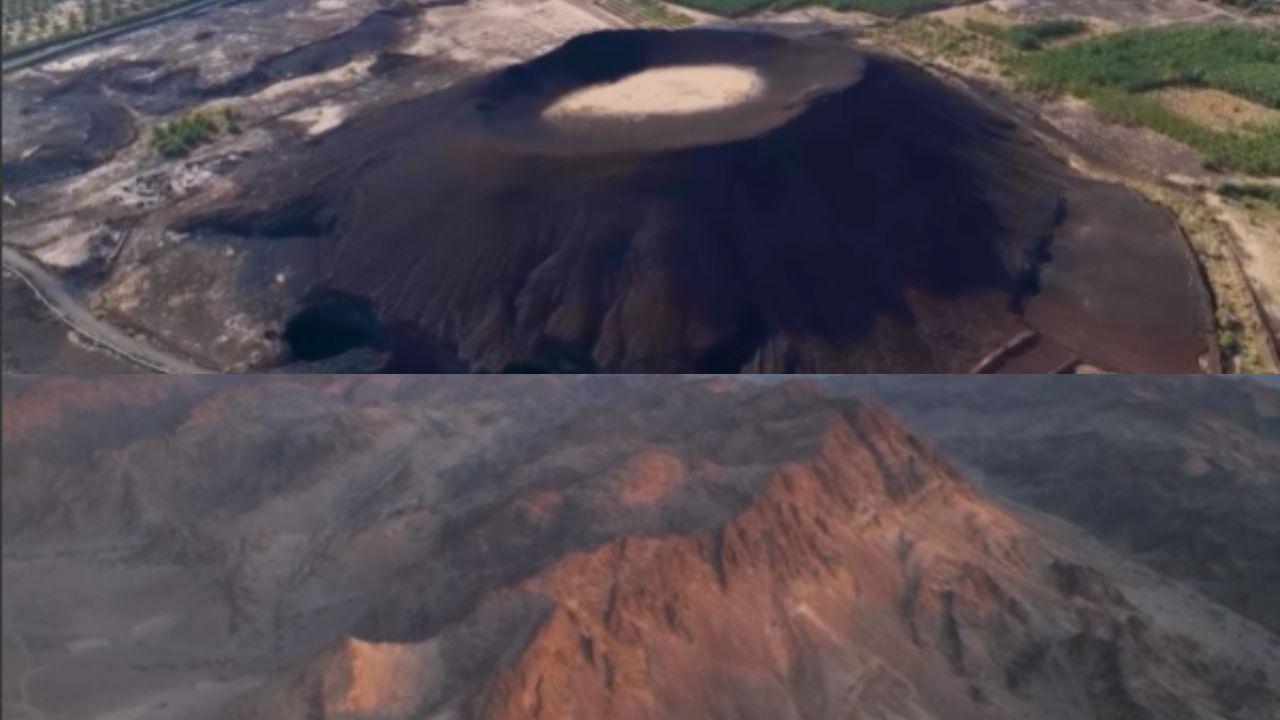
Saudi Arabia is not typically associated with volcanoes, yet it boasts one of the largest concentrations of lava fields in the world. These fields, or Harrats, cover over 180,000 square kilometers — that’s roughly the size of Syria. The most famous among them is Harrat Khaybar, located in the northwest of the kingdom. This region is filled with rugged black basalt, ancient craters, and towering volcanic cones. Some formations are so well-preserved that scientists can trace their origins back thousands — even millions — of years.
The stark contrast of these dark rocks against the golden deserts has led many to describe the landscape as “Martian” or “otherworldly.”
A Glimpse Into Saudi Arabia’s Fiery Past
What Saudi Arabia’s ancient lava fields reveal about its volcanic past is both fascinating and alarming. The kingdom is not entirely dormant when it comes to volcanic activity. In fact, historical records point to eruptions as recent as the 13th century. The most notable was the 1256 eruption of Harrat Rahat, near the holy city of Medina. Lava flowed just 20 kilometers from the city, a reminder of how geologically active the area once was — and could potentially be again. Geologists believe there are hundreds of dormant cones and fissures lying beneath the surface, some of which could erupt if the tectonic activity beneath the Red Sea continues to shift.
In the past decade, several scientific expeditions from institutions like the US Geological Survey and the Saudi Geological Survey have monitored these regions. Satellite imagery, soil sampling, and seismic readings help keep track of possible underground movements.
Opening a New Chapter: Adventure & Eco-Tourism
While the lava fields may sound ominous to some, they are proving to be goldmines for adventure tourism and eco-conscious travel. Saudi Arabia’s Vision 2030 initiative is diversifying the economy beyond oil, with tourism at the core of this transformation.
Sites like Harrat Khaybar, Harrat Uwayrid, and Harrat Rahat are now being marketed for:
Hiking & trekking across lava tubes and volcanic craters
Hot air ballooning over expansive black rock fields
Geotourism experiences with expert-led excursions
Cultural heritage tours with local tribes who have lived in these areas for centuries
The experience is raw, remote, and unlike anything else in the region — especially appealing to international tourists craving off-the-beaten-path exploration.
Archaeological Finds Amid the Rocks
One of the most unexpected revelations about what Saudi Arabia’s ancient lava fields reveal about its volcanic past is the discovery of stone structures and ancient archaeological sites embedded within the rock fields. In 2017, archaeologists identified over 400 mysterious stone gates using Google Earth imagery. These gates, believed to be thousands of years old, are still being studied to understand their origin and purpose. Some speculate they were used for rituals, hunting traps, or early territorial markings.
This merging of geology and archaeology gives Saudi Arabia a unique opportunity to market its Harrats not just as volcanic phenomena, but as windows into ancient human civilization.
Sustainability and Conservation Challenges
With increased tourism comes the responsibility to protect and preserve these fragile ecosystems. Basaltic rock may seem indestructible, but the delicate balance of geology, plant life, and historical relics can easily be disrupted by unchecked human activity.
Saudi Arabia’s Tourism Development Fund and Ministry of Environment are now working on guidelines for eco-tourism, ensuring that the lava fields are accessed responsibly, with minimum impact on the environment.
What’s Next for Saudi Arabia’s Volcano Trails?
There’s no denying that what Saudi Arabia’s ancient lava fields reveal about its volcanic past is rewriting what the world thinks it knows about the Arabian Peninsula. No longer just a desert destination, Saudi Arabia is now positioning itself as a hub for natural wonder, ancient history, and geological adventure.
Upcoming developments include:
Geo-parks and protected zones for guided tours
Scientific research centers for volcanology and earth sciences
Digital tourism platforms that offer VR experiences of these unique landscapes
Annual festivals celebrating nature, Bedouin culture, and volcanic heritage
As interest grows and infrastructure improves, the Harrats of Saudi Arabia might soon find themselves as popular as the Grand Canyon or Iceland’s lava fields.
Disclaimer
The content published on Middle East Bulletin is intended for informational purposes only. While we strive to ensure accuracy, completeness, and timeliness, we make no warranties or representations of any kind, express or implied, about the reliability, suitability, or availability of the information, opinions, or news presented on this platform.
Photo:Instagram/@alaa_oth









Anticipated Dates for UAE Eid Al Adha 2026 Unveiled by Astronomical Experts
Experts predict Eid Al Adha 2026 in the UAE to start on May 27, prompting early holiday planning amo

DAE Achieves Remarkable Growth in Q1 2026 With Record Revenue
Dubai Aerospace Enterprise announces impressive financial results for Q1 2026, reflecting a surge in

Price Increase for Sony PS5 in Southeast Asia Effective May 1
Sony announces a price increase for the PS5 across Southeast Asia starting May 1, 2026, impacting ga

Potential ‘Super El Niño’ in 2026: Understanding the Climate Risks
Could a Super El Niño emerge in 2026? Discover its implications and potential global climate impacts

Global Energy Crisis Intensifies: Markets React to Oil Supply Challenges
Markets are on edge as oil disruptions escalate, influencing prices and economic stability. Explore

Must-See Tourist Spots in London You Can't Overlook
Explore London's essential attractions, from royal landmarks to vibrant markets, ensuring an unforge




