Post by : Saif Nasser
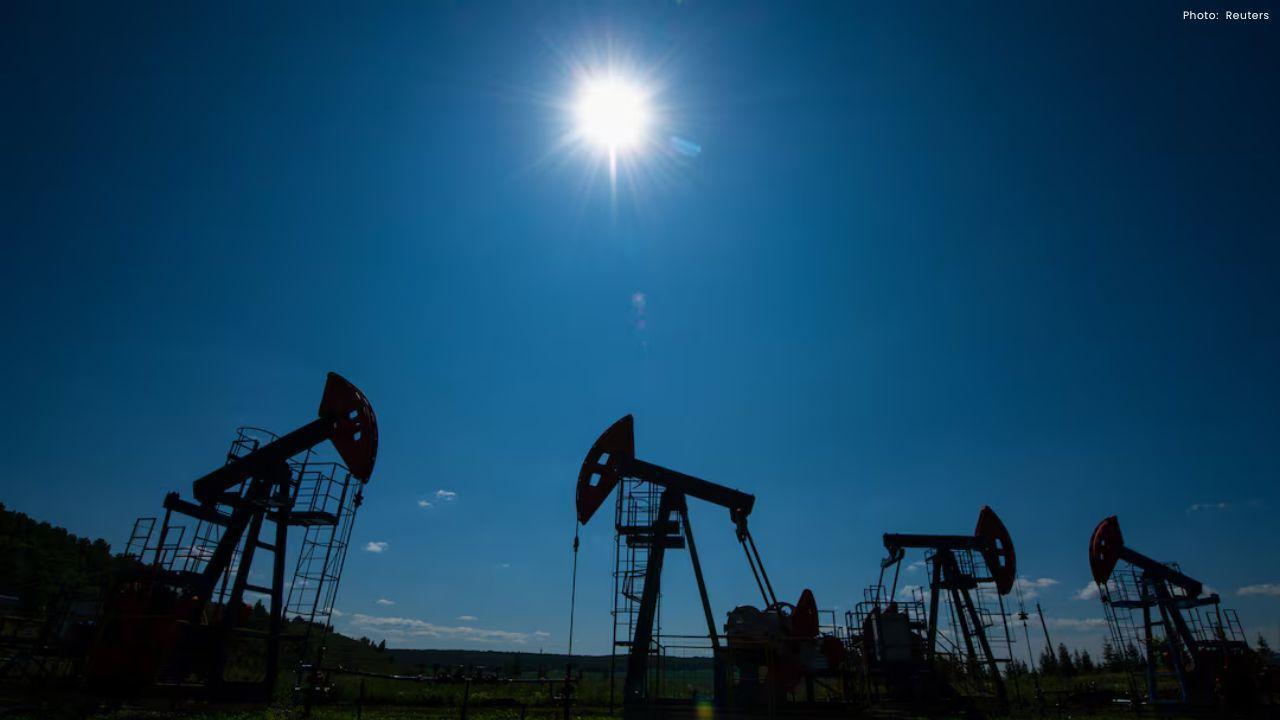
Four years after the start of the war in Ukraine, Russia’s income from energy exports has dropped sharply. Oil and gas remain central to the country’s economy, but the money earned from these sales is much lower than it was during the early years of the conflict.
Energy exports have long been one of Russia’s main sources of income. Oil and natural gas sales bring in billions of dollars each year. This money supports government spending, public services, and many parts of the national economy. However, the war and changes in the global market have reduced these earnings.
One major reason for the fall in revenue is lower global energy prices. In the early stages of the war, oil and gas prices rose to high levels. Over time, prices have cooled. When prices fall, even steady export volumes bring in less money. This has directly affected Russia’s income.
Sanctions imposed by Western countries have also played a role. Many nations placed restrictions on Russian oil and gas in response to the war. These measures limited Russia’s access to some major markets. As a result, Russia had to redirect its exports to other countries, often at discounted prices.
To keep oil flowing, Russia has been selling crude at lower rates compared to international benchmarks. While this strategy helps maintain export volumes, it reduces overall profit. In simple terms, Russia is still selling oil, but it is earning less for each barrel.
At the same time, global energy demand has shifted. Many countries are trying to reduce their reliance on fossil fuels. Investments in renewable energy such as wind and solar power have grown. Energy efficiency programs have also expanded. These changes affect long-term demand for oil and gas.
Despite these pressures, Russia remains a significant player in global energy markets. Large volumes of oil continue to move to buyers in Asia and other regions. This shows that energy trade remains complex and deeply connected to global supply needs.
The decline in revenue could create challenges for Russia’s economy. Lower energy income may limit government spending. It could also increase pressure on the national budget. Since energy exports form a large share of public revenue, any decline has wide effects.
Economic experts note that while exports continue, the structure of Russia’s trade has changed. Shipping routes have shifted, new buyers have stepped in, and payment systems have adapted to avoid sanctions. These adjustments show how flexible global trade networks can be, even during conflict.
The broader lesson from this situation is that global events can quickly reshape markets. Wars, sanctions, and political decisions all influence economic outcomes. Energy markets, in particular, respond strongly to uncertainty and supply risks.
Four years into the conflict, Russia’s oil is still flowing across the world. But the reduced income highlights the long-term economic costs of war and sanctions. It also reflects a world that is slowly changing how it produces and consumes energy.
As the global energy transition continues and political tensions remain, Russia’s energy revenue will likely remain under pressure. The coming years will show whether the country can adjust its economy to a new and more challenging environment.



Top 10 Must-See Attractions in NYC for First-Time Explorers
Discover essential experiences for first-time visitors to NYC, including attractions, culture, and i

Starbucks Engages Boyu Capital for Major Chinese Expansion
Starbucks teams up with Boyu Capital, selling a majority stake to boost growth and adapt to the Chin

Three Individuals Charged in Massive Meth Trafficking Case in Malaysia
In Malaysia, a married couple and another suspect are charged with trafficking 510kg of meth, facing
Singapore Police Revisit Geylang Murder Scene with Suspect
In Geylang, police return a murder suspect to the scene of a crime involving the fatal stabbing of a

Mattel Revives Masters of the Universe Action Figures Ahead of Film Launch
Mattel is reintroducing Masters of the Universe figures in line with its upcoming film, tapping into