Post by : Shakul
A significant international defense report has raised alarms about the possibility of a military confrontation between the United States and China regarding Taiwan morphing into a nuclear crisis. This troubling finding emerges as the Shangri-La Dialogue security summit in Singapore approaches, marking one of Asia's premier annual defense discussions.
Released by the International Institute for Strategic Studies based in London, the report emphasizes the rising potential for a nuclear arms race in the Asia-Pacific. Analysts have cautioned that enhancements in military capabilities, enlarged nuclear stockpiles, and advanced strike systems present critical challenges to global strategic stability.
The study indicates that, should conflict arise over Taiwan, both China and the US might execute comprehensive military operations aimed at each nation’s command, communication, intelligence, and surveillance networks. The lack of clearly outlined engagement protocols between the powers exacerbates the risk of rapid escalation.
Taiwan stands at the heart of tensions between Washington and Beijing. While China regards Taiwan as part of its territory and has not dismissed the option of force, it publicly maintains a preference for peaceful integration. Conversely, Taiwan’s government firmly disputes China’s claims and is enhancing its defense measures.
This report arrives on the heels of a summit involving Chinese President Xi Jinping and US President Donald Trump in Beijing earlier this month, raising concerns in Taipei about future US support amidst evolving security conditions in the region.
In recent years, China has exerted considerable military pressure around Taiwan via extensive naval drills, aerial patrols, and troop movements adjacent to the island. Taiwan’s government remains vigilant, worried that Beijing may amplify military operations following recent diplomatic shifts.
The International Institute for Strategic Studies has also pointed out that nations across the Asia-Pacific are increasingly investing in sophisticated weaponry and nuclear modernization. Experts warn that this trend could destabilize the regional security landscape if diplomatic efforts don't keep pace with military growth.
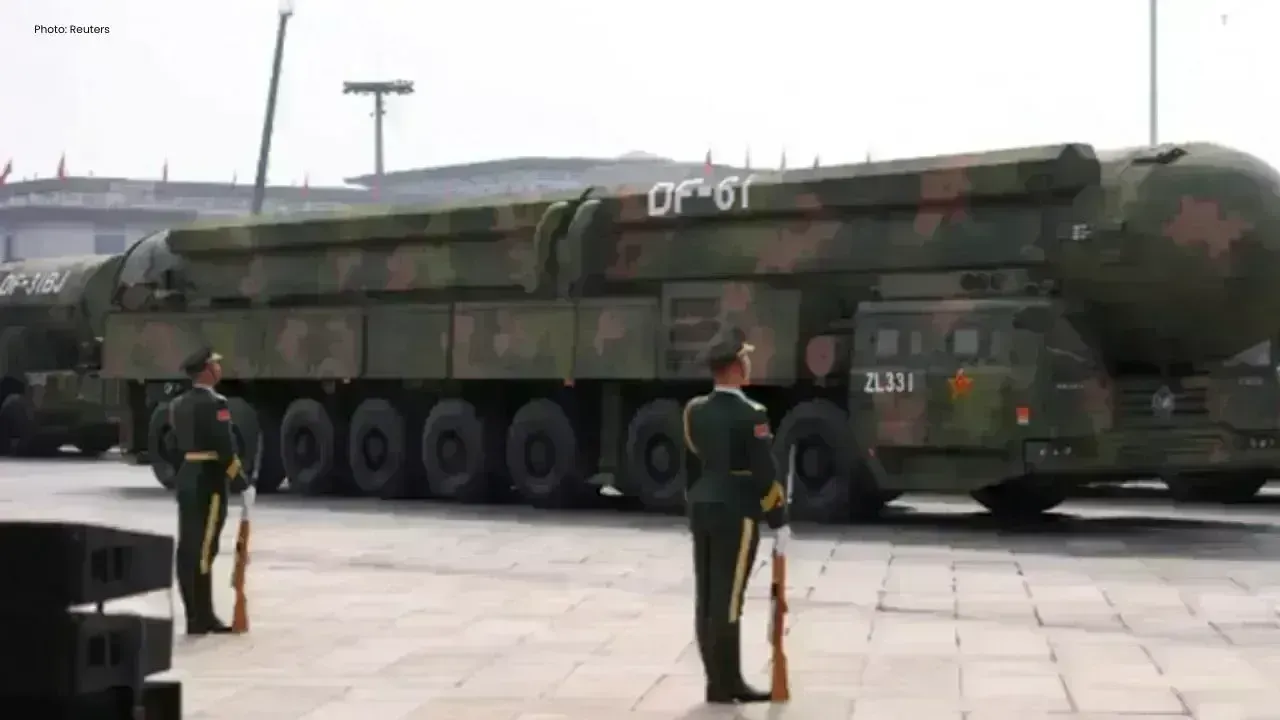
While the US and Russia continue to hold the largest nuclear arsenals globally, China is quickly augmenting its nuclear capabilities. Recent estimates from the Pentagon suggest that by 2030, China could amass around 1,000 nuclear warheads as it advances the modernization of its strategic assets.
As attention converges on the Shangri-La Dialogue in Singapore, defense ministers, military leaders, intelligence officials, and security experts are poised to engage in discussions concerning Taiwan, regional conflicts, and the future of security collaboration in the Indo-Pacific.






Meta Unveils Subscription Plans for Instagram, Facebook, and WhatsApp
Meta introduces new subscription plans for users of Instagram, Facebook, and WhatsApp, featuring enh

Suvarna Joy on Education Leadership, Resilience, and Building Purpose Through Adversity in the UAE
Suvarna Joy shares her journey of education leadership, motherhood, faith, and resilience within the

Anticipated Dates for UAE Eid Al Adha 2026 Unveiled by Astronomical Experts
Experts predict Eid Al Adha 2026 in the UAE to start on May 27, prompting early holiday planning amo

DAE Achieves Remarkable Growth in Q1 2026 With Record Revenue
Dubai Aerospace Enterprise announces impressive financial results for Q1 2026, reflecting a surge in

Price Increase for Sony PS5 in Southeast Asia Effective May 1
Sony announces a price increase for the PS5 across Southeast Asia starting May 1, 2026, impacting ga

Potential ‘Super El Niño’ in 2026: Understanding the Climate Risks
Could a Super El Niño emerge in 2026? Discover its implications and potential global climate impacts




