Post by : Saif Nasser
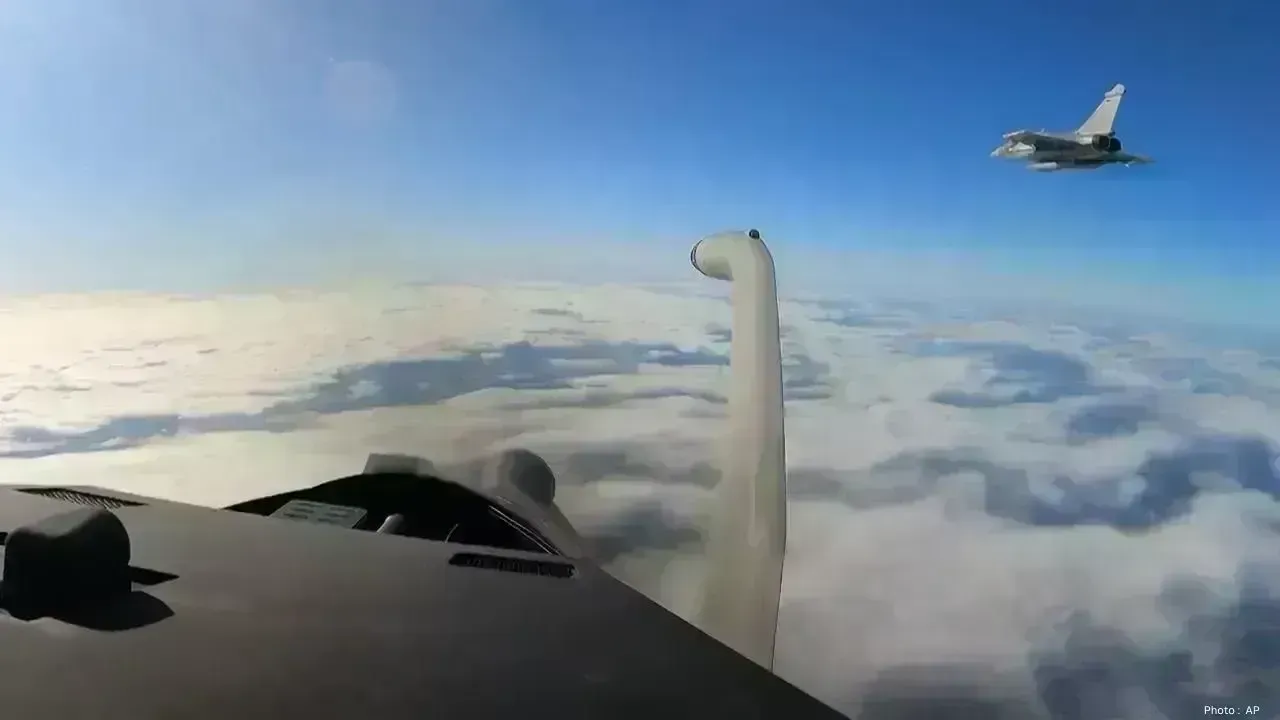
Tensions between NATO and Russia are once again visible in the skies over Europe, where military aircraft from both sides are regularly coming face to face. These encounters are taking place over the Baltic Sea, a region that has become a key point of attention due to growing security concerns.
Fighter jets from NATO, including advanced aircraft like the Dassault Rafale, are being deployed to monitor Russian military flights near allied airspace. These missions are part of NATO’s long-running air policing operations, which aim to protect member countries that do not have strong air defense systems of their own.
On the other side, Russian aircraft, including reconnaissance planes and strategic bombers, continue to fly in international airspace near NATO borders. In many cases, these planes do not use standard communication systems such as transponders or radio contact with air traffic control. This forces NATO jets to take off quickly to identify and track them.
These encounters are often tense but controlled. Pilots from both sides observe each other closely, sometimes flying at short distances but avoiding direct conflict. The situation has been described as a careful balance, where both sides show strength but avoid crossing a line that could lead to escalation.
The presence of NATO forces in the Baltic region is especially important for countries like Lithuania, Latvia, and Estonia. These nations are close to Russia and depend on NATO support for their air security. The ongoing patrol missions provide reassurance and act as a deterrent against possible threats.
From an editorial point of view, this situation highlights the fragile nature of peace in today’s world. Even when there is no open war, constant military activity can create pressure and uncertainty. Small misunderstandings or mistakes in such close encounters could quickly lead to serious consequences.
The increased activity is also linked to the broader conflict between Russia and Ukraine. Since that war began, NATO has strengthened its presence in Eastern Europe. This includes more troops, more equipment, and more frequent patrol missions in the air and on the ground.
At the same time, Russia continues to show its military strength through regular flights and exercises. It says these operations are planned and follow international rules. However, NATO remains cautious and continues to monitor every movement closely.
Another important point is the role of communication. In high-risk environments like the Baltic skies, clear communication can help prevent accidents. When aircraft fly without proper signals, it increases the risk of misunderstanding. This makes the job of pilots even more challenging.
For the global community, these developments are a reminder that tensions between major powers are still very real. Even without direct fighting, the risk of conflict remains present. Managing this risk requires careful planning, strong diplomacy, and constant vigilance.
The current situation shows a balance between caution and competition. Both sides are showing their strength, but at the same time, they are avoiding actions that could lead to open conflict. This delicate balance will be important in maintaining stability in the region.
As long as tensions continue, such encounters in the skies are likely to remain a regular feature. The challenge for both NATO and Russia will be to manage these situations carefully and prevent them from turning into something more serious.








Global Energy Crisis Intensifies: Markets React to Oil Supply Challenges
Markets are on edge as oil disruptions escalate, influencing prices and economic stability. Explore

Must-See Tourist Spots in London You Can't Overlook
Explore London's essential attractions, from royal landmarks to vibrant markets, ensuring an unforge

Ultimate Guide to Snagging Cheap Flights in 2026
Unlock the secrets to booking affordable flights in 2026 with insightful tips and strategies tailore

The Impact of Consistent Small Investments on Wealth Building
Discover how investing small amounts regularly can positively transform your financial future over t

7.5 Magnitude Earthquake Strikes Japan, Tsunami Alerts Issued
Japan experiences a hefty 7.5 quake, prompting tsunami alerts and safety measures. Stay updated on a

Reopening of the Strait of Hormuz: New Regulations to Impact Global Trade
Iran reopens the strategic Strait of Hormuz with new regulations affecting oil transport and global