Post by : Bianca Suleiman
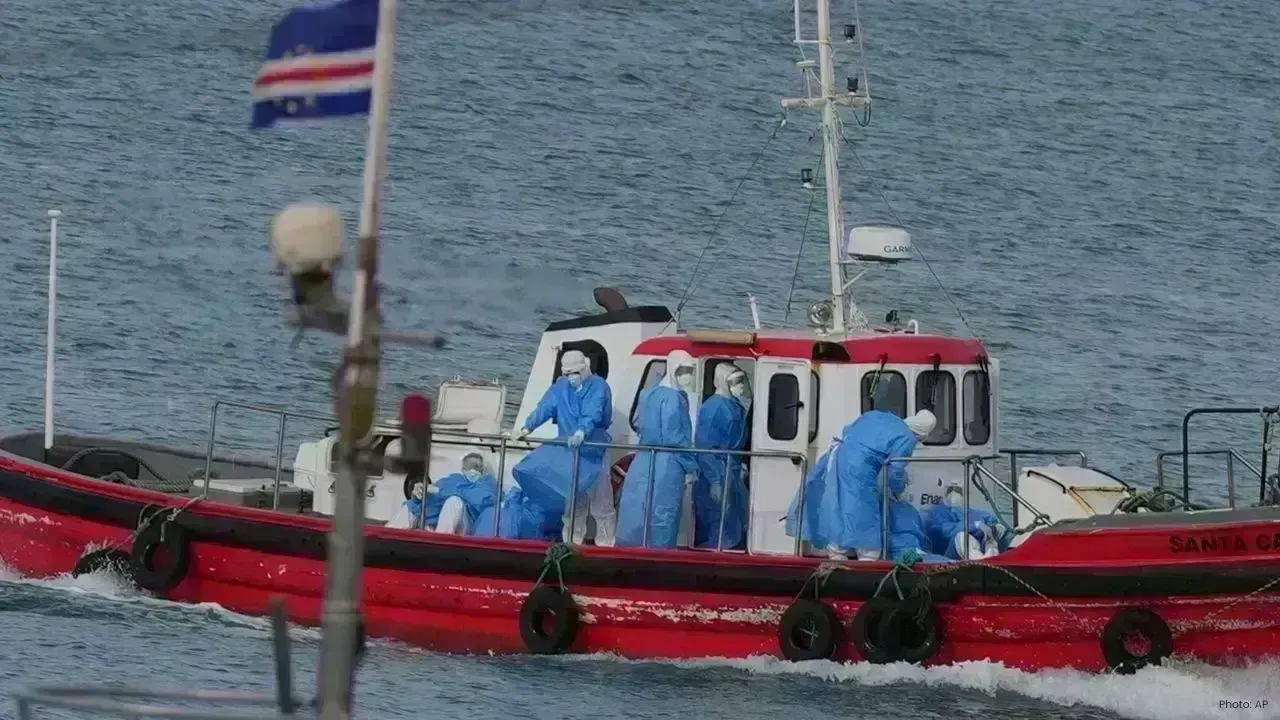
Medical teams in full protective gear evacuated suspected hantavirus patients from the MV Hondius as global health organizations ramped up efforts in response to a rare outbreak associated with the Andes strain.
Footage shared online depicted health professionals donned in respirators, face shields, gloves, and protective clothing escorting patients into specialized air ambulances in locations such as Amsterdam and Cape Verde.
The expedition cruise ship, under the Dutch flag, carries about 150 passengers and crew members and has become a focal point of an international health crisis, with three fatalities confirmed and at least eight cases linked to it.
The World Health Organization (WHO) indicated that the outbreak is likely tied to the Andes strain of hantavirus, which is known to occasionally spread among humans through close contact.
As the ship makes its way to Spain’s Canary Islands while under rigorous monitoring, European, South African, and Argentine authorities are conducting contact tracing and preparing for potential quarantines.
Understanding the Use of Hazmat Suits
Hantavirus pulmonary syndrome generally results from exposure to infected rodent waste. Infection commonly occurs when contaminated particles are inhaled.
The Andes strain, primarily found in Argentina and Chile, has shown limited human-to-human transmission, especially among those in close contact.
With the precise transmission dynamics on the MV Hondius still uncertain, medical teams adhered to stringent WHO guidelines during the evacuations, utilizing respirators and full protective attire.
WHO recommendations advocate for full protective gear during the transport of patients with severe respiratory illnesses when transmission risks are ambiguous.
Experts emphasize that these measures are precautionary and do not imply the virus spreads as easily as Covid-19 or flu viruses, with WHO assessing the overall public health risk to be low.
Ongoing Emergency Medical Evacuations
Reports confirm that three individuals, including the vessel's doctor and two crew members, were evacuated for severe symptoms. Two patients received urgent care and were flown to Europe via specialized medical aircraft.
Passengers aboard the MV Hondius have been restricted to their cabins while medical personnel evaluate symptomatic individuals and track close contacts.
There is agreement from Spanish authorities to accept the ship after a request from WHO and European health agencies. The Canary Islands are equipped to isolate, assess, and repatriate passengers safely.
Transportation and disembarkation will proceed through controlled medical facilities and secure transport to minimize public exposure, as confirmed by Spanish officials.
Health organizations in South Africa, Switzerland, the Netherlands, and the United States are also closely monitoring passengers who might have come into contact with the infected individuals earlier in the trip.
The Risks of Outbreaks on Cruise Ships
Experts assert that cruise ships present unique challenges during disease outbreaks, due to shared confined spaces, dining areas, and ventilation systems utilized by passengers for extended periods.
The MV Hondius commenced its journey from Ushuaia, Argentina, in April and traversed remote regions of the South Atlantic before the outbreak was detected.
Investigators from WHO suspect that the outbreak may have originated from a passenger who was infected prior to boarding.
Authorities in Argentina are currently looking into possible sources of exposure, including rodent interactions in areas where the Andes strain is prevalent. Surveillance, contact tracing, and genomic testing are in place to pinpoint the outbreak’s origin and evaluate onboard transmission.
Upon reaching Spain, passengers will undergo medical evaluations and laboratory tests along with supervised repatriation.
Spanish nationals onboard might face quarantine in specialized facilities, whereas international travelers will be monitored by health authorities upon returning home.
WHO indicates that the investigation remains active, with genomic sequencing and epidemiological analysis needed to ascertain the virus's transmission aboard the vessel.
The outbreak linked to MV Hondius has emerged as one of the most scrutinized infectious disease events of 2026, underscoring the complexities in regulating rare zoonotic diseases on cruise ships and organizing international medical evacuations during potential outbreaks.










Anticipated Dates for UAE Eid Al Adha 2026 Unveiled by Astronomical Experts
Experts predict Eid Al Adha 2026 in the UAE to start on May 27, prompting early holiday planning amo

DAE Achieves Remarkable Growth in Q1 2026 With Record Revenue
Dubai Aerospace Enterprise announces impressive financial results for Q1 2026, reflecting a surge in

Price Increase for Sony PS5 in Southeast Asia Effective May 1
Sony announces a price increase for the PS5 across Southeast Asia starting May 1, 2026, impacting ga

Potential ‘Super El Niño’ in 2026: Understanding the Climate Risks
Could a Super El Niño emerge in 2026? Discover its implications and potential global climate impacts

Global Energy Crisis Intensifies: Markets React to Oil Supply Challenges
Markets are on edge as oil disruptions escalate, influencing prices and economic stability. Explore

Must-See Tourist Spots in London You Can't Overlook
Explore London's essential attractions, from royal landmarks to vibrant markets, ensuring an unforge




