Post by : Saif Nasser
Israel is facing growing political tension at home as its opposition leaders question the government’s approach to the ongoing conflict in the region. The criticism comes at a time when the country is dealing with threats on multiple fronts, including Gaza, Lebanon, and tensions involving Iran.
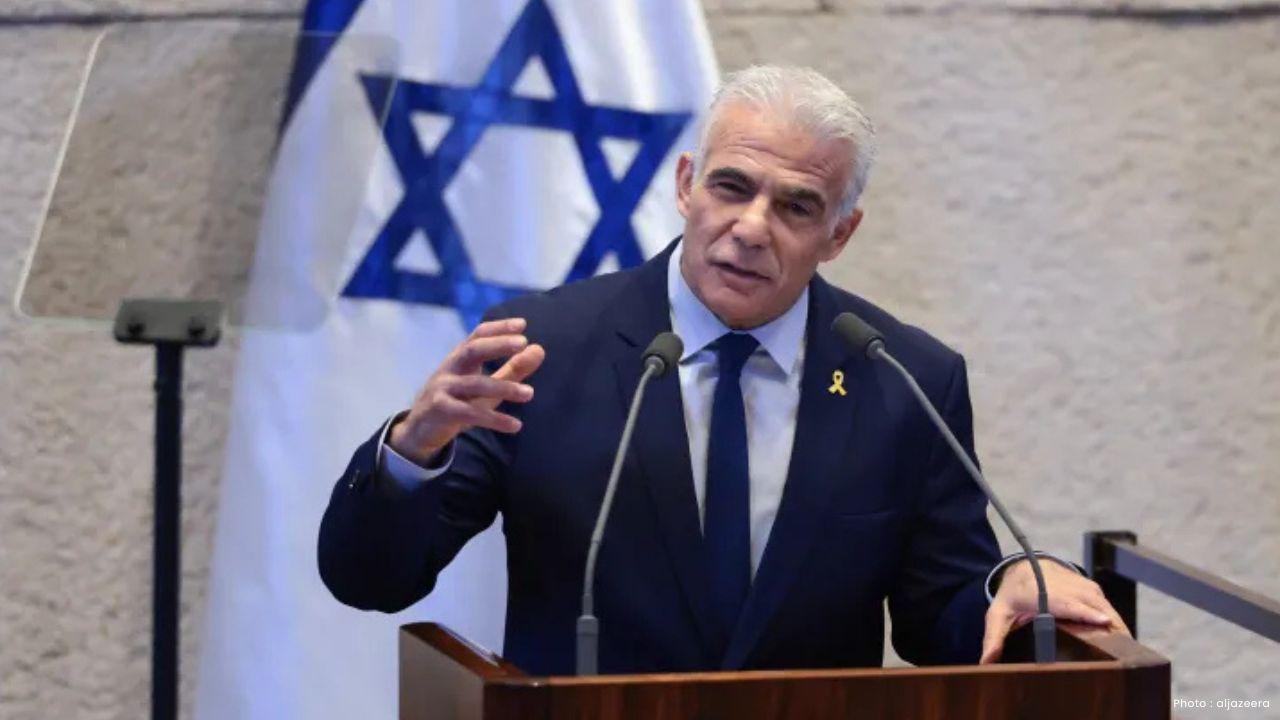
One of the strongest voices of concern has come from opposition leader Yair Lapid. He has openly criticized the government, saying that Israel is fighting a multi-front war without a clear and well-planned strategy.
Lapid warned that such an approach could lead to long-term problems for the country. According to him, military actions alone are not enough. He believes that the government must also have a clear political and diplomatic plan for what comes next.
The current situation is complex. Israel is involved in ongoing conflict in Gaza, where military operations continue. At the same time, tensions with Hezbollah in Lebanon remain high, and there is also the broader confrontation involving Iran and its allies in the region.
This has created a situation where Israel is facing challenges from different directions at once. While the government says it is acting to protect national security, critics argue that fighting on many fronts without a clear plan can increase risks.
Lapid pointed out that without a defined goal, military operations may continue without achieving lasting results. He stressed that the country needs a clear vision for how these conflicts will end and what kind of peace or stability it hopes to achieve.
The criticism also reflects a deeper political divide inside Israel. While the ruling government supports strong military action, the opposition is asking for a more balanced approach that includes diplomacy and long-term planning.
Supporters of the government argue that the current actions are necessary. They say that Israel must respond strongly to threats and cannot afford to appear weak in a dangerous region. For them, security comes first, and decisions must be made quickly in times of crisis.
However, critics say that focusing only on military action may not solve the deeper issues. They argue that without a clear strategy, the conflict could continue for a long time, leading to more damage and loss on all sides.
The debate is also being closely watched by the international community. Many countries are concerned about the risk of the conflict spreading further. A wider war in the Middle East could affect global stability, trade, and energy supplies.
At the same time, there are concerns about the human cost of the conflict. Ongoing fighting in Gaza and other areas has led to loss of life and damage to infrastructure. This has increased pressure on leaders to find a solution that goes beyond military action.
Inside Israel, public opinion is also divided. Some people support the government’s tough stance, while others are worried about the long-term impact of continuous conflict. Families of soldiers and civilians are especially concerned about safety and the future.
The criticism from Lapid highlights an important question: what is the end goal of the current war? Without a clear answer, it becomes difficult to measure success or plan for the future.
This situation is not unique to Israel. Many countries that face security threats struggle to balance immediate action with long-term planning. The challenge is to protect the nation while also working toward lasting peace.
In the end, the debate in Israel shows how complex modern conflicts have become. Fighting on multiple fronts requires not just strength, but also clear thinking and careful planning.
As the situation continues to develop, the pressure on leaders will grow. They will need to show not only how they plan to fight, but also how they plan to bring stability and peace in the future.









Mattel Revives Masters of the Universe Action Figures Ahead of Film Launch
Mattel is reintroducing Masters of the Universe figures in line with its upcoming film, tapping into

China Executes 11 Members of Criminal Clan Linked to Myanmar Scam
China has executed 11 criminals associated with the Ming family, known for major scams and human tra

US Issues Alarm to Iran as Military Forces Deploy in Gulf Region
With a significant military presence in the Gulf, Trump urges Iran to negotiate a nuclear deal or fa

Copper Prices Reach Unprecedented Highs Amid Geopolitical Turmoil
Copper prices soar to all-time highs as geopolitical tensions and a weakening dollar boost investor

New Zealand Secures First Win Against India, Triumph by 50 Runs
New Zealand won the 4th T20I against India by 50 runs in Vizag. Despite Dube's impressive 65, India