Post by : Saif Nasser
A controversial new law in Israel has triggered strong reactions around the world. The law allows the death penalty for Palestinians convicted of carrying out deadly attacks against Israelis. Supporters say it will improve security, but critics warn it could increase violence and deepen divisions.
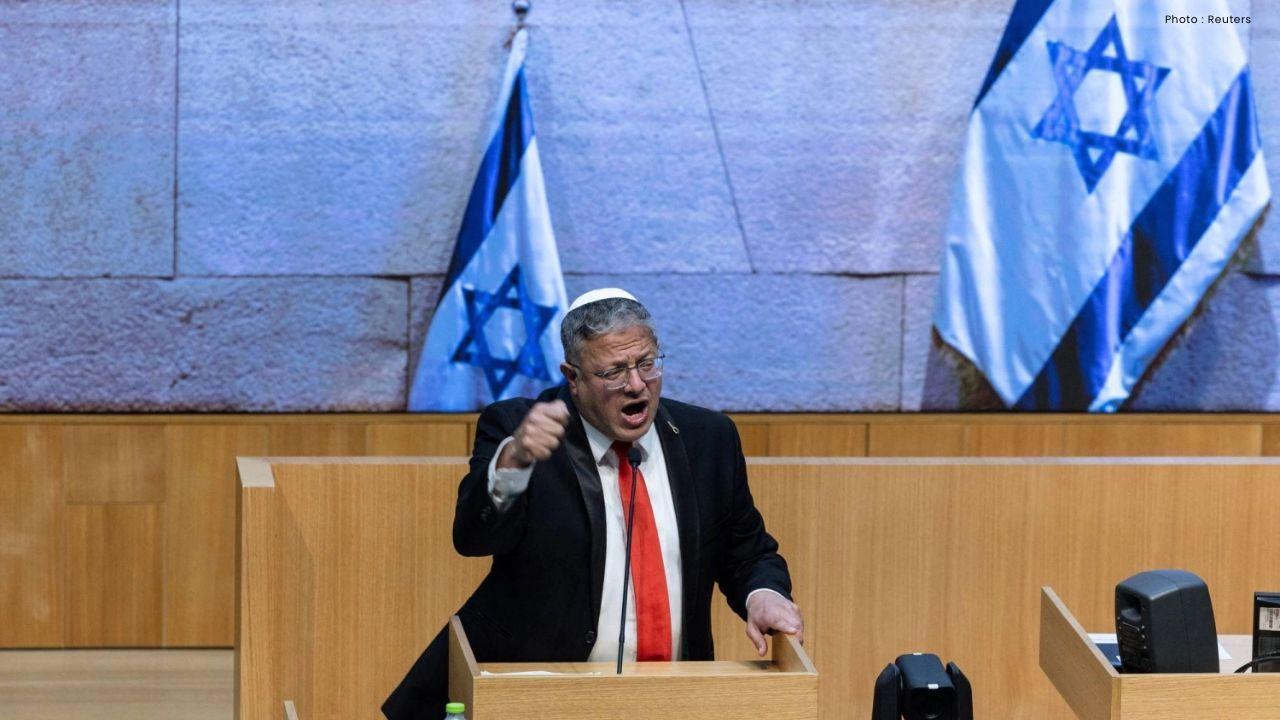
The law was passed by Israel’s parliament, known as the Knesset, after a heated debate. It received enough votes to move forward, showing strong support from right-wing leaders. Benjamin Netanyahu backed the measure, while far-right minister Itamar Ben-Gvir played a key role in pushing it forward.
Under the new law, Palestinians convicted in military courts for deadly attacks can face execution, usually by hanging. The punishment is expected to be carried out within about 90 days of sentencing. In most cases, the death penalty would be the default sentence, with life imprisonment allowed only in special situations.
This marks a major change in Israel’s legal system. For many years, the country has rarely used the death penalty. In fact, the last execution took place in 1962. The new law shows a shift toward harsher punishment in response to ongoing violence.
Supporters of the law argue that it will act as a strong warning to those who plan attacks. They believe strict punishment can prevent future violence and protect Israeli citizens. For families affected by attacks, the law is seen as a form of justice.
However, the law has also faced strong criticism from many sides. Palestinian leaders, including Mahmoud Abbas, have condemned it as unfair and a violation of international law. Human rights groups have also raised serious concerns.
Critics say the law is discriminatory because it mainly applies to Palestinians and not to Jewish Israelis who commit similar crimes. This raises questions about equality before the law. Some legal experts have warned that the measure could be challenged in Supreme Court.
International reactions have also been strong. Several European countries, including the United Kingdom, France, Germany, and Italy, expressed concern. They warned that the law could harm Israel’s image as a democratic nation and may not reduce violence as intended.
Another major concern is that the law could increase tensions in an already fragile region. The Israeli-Palestinian conflict has lasted for decades, with cycles of violence and retaliation. Many experts believe that harsher punishments alone cannot solve deep political and social problems.
There is also a fear that the law could lead to more anger among Palestinians. Instead of preventing attacks, it may push some groups toward further violence. This could make peace efforts even more difficult.
The legal system itself may face challenges. Critics argue that military courts, which handle many Palestinian cases, do not always provide the same level of protection as civilian courts. This raises concerns about fairness, especially in cases involving the death penalty.
Despite these concerns, the law has strong political support within Israel. For many leaders, it reflects a tougher approach to security in a time of rising attacks and fear among citizens.
This issue also highlights a larger global debate about the death penalty. Many countries have moved away from capital punishment, arguing that it is inhumane and does not effectively stop crime. Others continue to use it, especially in cases involving terrorism or serious violence.
The situation in Israel shows how complex this debate can be. On one side, there is a desire for safety and justice. On the other, there are concerns about human rights and fairness.
The passing of this law is not just a legal decision. It is a political and moral turning point. It raises important questions about how countries respond to violence and how far they should go in the name of security.
In the end, the real challenge is finding a path toward peace. Laws alone cannot end conflict. Dialogue, understanding, and long-term solutions are needed to reduce violence and build trust between communities.
The world will now watch closely to see how this law is used and what impact it will have on the region. The hope is that it does not lead to more suffering, but instead pushes leaders to seek better and more peaceful solutions.









Mattel Revives Masters of the Universe Action Figures Ahead of Film Launch
Mattel is reintroducing Masters of the Universe figures in line with its upcoming film, tapping into

China Executes 11 Members of Criminal Clan Linked to Myanmar Scam
China has executed 11 criminals associated with the Ming family, known for major scams and human tra

US Issues Alarm to Iran as Military Forces Deploy in Gulf Region
With a significant military presence in the Gulf, Trump urges Iran to negotiate a nuclear deal or fa

Copper Prices Reach Unprecedented Highs Amid Geopolitical Turmoil
Copper prices soar to all-time highs as geopolitical tensions and a weakening dollar boost investor

New Zealand Secures First Win Against India, Triumph by 50 Runs
New Zealand won the 4th T20I against India by 50 runs in Vizag. Despite Dube's impressive 65, India