Post by :
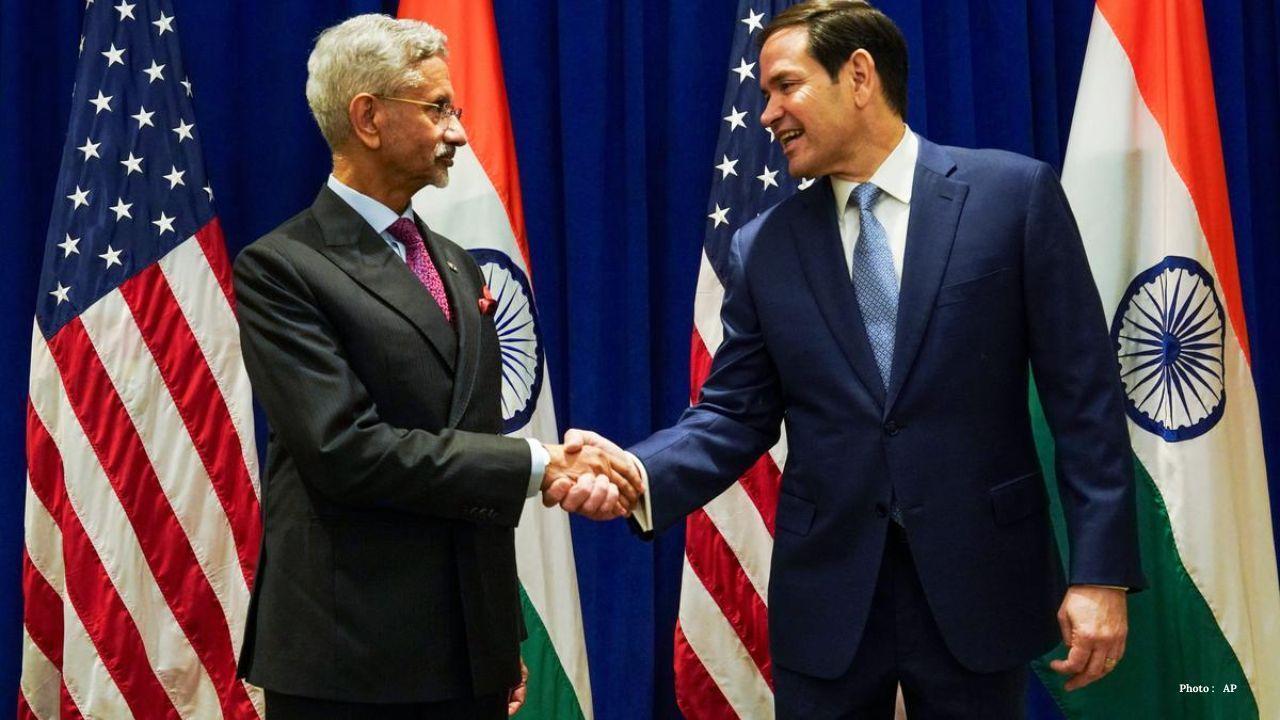
India and the United States have taken an important step toward repairing their troubled relationship. On Monday, India’s External Affairs Minister S. Jaishankar sat down with U.S. Secretary of State Marco Rubio in New York for a detailed round of talks. The meeting was held on the sidelines of the 80th United Nations General Assembly, where world leaders have gathered to discuss global issues.
This discussion was not just another formal meeting. It came at a time when relations between the two countries have been under pressure. Recently, the United States imposed a 50% tariff on Indian goods, making Indian exports much more expensive in the American market. On top of that, Washington also increased fees for H-1B visas, which are important for thousands of Indian professionals working in the U.S. Both of these moves have created tension and worry in India, especially for its businesses and technology sector.
The meeting in New York was therefore seen as a chance to calm the situation and find solutions. Both sides understand that their relationship is too important to be damaged by trade disputes alone. India and the U.S. are not only large trading partners but also share strategic, defense, and cultural ties.
According to officials, the talks between Mr. Jaishankar and Mr. Rubio covered a wide range of subjects, but the main focus remained on trade frictions. At the same time, Commerce and Industries Minister Piyush Goyal is also in the United States this week. He is scheduled to hold meetings with American trade officials as part of the next round of negotiations, which will decide how the two countries can reduce trade barriers and ease tensions.
The presence of India’s top leaders in New York shows how seriously New Delhi is treating this issue. By placing both the foreign minister and the commerce minister on U.S. soil at the same time, India is making a clear point: it is ready to negotiate, but it also expects Washington to listen.
For India, the 50% tariff is a big problem. Goods like textiles, machinery, and some food products have now become far less competitive in the U.S. market. Many small and medium Indian businesses that depend on exports fear losing their income. On the other hand, for the U.S., the concern over H-1B visas comes from domestic politics. Many American lawmakers argue that too many foreign workers take jobs that could go to Americans. By raising fees, Washington says it wants to protect local workers, but for Indian professionals, this makes their path to working in the U.S. more expensive and difficult.
The discussions in New York were therefore aimed at finding a middle path. Diplomats believe that while no breakthrough was announced immediately, the very fact that such high-level talks took place is a sign that both sides want to avoid further damage.
It is also important to note that India and the U.S. are partners in many other areas, such as security cooperation in the Indo-Pacific region, defense technology sharing, climate change action, and digital trade. Neither country can afford to let disagreements on tariffs or visa fees overshadow their larger shared interests.
Analysts believe that this meeting is the first step in a longer process. Trade negotiators from both countries will now continue the dialogue, and the outcome of these talks will shape the future of India-U.S. relations. For businesses, students, and professionals on both sides, the results of these negotiations will have a direct impact on their lives.
The world is also watching these talks closely. Since India and the U.S. are two of the largest economies, their cooperation—or conflict—affects global markets and international politics. If they can resolve their differences, it will boost confidence in global trade. If not, other countries may feel the ripple effects.
For now, the meeting between Mr. Jaishankar and Mr. Rubio has opened a window of hope. It shows that while disagreements exist, dialogue is still the preferred path. Both countries appear willing to talk rather than fight over policies, and that gives businesses and people reason to stay optimistic.






Anticipated Dates for UAE Eid Al Adha 2026 Unveiled by Astronomical Experts
Experts predict Eid Al Adha 2026 in the UAE to start on May 27, prompting early holiday planning amo

DAE Achieves Remarkable Growth in Q1 2026 With Record Revenue
Dubai Aerospace Enterprise announces impressive financial results for Q1 2026, reflecting a surge in

Price Increase for Sony PS5 in Southeast Asia Effective May 1
Sony announces a price increase for the PS5 across Southeast Asia starting May 1, 2026, impacting ga

Potential ‘Super El Niño’ in 2026: Understanding the Climate Risks
Could a Super El Niño emerge in 2026? Discover its implications and potential global climate impacts

Global Energy Crisis Intensifies: Markets React to Oil Supply Challenges
Markets are on edge as oil disruptions escalate, influencing prices and economic stability. Explore

Must-See Tourist Spots in London You Can't Overlook
Explore London's essential attractions, from royal landmarks to vibrant markets, ensuring an unforge




