Post by : Saif Nasser
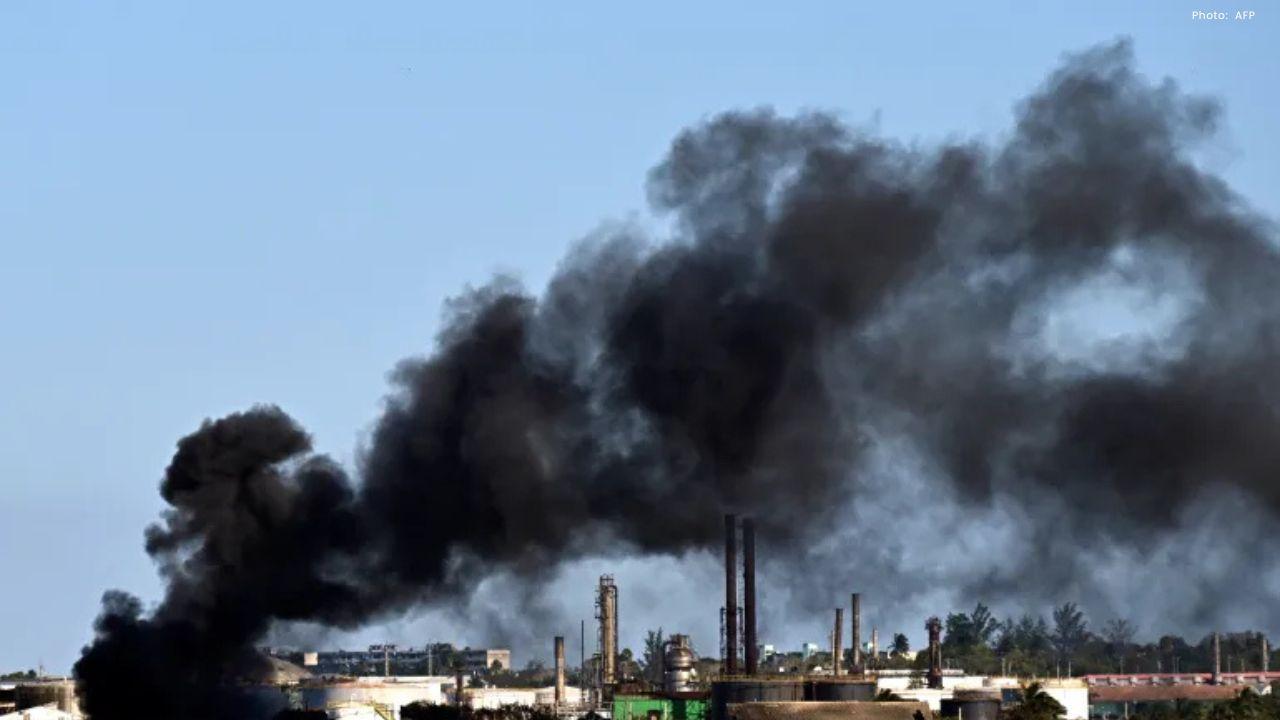
A fire at a major oil refinery in Havana has added new pressure to Cuba’s already serious fuel crisis. The incident has renewed fears about the country’s weak energy system and the daily struggles faced by ordinary people due to shortages of fuel and electricity.
Officials said the fire broke out at the Ñico López refinery area near Havana Bay. Thick smoke was seen rising over the site, and emergency crews were sent quickly to control the flames. Authorities later said the fire was brought under control and no deaths were reported. An investigation is now underway to find the exact cause.
Even though the blaze was contained, the timing could not be worse for the country. Cuba is going through one of its toughest fuel shortages in years. Power cuts, transport delays, and reduced industrial activity have already become common in many regions. Any problem at a refinery, even a limited one, increases public concern about how stable the fuel supply really is.
Energy systems depend on reliability. When a country has only a few working refineries and aging equipment, every accident matters more. Cuba’s refining and power infrastructure is old and has suffered from years of underinvestment and limited access to parts and technology. Small failures can quickly grow into national problems.
Fuel shortages do not only affect cars and trucks. They affect hospitals, food delivery, farming, electricity production, and public transport. When fuel is limited, governments must choose which sectors get priority. This often leads to rationing and rolling blackouts. For families, it means fewer bus services, higher prices, and long hours without power.
Cuba has long depended on imported fuel, especially from its close partner Venezuela. But reduced shipments and political pressure have cut those supplies. Finding new sellers is not easy because payments, transport, and sanctions create barriers. This leaves the country exposed whenever global or regional conditions change.
The refinery fire also highlights a larger issue: energy security is national security. A country that cannot produce or reliably import enough fuel becomes vulnerable. Schools close early, factories slow down, and health systems come under strain. Over time, this can weaken the whole economy.
Authorities say some preserved parts of the damaged area will be reused and that safety reviews are being carried out. That is necessary, but repairs alone are not enough. Long-term solutions require modernization, better maintenance, and more diverse energy sources such as renewables. Solar and wind projects can help reduce pressure on fuel imports, though they take time and money to build.
Public trust is another key factor. In times of shortage, people want clear and honest updates. When governments communicate openly about risks, repairs, and supply plans, citizens are better prepared and less likely to panic. Silence or unclear messages can increase fear and rumors.
The Havana refinery incident should serve as a warning sign, not just a news event. It shows how fragile energy systems can become when they depend on limited sources and aging facilities. It also shows why planning, investment, and diversification matter.
Cuba now faces a difficult path forward. Stabilizing fuel supply, upgrading infrastructure, and protecting essential services will require careful planning and outside cooperation. The refinery fire did not create the crisis, but it has made an already hard situation more urgent.







Starbucks Engages Boyu Capital for Major Chinese Expansion
Starbucks teams up with Boyu Capital, selling a majority stake to boost growth and adapt to the Chin

Three Individuals Charged in Massive Meth Trafficking Case in Malaysia
In Malaysia, a married couple and another suspect are charged with trafficking 510kg of meth, facing
Singapore Police Revisit Geylang Murder Scene with Suspect
In Geylang, police return a murder suspect to the scene of a crime involving the fatal stabbing of a

Mattel Revives Masters of the Universe Action Figures Ahead of Film Launch
Mattel is reintroducing Masters of the Universe figures in line with its upcoming film, tapping into
China Executes 11 Members of Criminal Clan Linked to Myanmar Scam
China has executed 11 criminals associated with the Ming family, known for major scams and human tra