Post by : Monika
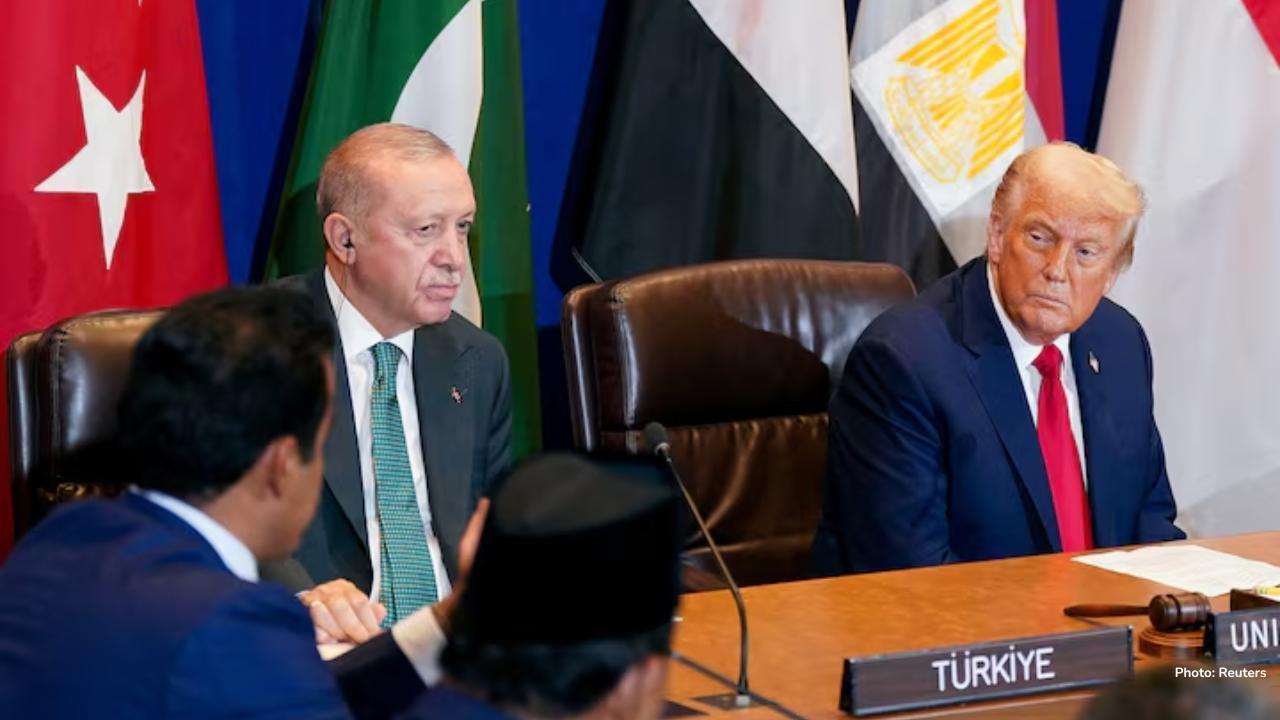
On September 25, 2025, Turkish President Tayyip Erdogan visited the White House in Washington, D.C., for a high-level meeting with U.S. President Donald Trump. This was Erdogan's first visit to the White House in about six years. The main topic of discussion was Turkey’s interest in purchasing F-35 fighter jets from the United States.
Erdogan's visit comes at a time when U.S.-Turkey relations have been tense due to previous military and defense disagreements. Turkey had been removed from the F-35 program in 2019 because of its purchase of the Russian S-400 missile defense system.
The United States and NATO countries were concerned that integrating the Russian system with NATO weapons could compromise security, particularly sensitive technology in the F-35 jets. As a result, sanctions were imposed on Turkey, affecting its defense industry and limiting its ability to purchase advanced military equipment from the United States.
Background on Turkey-U.S. Defense Tensions
The conflict over the S-400 missile defense system has been a key issue in U.S.-Turkey relations. The F-35 program, in which Turkey had been a partner, involves sharing sensitive technology among NATO allies. When Turkey acquired the S-400 system from Russia, the U.S. argued that this could allow Russia to access sensitive data from the F-35 program, creating security risks.
The U.S. response included:
Limiting arms sales to Turkey
Since then, Turkey has been seeking ways to rejoin the F-35 program and lift U.S. sanctions. Erdogan’s White House visit represents a significant attempt to resolve these longstanding issues and improve relations between the two NATO allies.
Main Goals of Erdogan’s Visit
Purchasing new F-16 fighter jets: Turkey has expressed interest in acquiring 40 new F-16s to modernize its fleet. These jets would supplement Turkey’s current aircraft and improve air defense capabilities.
Upgrading existing F-16s: In addition to purchasing new jets, Turkey seeks to upgrade its current fleet of F-16s with advanced systems, avionics, and engines.
Eurofighter Typhoon interest: Erdogan also showed interest in acquiring 40 Eurofighter Typhoon jets, which would further enhance Turkey’s air power and complement the F-35 and F-16 programs.
By pursuing these objectives, Erdogan aims to improve Turkey’s military capabilities while also restoring strategic ties with the United States.
Trade and Economic Discussions
Beyond defense matters, Erdogan and Trump also discussed broader trade agreements and economic cooperation. One key topic was a potential $10 billion deal for Turkish Airlines, which would involve purchasing more than 200 Boeing aircraft and associated GE engines.
These trade discussions are important for both countries. For Turkey, purchasing U.S.-made aircraft strengthens its aviation industry and ensures access to advanced technology. For the United States, such deals support Boeing and GE, creating jobs and economic growth at home.
The trade negotiations also tie into broader geopolitical considerations. Strengthening economic ties can help improve U.S.-Turkey relations and create mutual incentives for cooperation on defense, security, and regional stability.
Regional and Geopolitical Context
The meeting also addressed regional security issues. Erdogan and Trump discussed several ongoing conflicts and challenges:
Syria: Both leaders expressed support for the new government in Syria and discussed efforts to stabilize the region. Turkey has been involved in multiple military operations in northern Syria, primarily targeting Kurdish groups it considers terrorist organizations.
Gaza: Erdogan condemned Israeli actions in Gaza, while Trump reaffirmed the U.S. support for Israel. This disagreement remains a sensitive issue between the two countries, but both leaders agreed to focus on defense cooperation and strategic partnership despite differences.
NATO cooperation: Turkey is a key NATO member, and its participation in regional security initiatives is critical. Erdogan emphasized Turkey’s continued commitment to NATO while seeking flexibility in arms purchases and defense projects.
Significance of the F-35 Deal
The F-35 fighter jet is one of the most advanced military aircraft in the world. It combines stealth technology, advanced radar, and precision weapons to give air forces a significant advantage in combat.
Challenges and Obstacles
Despite the discussions, several challenges remain:
Past sanctions: The United States imposed sanctions on Turkey for its purchase of the S-400 system. Lifting these sanctions would require careful negotiation and congressional approval.
Potential Outcomes
President Erdogan’s visit to the White House on September 25, 2025, marks an important step in U.S.-Turkey relations. The talks focused on defense cooperation, F-35 fighter jets, F-16 upgrades, Eurofighter Typhoon interest, and trade agreements including a potential Boeing aircraft deal.
While challenges remain, including past sanctions, security concerns, and political disagreements, both leaders appear committed to improving relations and finding mutually beneficial solutions. Erdogan’s visit demonstrates Turkey’s determination to modernize its military, strengthen strategic partnerships, and maintain an influential role within NATO.
The outcomes of this visit will likely impact regional security, NATO operations, and international arms agreements. It also highlights the importance of diplomatic engagement, negotiation, and compromise in addressing complex international issues.
In the coming months, both countries will likely continue discussions to finalize defense deals, trade agreements, and agreements on arms purchases. These steps could restore a sense of partnership between the United States and Turkey while enhancing Turkey’s military and economic capabilities.








DAE Achieves Remarkable Growth in Q1 2026 With Record Revenue
Dubai Aerospace Enterprise announces impressive financial results for Q1 2026, reflecting a surge in

Price Increase for Sony PS5 in Southeast Asia Effective May 1
Sony announces a price increase for the PS5 across Southeast Asia starting May 1, 2026, impacting ga

Potential ‘Super El Niño’ in 2026: Understanding the Climate Risks
Could a Super El Niño emerge in 2026? Discover its implications and potential global climate impacts

Global Energy Crisis Intensifies: Markets React to Oil Supply Challenges
Markets are on edge as oil disruptions escalate, influencing prices and economic stability. Explore

Must-See Tourist Spots in London You Can't Overlook
Explore London's essential attractions, from royal landmarks to vibrant markets, ensuring an unforge

Ultimate Guide to Snagging Cheap Flights in 2026
Unlock the secrets to booking affordable flights in 2026 with insightful tips and strategies tailore




