Post by : Saif Nasser
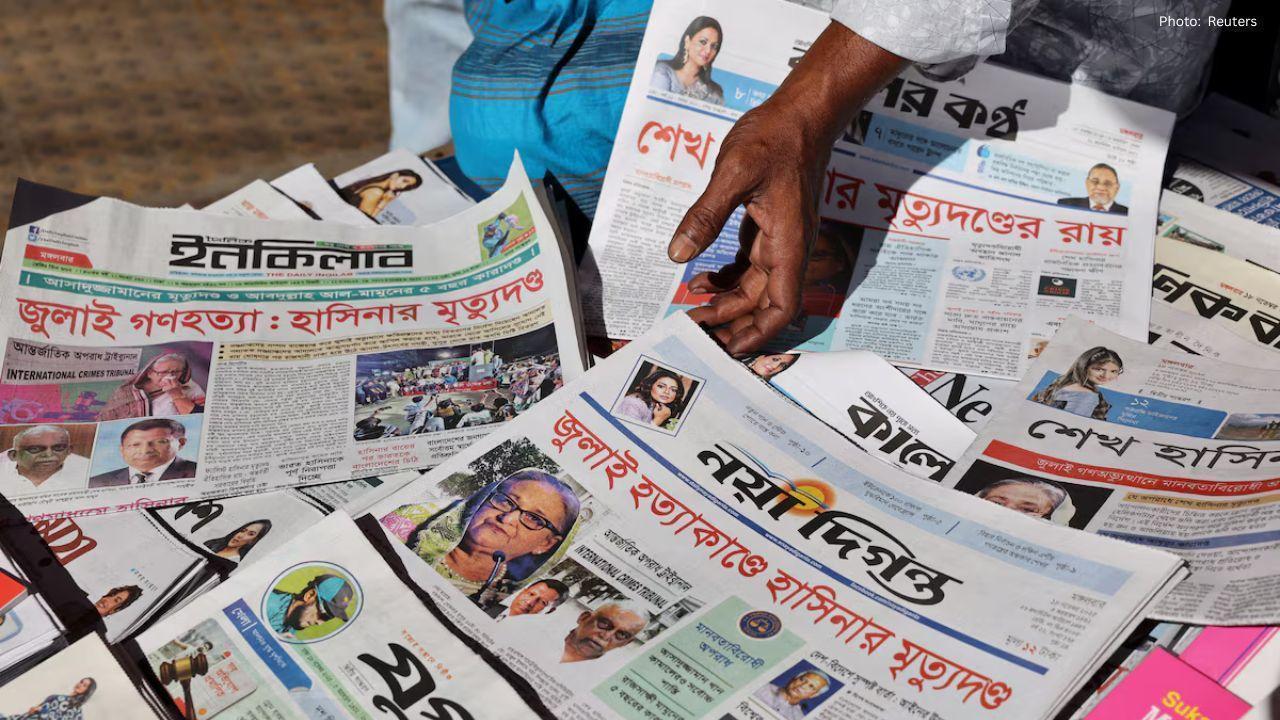
Bangladesh is facing a new and unusual political moment. The young people who helped remove long-time leader Sheikh Hasina last year are now trying to change the country through formal politics. Their group, the National Citizen Party (NCP), was created from the student movement that brought thousands into the streets. But as the election in February approaches, the passion of the protests is meeting the difficult reality of organised politics.
When the NCP was launched, huge crowds came to listen to the young leaders who led the uprising. Many citizens hoped this new party would finally break the long rule of powerful political families. But now the NCP is finding it hard to turn public excitement into actual votes. Its leader, 27-year-old Nahid Islam, says openly that the party is weak because it did not have enough time to build strong teams across the country. Their office in Dhaka still carries the spirit of protest, with graffiti showing crowds rising against injustice, but energy alone is not enough to win seats.
Recent opinion polls clearly show the NCP falling behind. The party plans to contest all 300 seats but has only 6% support. The Bangladesh Nationalist Party (BNP) leads with 30%, while Jamaat-e-Islami has 26%. These older parties, even with their controversies, have strong networks built over decades. Some young activists who once believed deeply in the NCP are now losing trust. One of them, Prapti Taposhi, said she expected the party to take bold positions, especially on women’s rights and minority rights. Instead, she feels the party hesitates too much and speaks too late. This growing disappointment was also clear when the NCP failed to win even one seat in the Dhaka University student election, despite the university being the heart of last year’s protests.
Although the Awami League is banned from the upcoming election, it remains a powerful political force and has warned of unrest if the ban continues. This creates uncertainty at a time when the country’s garment industry, the world’s second-largest, depends on stability. Meanwhile, the BNP and Jamaat have deep networks across villages and cities, making it even harder for a young party like the NCP to compete.
Money is another major challenge. NCP leaders depend on small donations, personal incomes, and crowdfunding. Young candidates like Hasnat Abdullah travel through villages telling voters honestly that they do not have money to offer, but they promise to use government funds honestly if elected. Even so, accusations of corruption against some NCP members—denied strongly by the party—have damaged its clean image.
Because of weak organisation and low funding, NCP leaders are talking with bigger parties, including BNP and Jamaat, about possible alliances. A senior NCP member admitted privately that if they run alone, they may not win a single seat. But forming alliances also carries a risk: the NCP could lose its “revolutionary” identity and become just another part of traditional politics. Many analysts warn that if the party joins old groups, people may stop seeing it as a fresh and independent voice.
Yet hope is not lost. Many young Bangladeshis still feel the NCP represents something different. They appreciate the party’s efforts to include ordinary people in politics. Last month, the NCP organised a rare search for candidates by interviewing more than 1,000 citizens from across the country, including a rickshaw puller and a student partly blinded during protests. These stories inspire young voters who want a political system where everyone—not just wealthy families—gets a chance to lead.
One of the most inspiring examples is Tasnim Jara, a doctor who left a successful career in Cambridge to join the NCP and help build a new political culture from the ground up. Even established parties like the BNP and Jamaat say they value young voices because they understand that the future of Bangladesh’s politics will be shaped by this new generation.
The NCP says it is thinking beyond the upcoming vote. Its goal is long-term reform, stronger institutions, and fair governance. But before it reaches that goal, it must survive the immediate struggle of organising, funding, and winning public trust.
Bangladesh now stands at an important crossroads. The young people who once shook the nation with their bravery must decide whether they can transform that revolutionary spirit into stable political leadership. The NCP’s journey shows that starting a revolution is one thing, but guiding a country through democracy is a far more difficult and demanding path.









Anticipated Dates for UAE Eid Al Adha 2026 Unveiled by Astronomical Experts
Experts predict Eid Al Adha 2026 in the UAE to start on May 27, prompting early holiday planning amo

DAE Achieves Remarkable Growth in Q1 2026 With Record Revenue
Dubai Aerospace Enterprise announces impressive financial results for Q1 2026, reflecting a surge in

Price Increase for Sony PS5 in Southeast Asia Effective May 1
Sony announces a price increase for the PS5 across Southeast Asia starting May 1, 2026, impacting ga

Potential ‘Super El Niño’ in 2026: Understanding the Climate Risks
Could a Super El Niño emerge in 2026? Discover its implications and potential global climate impacts

Global Energy Crisis Intensifies: Markets React to Oil Supply Challenges
Markets are on edge as oil disruptions escalate, influencing prices and economic stability. Explore

Must-See Tourist Spots in London You Can't Overlook
Explore London's essential attractions, from royal landmarks to vibrant markets, ensuring an unforge




