Post by : Jyoti Singh
Photo: Reuters
A deeply emotional and heartbreaking story has emerged from Gaza following the killing of a young journalist who had dedicated his life to telling the stories of his people.
On Saturday, August 9, Al Jazeera confirmed that its correspondent Anas al-Sharif 28 years old, was among five journalists killed in an Israeli airstrike near Al-Shifa Hospital in Gaza City. The incident has sent shockwaves through the journalism community and sparked strong condemnation from media organisations and press freedom advocates.
His Final Words to the World
Shortly after news of his death broke, a long message appeared on his social media account. The post was reportedly written by al-Sharif before his death and shared by a close friend when it was confirmed that he had been killed. The message carried the tone of a farewell — his last will to the people he loved and the audience he served.
In the letter, al-Sharif wrote:
If these words of mine reach you, know that Israel has succeeded in killing me and silencing my voice. Peace, mercy, and blessings of God be upon you. God knows that I have exerted all my effort and strength to be a support and voice for my people, ever since I opened my eyes to life in the alleys and neighbourhoods of Jabalia refugee camp.
Al-Sharif expressed his hope that one day he would return to his family’s original home in Ashkelon (al-Majdal). However, he accepted that God’s will was supreme and his judgment final.
A Life of Pain and Determination
In his final words, al-Sharif spoke openly about the hardships he had endured in Gaza — the pain of loss, the daily struggles under blockade, and the repeated tragedies that had befallen his community.
I have lived the pain in all its details, and I have tasted the pain and loss repeatedly. Despite this, I have never hesitated to convey the truth as it is, without falsification or distortion.
He also voiced frustration toward those who remained silent in the face of the suffering in Gaza, as well as those who, despite seeing the deaths of children and women, did nothing to stop the violence.
His words called for unity, resilience, and a continued fight for dignity and freedom:
Be bridges toward the liberation of the country and its people, so that the sun of dignity and freedom may shine upon our usurped homeland.
A Plea for His Family
Al-Sharif’s final request was deeply personal. He asked people to take care of his family, especially his children — a young daughter he would never see grow up, a son, his wife, and his elderly mother.
If I die, I die steadfast in my principles, bearing witness before God that I am content with His decree. Do not forget Gaza. And do not forget me in your righteous prayers for forgiveness and acceptance.
The Strike and Its Victims
Alongside al-Sharif, Al Jazeera confirmed that four other media workers were killed in the same Israeli strike:
Mohammed Qreiqeh (correspondent)
Ibrahim Zaher (cameraman)
Moamen Aliwa (cameraman)
Mohammed Noufal (cameraman)
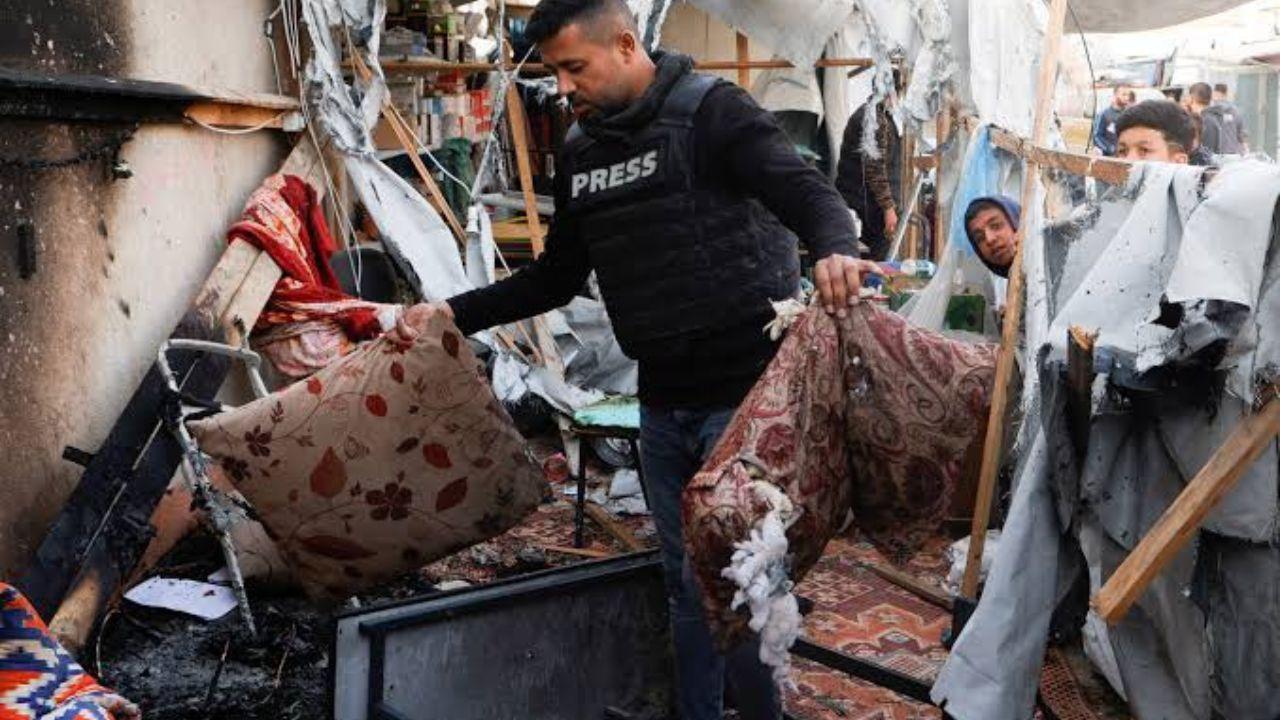
The attack took place near Al-Shifa Hospital an area that has repeatedly been targeted during the conflict. The strike destroyed buildings and left behind scenes of devastation.
While announcing the news live on air, an Al Jazeera anchor was visibly emotional, struggling to hold back tears as he spoke about his colleagues’ deaths.
The Israeli Military’s Claim
Following the strike, the Israeli Defence Forces (IDF) issued a statement accusing Anas al-Sharif of being a senior member of Hamas, claiming that he served as the head of a terrorist cell and was involved in planning and executing rocket attacks against Israeli civilians and soldiers.
The IDF said they had intelligence and documents from Gaza — including rosters, training lists, and salary records — that they claimed proved al-Sharif was a Hamas operative working under the cover of being a journalist.
This claim has been strongly rejected by Palestinian officials, media colleagues, and journalism organisations, who insist that al-Sharif was targeted because of his reporting.
Condemnation from Journalists’ Unions
The Palestinian Journalists’ Syndicate condemned the attack in the strongest terms, describing it as a bloody crime and an act of assassination against members of the press.
They said the killing of journalists in Gaza has become alarmingly common, and accused Israel of deliberately targeting media workers to silence coverage of the war and humanitarian crisis.
International press freedom groups have also expressed outrage, calling for an independent investigation into the strike and accountability in the killing of journalists.
A Dangerous Profession in Gaza
Reporting from Gaza has always been dangerous, but the current war has made it even more deadly for journalists. Since the escalation of violence began, dozens of reporters, photographers, and camera operators have been killed while covering the conflict.
Many of them were well-known figures in their communities, with years of experience telling the stories of ordinary Palestinians under siege. Their work often involved being in areas of active fighting, close to bombings and airstrikes, to document the human impact of the war.
Anas al-Sharif had become one of the most recognised reporters in Gaza, known for his calm but powerful on-the-ground coverage. Viewers across the Arab world recognised his voice and his face from daily reports showing destroyed neighbourhoods, grieving families, and the desperate search for survivors after each strike.
Remembering His Legacy
Colleagues have described al-Sharif as fearless but deeply compassionate, someone who felt the suffering of the people he interviewed and who never lost his humanity despite years of covering violence.
One of his co-workers said:
Anas was not just a journalist. He was the voice of the people here. Even when the bombs were falling, he would be out there with his camera and microphone, making sure the world saw what was happening.
His final social media post, now shared thousands of times, is being remembered as a symbol of both the risks journalists face and their dedication to the truth. For many Palestinians, his words are a reminder to keep telling their stories, even in the face of danger.
The Bigger Picture
The killing of journalists in conflict zones raises serious questions about press freedom, accountability, and the right of the public to know the truth. International law considers journalists as civilians who must be protected during armed conflicts.
Yet, in Gaza, journalists continue to die at one of the highest rates in the world, making it increasingly difficult to document what is happening on the ground.
Al-Sharif’s death, along with the others killed in the same strike, will likely be remembered as one of the darkest days for journalism in the region. His farewell message — part personal letter, part call to action — has touched people far beyond Gaza, reaching readers and viewers across the globe.
For those who knew him, his legacy is not just in the reports he filed, but in his unwavering belief that the truth matters, no matter the cost.





Mattel Revives Masters of the Universe Action Figures Ahead of Film Launch
Mattel is reintroducing Masters of the Universe figures in line with its upcoming film, tapping into

China Executes 11 Members of Criminal Clan Linked to Myanmar Scam
China has executed 11 criminals associated with the Ming family, known for major scams and human tra

US Issues Alarm to Iran as Military Forces Deploy in Gulf Region
With a significant military presence in the Gulf, Trump urges Iran to negotiate a nuclear deal or fa

Copper Prices Reach Unprecedented Highs Amid Geopolitical Turmoil
Copper prices soar to all-time highs as geopolitical tensions and a weakening dollar boost investor
New Zealand Secures First Win Against India, Triumph by 50 Runs
New Zealand won the 4th T20I against India by 50 runs in Vizag. Despite Dube's impressive 65, India