Post by : Bianca Suleiman
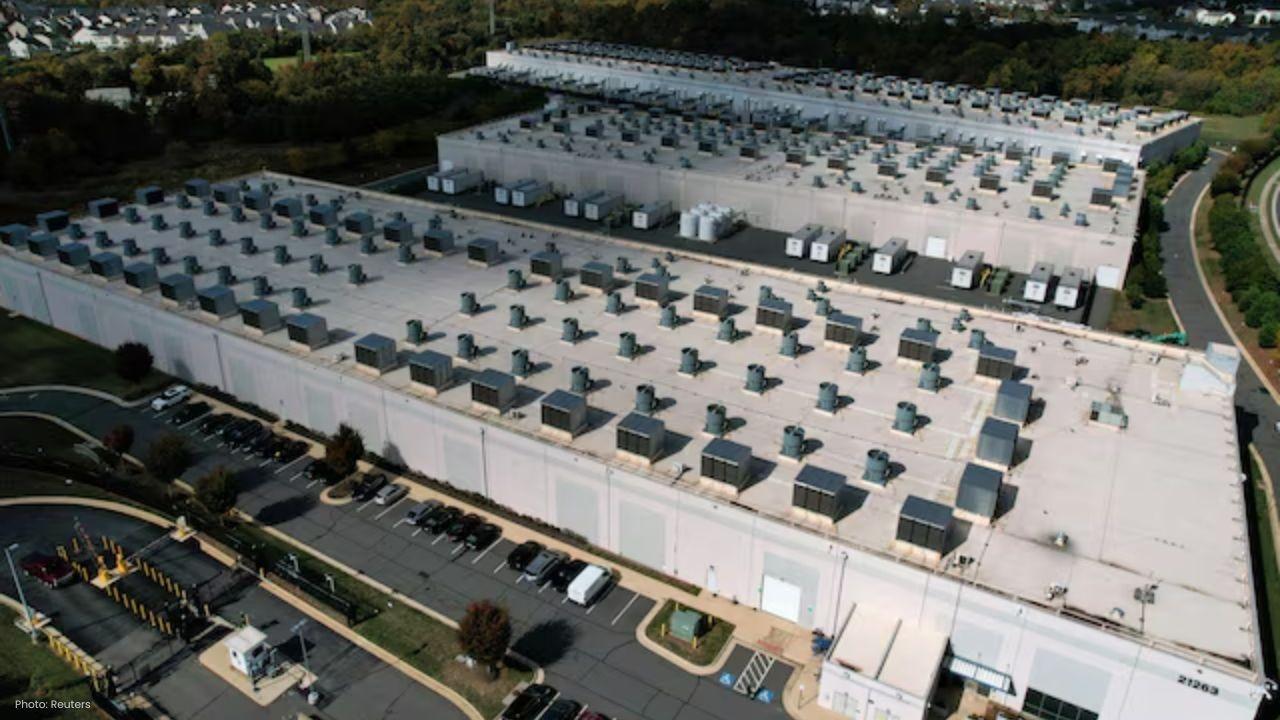
Global equities have climbed on strong AI sentiment, hitting fresh highs. Behind the rally, the data centres that underpin the AI surge are being funded via increasingly intricate debt arrangements, prompting closer scrutiny from investors and policymakers.
Unlike earlier tech excesses, this wave is driven by profitable firms with robust balance sheets. Still, economists and regulators warn that stress is emerging in pockets of the credit system where opacity and illiquidity are concentrated.
Record Investment-Grade Borrowing
Bank of America data indicates U.S. Big Tech firms focused on AI issued about $75 billion of investment-grade debt during September and October alone—more than double the sector’s average annual issuance of roughly $32 billion between 2015 and 2024.
Meta accounted for approximately $30 billion of that borrowing, Oracle about $18 billion, and Alphabet has signalled fresh debt plans as well. Oracle’s $38 billion high-grade facility linked to Vantage data centres highlights the scale of financing backing the infrastructure build-out.
Despite these sizable issues, AI-related debt represented only around 5% of the $1.5 trillion U.S. investment-grade market in 2025. Barclays analysts caution, however, that AI-driven issuance could materially affect credit supply dynamics through 2026.
Hybrid financing structures are also appearing. For example, Meta’s $27 billion arrangement with Blue Owl Capital keeps debt off the company’s balance sheet, illustrating creative — and potentially opaque — funding approaches in the sector.
Oracle Shares Soar Amid Debt Concerns
Oracle’s stock climbed about 54% in 2025, its strongest surge since 1999, buoyed by AI-related revenue momentum. Yet a sharp rise in the company’s credit default swap levels suggests investors remain cautious about elevated leverage.
High-Yield Bonds Enter the AI Space
Companies tied to AI infrastructure are increasingly tapping the high-yield market. TeraWulf, transitioning from bitcoin mining to data centres, issued a $3.2 billion BB- rated bond, while CoreWeave, which has backing from Nvidia, raised roughly $2 billion in high-yield debt.
Such securities offer higher returns but carry greater default risk, underscoring trade-offs investors face when funding rapid infrastructure expansion.
Private Credit Gains Ground
Private credit has grown into a major funding source for AI projects. UBS estimates that AI-related private loans nearly doubled in the year through early 2025. These facilities provide flexibility but are less liquid, which can amplify strains in stressed markets.
Morgan Stanley estimates private credit could account for more than half of the roughly $1.5 trillion required to expand U.S. data centre capacity through 2028.
Asset-Backed Securities Join the Race
Securitised products, notably asset-backed securities (ABS), are being used to finance parts of the digital-infrastructure market. ABS pool typically illiquid cash flows—such as data centre lease revenues—into tradable securities.
Digital infrastructure ABS total about $80 billion, roughly 5% of the $1.6 trillion U.S. ABS market, after an eightfold increase in under five years. Bank of America notes that around 64% of this segment is backed by data centres, and projects the figure could reach $115 billion next year.
While ABS are standard financing tools, their complexity and low liquidity revive memories of past securitisation-linked strains in 2008.
The Bottom Line
The AI-driven investment wave is accelerating data centre construction and is being financed through a diverse mix of instruments—from investment-grade bonds and high-yield paper to private credit and ABS. That breadth of financing brings growth, but also a tangle of complex loans and illiquid assets that investors and regulators are monitoring closely for systemic risk.










DAE Achieves Remarkable Growth in Q1 2026 With Record Revenue
Dubai Aerospace Enterprise announces impressive financial results for Q1 2026, reflecting a surge in

Price Increase for Sony PS5 in Southeast Asia Effective May 1
Sony announces a price increase for the PS5 across Southeast Asia starting May 1, 2026, impacting ga

Potential ‘Super El Niño’ in 2026: Understanding the Climate Risks
Could a Super El Niño emerge in 2026? Discover its implications and potential global climate impacts

Global Energy Crisis Intensifies: Markets React to Oil Supply Challenges
Markets are on edge as oil disruptions escalate, influencing prices and economic stability. Explore

Must-See Tourist Spots in London You Can't Overlook
Explore London's essential attractions, from royal landmarks to vibrant markets, ensuring an unforge

Ultimate Guide to Snagging Cheap Flights in 2026
Unlock the secrets to booking affordable flights in 2026 with insightful tips and strategies tailore




