Post by : Shivana Rahim
Collagen is often called the “glue” that holds our body together. It’s the most abundant protein in the human body, making up about 30% of total protein. This mighty structural protein keeps your skin smooth, your joints flexible, and your hair strong. But here’s the catch: as we age, collagen production naturally declines. By the time we hit our mid-20s, the body produces less collagen every year, leading to wrinkles, sagging skin, brittle nails, and joint discomfort.
The good news? You don’t need to rely solely on animal-based collagen supplements. A plant-powered diet can work wonders by supplying the vitamins, minerals, and antioxidants your body needs to boost its own collagen production. Let’s explore how vegetarians can naturally fuel their collagen and stay young inside and out.
Collagen acts as a support system. In the skin, it maintains elasticity and hydration. In hair and nails, it provides strength and shine. In joints and bones, it cushions and supports movement. Without collagen, our body would lose its structural integrity.
Several factors accelerate collagen breakdown:
Aging – Natural decline after the mid-20s.
UV Exposure – Sun damage breaks down collagen fibers.
Poor Diet – High sugar intake triggers glycation, damaging collagen.
Smoking & Alcohol – Weakens collagen synthesis.
Stress & Lack of Sleep – Inhibits repair and regeneration.
Unlike bone broth or animal collagen powders, plants don’t contain collagen directly. Instead, vegetarian foods provide collagen-boosting nutrients like Vitamin C, Zinc, Copper, Amino Acids, and Antioxidants that help your body synthesize collagen naturally.
Vitamin C – Crucial for collagen formation.
Proline & Glycine – Found in legumes, soy, and nuts.
Zinc & Copper – Mineral cofactors for collagen production.
Antioxidants – Protect collagen from free radical damage.
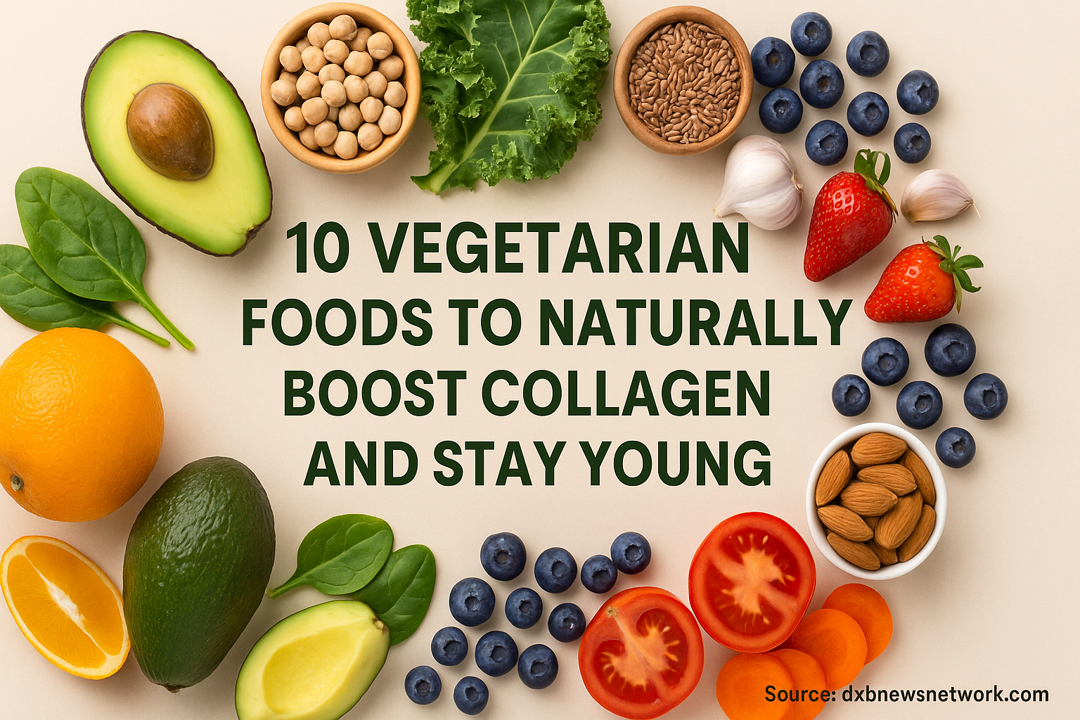
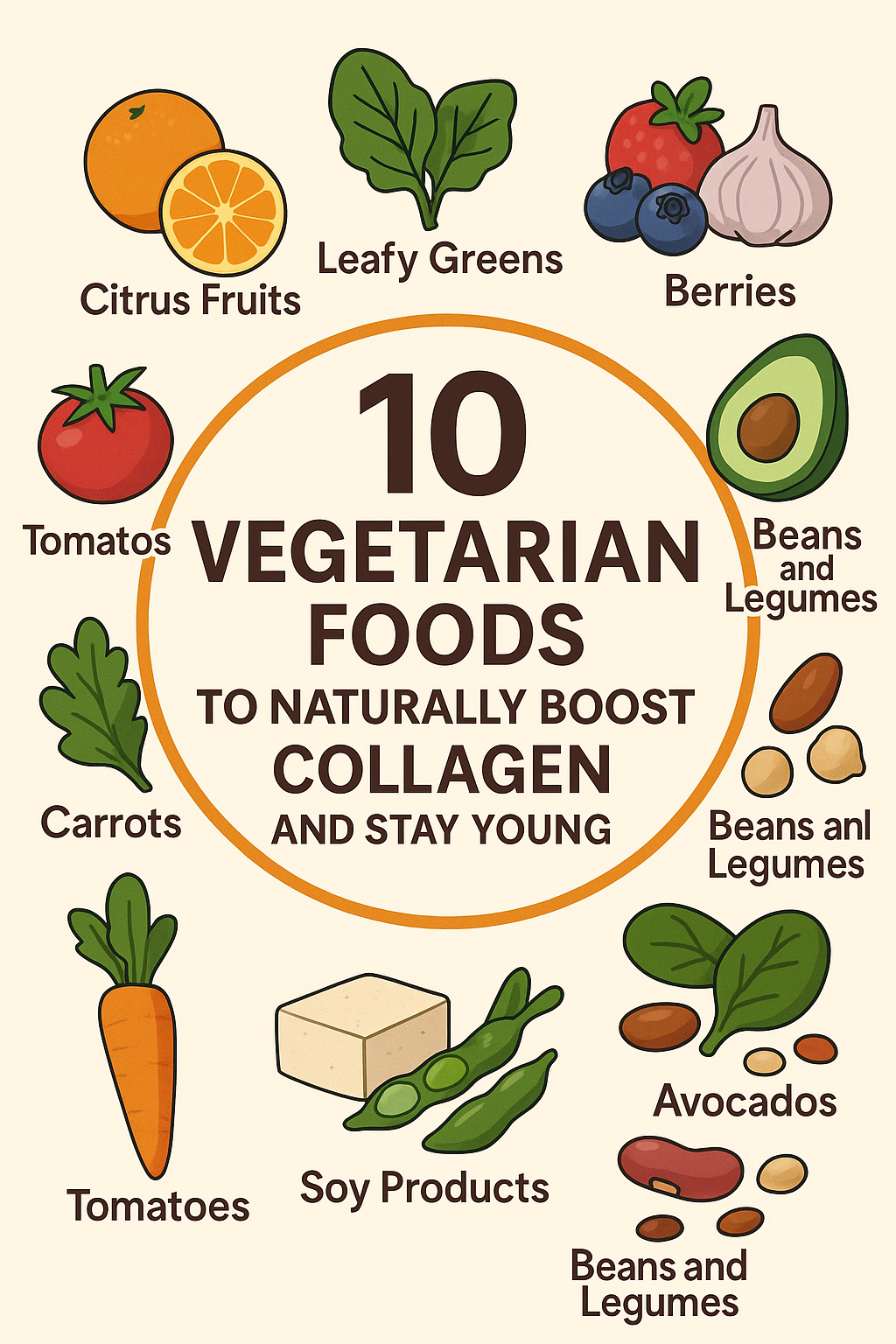
Oranges, lemons, limes, and grapefruits are collagen heroes. Vitamin C stimulates collagen synthesis while protecting against UV damage. A glass of fresh orange juice or adding lemon to your salads can supercharge your skin health.
Spinach, kale, and Swiss chard are loaded with chlorophyll, which may boost collagen precursors. Their Vitamin A and C content also aids skin repair and slows signs of aging.
Strawberries, blueberries, and raspberries are rich in antioxidants that fight free radicals. They also contain ellagic acid, which prevents collagen breakdown from sun exposure.
Garlic may be small, but it’s mighty. Its sulfur content helps form collagen and prevents its breakdown. Plus, taurine and lipoic acid in garlic repair damaged collagen fibers.
Almonds, walnuts, chia seeds, and flaxseeds provide zinc, copper, and Vitamin E—all essential for collagen synthesis. These also protect existing collagen from oxidative stress.
Black beans, lentils, and chickpeas are rich in lysine, an amino acid crucial for collagen formation. They’re also a great plant-based protein source to keep your skin firm.
Avocados are rich in healthy monounsaturated fats, which keep skin supple. Vitamin E reduces oxidative stress, while Vitamin C supports collagen production.
Tofu, tempeh, and soy milk contain isoflavones, plant-based compounds that protect against collagen breakdown caused by UV rays.
Tomatoes are packed with Vitamin C and lycopene, a powerful antioxidant that shields the skin from sun damage and maintains collagen levels.
Carrots are rich in beta-carotene, which converts into Vitamin A. This nutrient aids skin repair and works alongside Vitamin C to enhance collagen synthesis.
Collagen needs hydration to function properly. Drinking enough water plumps the skin and keeps tissues flexible.
During deep sleep, the body repairs collagen. Chronic stress, on the other hand, increases cortisol, which breaks down collagen fibers.
Sugar binds to collagen proteins, making them stiff and weak. Smoking releases toxins that destroy collagen and reduce blood flow to the skin.
Pros: Convenient, easily absorbed peptides, quick results.
Cons: Mostly animal-based, expensive, and not sustainable.
Plant-based foods not only support collagen production but also provide antioxidants, fiber, and long-term health benefits without side effects.
Q1: Can vegetarians get enough collagen without supplements?
Yes. While plants don’t contain collagen directly, they provide the nutrients your body needs to make collagen naturally.
Q2: Which vitamin is most important for collagen production?
Vitamin C is the key nutrient, found in citrus fruits, berries, and leafy greens.
Q3: How long does it take to see results from a collagen-boosting diet?
Visible changes in skin elasticity and hair strength may take 6–12 weeks of consistent intake.
Q4: Are collagen supplements suitable for vegetarians?
Most collagen supplements are animal-derived, but some companies now offer vegan collagen boosters made from fermented yeast and algae.
Q5: Do lifestyle habits affect collagen levels?
Yes. Sun exposure, stress, smoking, and poor diet accelerate collagen breakdown. Healthy habits preserve it.
Q6: Can children and teens benefit from collagen-rich foods?
Absolutely. Collagen supports growth, strong bones, and healthy skin at every age.
Collagen is the foundation of youthful skin, strong joints, and shiny hair. While aging and lifestyle factors reduce collagen over time, a diet rich in collagen-boosting vegetarian foods can naturally restore your body’s ability to produce it. By adding citrus fruits, leafy greens, berries, nuts, soy, and other plant-based powerhouses to your meals—and pairing them with healthy lifestyle habits—you can stay vibrant and youthful without relying on animal-based supplements.
Start today, and let your plate become the secret to glowing skin and long-lasting health.










Anticipated Dates for UAE Eid Al Adha 2026 Unveiled by Astronomical Experts
Experts predict Eid Al Adha 2026 in the UAE to start on May 27, prompting early holiday planning amo

DAE Achieves Remarkable Growth in Q1 2026 With Record Revenue
Dubai Aerospace Enterprise announces impressive financial results for Q1 2026, reflecting a surge in

Price Increase for Sony PS5 in Southeast Asia Effective May 1
Sony announces a price increase for the PS5 across Southeast Asia starting May 1, 2026, impacting ga

Potential ‘Super El Niño’ in 2026: Understanding the Climate Risks
Could a Super El Niño emerge in 2026? Discover its implications and potential global climate impacts

Global Energy Crisis Intensifies: Markets React to Oil Supply Challenges
Markets are on edge as oil disruptions escalate, influencing prices and economic stability. Explore

Must-See Tourist Spots in London You Can't Overlook
Explore London's essential attractions, from royal landmarks to vibrant markets, ensuring an unforge




