Post by : Saif Nasser
Russia and Ukraine continued exchanging attacks despite a temporary Victory Day ceasefire announced by Moscow, showing once again how difficult peace efforts remain in the ongoing war between the two countries. The latest fighting has increased concerns about the possibility of further escalation and the weakening chances of diplomatic progress.
The ceasefire was announced by Russia to mark Victory Day celebrations, one of the country’s most important national events that remembers the Soviet Union’s role in defeating Nazi Germany during World War II. However, both Russia and Ukraine accused each other of violating the temporary truce soon after it began.
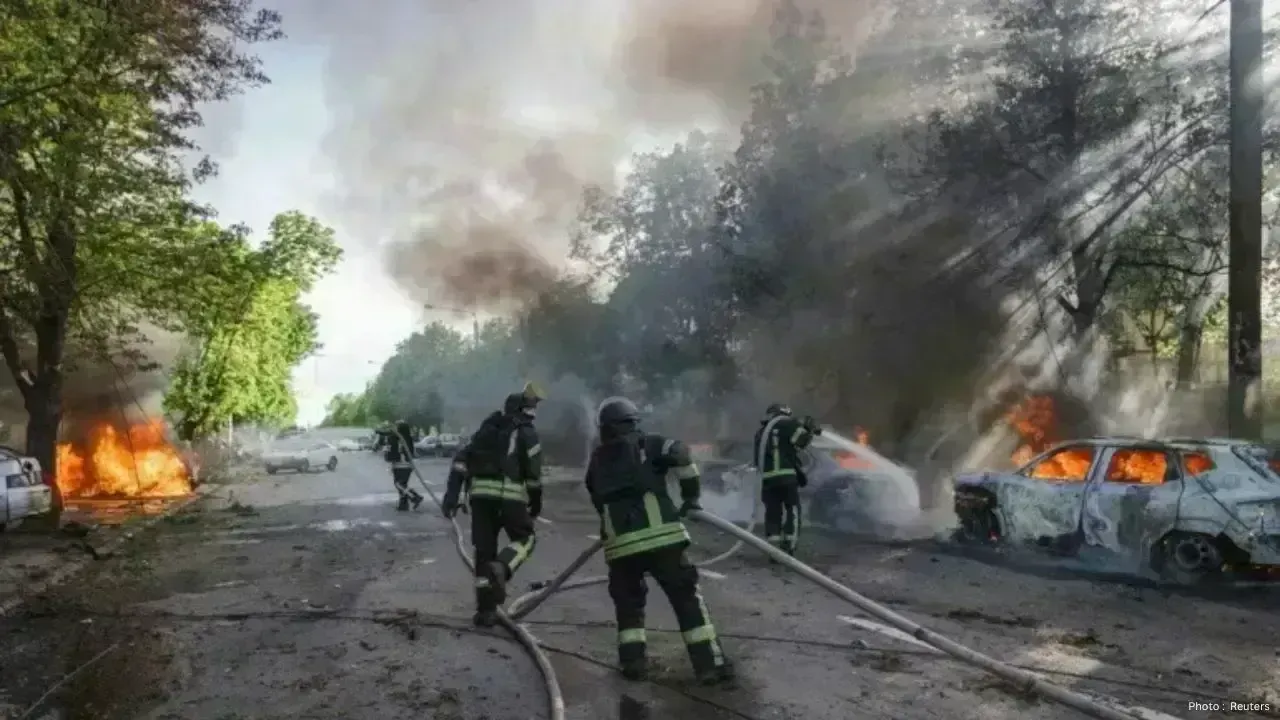
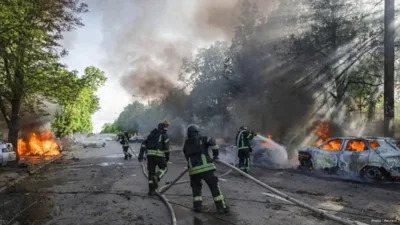
According to reports, explosions, shelling, and drone attacks were reported in several areas despite the ceasefire announcement. Ukrainian officials claimed Russian forces continued military operations in parts of eastern and southern Ukraine. At the same time, Russia accused Ukraine of launching attacks on Russian-controlled regions and border areas.
The continued fighting highlights the deep mistrust between both sides after more than four years of conflict. Peace talks between Russia and Ukraine have remained stalled, while military operations continue across multiple frontlines.
The war has caused massive destruction since it began in 2022. Thousands of soldiers and civilians have been killed, millions of people have been displaced, and many cities and towns have suffered severe damage. The conflict has also created major economic and political effects around the world.
Victory Day remains highly important in Russia, where large military parades and ceremonies are organized every year. Russian President Vladimir Putin has often linked the war in Ukraine to Russia’s historical fight against fascism during World War II. Ukraine and Western countries strongly reject these comparisons.
Ukraine has repeatedly stated that temporary ceasefires announced by Russia are not enough and that a complete withdrawal of Russian forces is necessary for meaningful peace negotiations. Ukrainian leaders have also accused Moscow of using ceasefire announcements mainly for political and military advantage.
Meanwhile, Russia continues to accuse Ukraine and its Western allies of prolonging the war through military support and weapons supplies. The conflict has increasingly become part of a larger geopolitical struggle involving Russia, NATO countries, and Western powers.
The latest ceasefire violations show how difficult it has become to build trust between the two nations. Even short humanitarian pauses and prisoner exchange agreements have often faced challenges during the war.
Military experts believe both sides continue using drones, missile systems, artillery, and advanced surveillance technology to maintain pressure on the battlefield. The war has become one of the most technology-driven conflicts in recent history.
The ongoing fighting is also affecting global markets and international security. Energy prices, food supplies, defence spending, and geopolitical tensions have all been influenced by the Russia-Ukraine conflict.
Several international leaders and humanitarian organizations have repeatedly called for negotiations and peaceful dialogue. However, strong political differences and military objectives on both sides continue blocking long-term diplomatic solutions.
The war has also changed Europe’s security environment. NATO countries have increased defence spending and military preparedness because of fears about regional instability and future security threats.
Civilians continue to suffer heavily as attacks damage homes, schools, hospitals, and infrastructure in many areas. Humanitarian agencies have warned that millions of people still require urgent support, medical aid, and shelter because of the prolonged conflict.
The latest exchange of attacks during the Victory Day ceasefire clearly shows that the Russia-Ukraine war remains far from over. Despite occasional calls for peace, both countries continue preparing for a long conflict with no immediate political solution in sight.
As fighting continues, global attention remains focused on whether diplomatic efforts can eventually reduce tensions and prevent further destruction in the region.




Anticipated Dates for UAE Eid Al Adha 2026 Unveiled by Astronomical Experts
Experts predict Eid Al Adha 2026 in the UAE to start on May 27, prompting early holiday planning amo

DAE Achieves Remarkable Growth in Q1 2026 With Record Revenue
Dubai Aerospace Enterprise announces impressive financial results for Q1 2026, reflecting a surge in

Price Increase for Sony PS5 in Southeast Asia Effective May 1
Sony announces a price increase for the PS5 across Southeast Asia starting May 1, 2026, impacting ga

Potential ‘Super El Niño’ in 2026: Understanding the Climate Risks
Could a Super El Niño emerge in 2026? Discover its implications and potential global climate impacts

Global Energy Crisis Intensifies: Markets React to Oil Supply Challenges
Markets are on edge as oil disruptions escalate, influencing prices and economic stability. Explore

Must-See Tourist Spots in London You Can't Overlook
Explore London's essential attractions, from royal landmarks to vibrant markets, ensuring an unforge




