Post by : Shakul
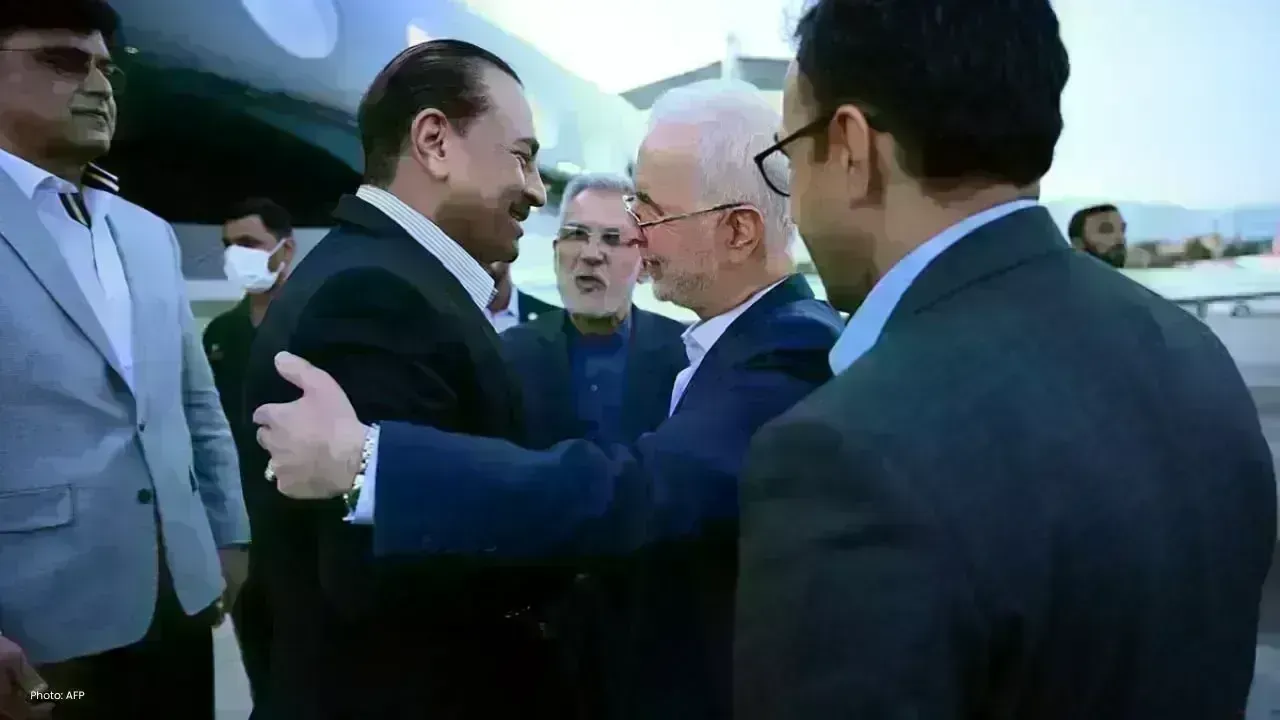
In a significant move, Pakistan's army chief Asim Munir landed in Tehran on Friday, coinciding with intensifying diplomatic initiatives related to the Middle East turmoil. His arrival is particularly timely as Iran contemplates a new peace proposal from the United States, though key differences still pose challenges for both nations.
Esmaeil Baqaei, spokesperson for the Iranian Foreign Ministry, articulated that despite the ongoing diplomatic dialogues, the gaps between Tehran and Washington are still profound and complex. Officials from Iran underscore that these recent conversations should not be misconstrued as a pivotal breakthrough in negotiations.
The conflict, which escalated on February 28 due to joint US-Israeli military operations against Iran, continues to destabilize the region, even after a ceasefire was temporarily established in April to halt direct military actions. Diplomatic exchanges, including rare face-to-face meetings that took place in Pakistan earlier this year, have unfolded since then.
Pakistan is carving its path as a crucial mediator in this ongoing crisis, and officials confirmed that Asim Munir's visit aims to alleviate tensions and rejuvenate stalled discussions. He was received upon arrival by Iranian Interior Minister Eskandar Momeni alongside high-ranking Pakistani officials.
Meanwhile, US Secretary of State Marco Rubio indicated that while some advancements have been made in talks with Iran, securing a finalized agreement remains a considerable challenge. He cautioned that if diplomatic avenues falter, the US is exploring alternative strategies. President Donald Trump has also conveyed hesitance about the eventual success of negotiations.
One of the primary concerns in these negotiations is the status of the Strait of Hormuz, a crucial global shipping pathway that facilitates a significant share of the world's oil and gas. Iran's management and potential restrictions in the strait have heightened fears of global economic instability and spiking energy costs.
Concurrently, tensions are escalating in nearby regions, such as Lebanon, where clashes involving Hezbollah and Israeli forces have persisted despite existing ceasefire agreements. Reports from Lebanese authorities indicate that recent Israeli airstrikes in eastern and southern Lebanon have resulted in fatalities, including both rescuers and civilians.
Global markets are closely monitoring these diplomatic developments, with investors hoping that negotiations can avert further escalation in the Middle Eastern conflict. Nevertheless, anxieties surrounding oil supplies, shipping routes, and overall regional security keep international markets on high alert.





Meta Unveils Subscription Plans for Instagram, Facebook, and WhatsApp
Meta introduces new subscription plans for users of Instagram, Facebook, and WhatsApp, featuring enh

Suvarna Joy on Education Leadership, Resilience, and Building Purpose Through Adversity in the UAE
Suvarna Joy shares her journey of education leadership, motherhood, faith, and resilience within the

Anticipated Dates for UAE Eid Al Adha 2026 Unveiled by Astronomical Experts
Experts predict Eid Al Adha 2026 in the UAE to start on May 27, prompting early holiday planning amo

DAE Achieves Remarkable Growth in Q1 2026 With Record Revenue
Dubai Aerospace Enterprise announces impressive financial results for Q1 2026, reflecting a surge in

Price Increase for Sony PS5 in Southeast Asia Effective May 1
Sony announces a price increase for the PS5 across Southeast Asia starting May 1, 2026, impacting ga

Potential ‘Super El Niño’ in 2026: Understanding the Climate Risks
Could a Super El Niño emerge in 2026? Discover its implications and potential global climate impacts




