Post by : Shweta
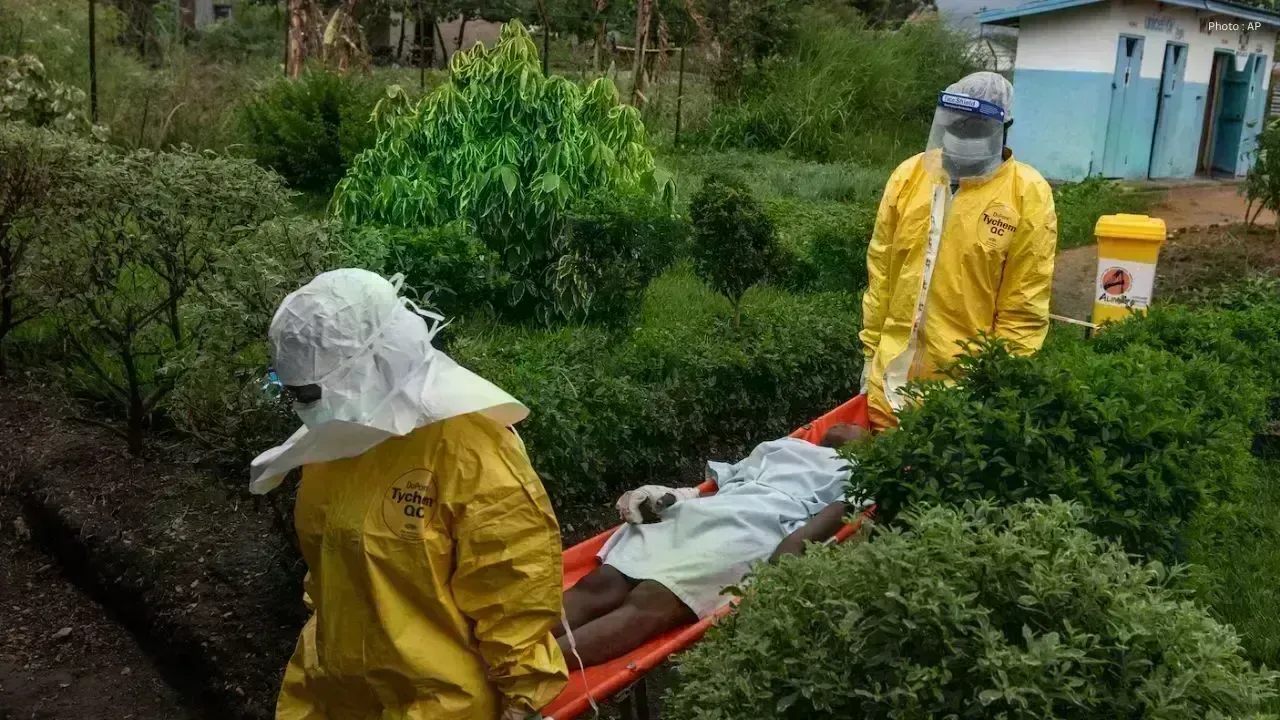
In response to the escalating Ebola crisis in Central and East Africa, the U.S. government has implemented new travel restrictions targeting lawful permanent residents, commonly known as green card holders. These individuals are now prohibited from entering the U.S. if they have recently traveled to regions affected by the outbreak.
The latest directive from the Centers for Disease Control and Prevention (CDC) and the Department of Homeland Security specifies that green card holders who have been in the Democratic Republic of the Congo, Uganda, or South Sudan in the past 21 days are subject to this ban. Previously, such restrictions were primarily aimed at non-U.S. citizens and foreign travelers.
Health officials have cited concerns about public safety and limited resources in dealing with the ongoing outbreak, which is linked to the Bundibugyo strain of the virus. The CDC emphasizes that these temporary measures are part of comprehensive efforts to safeguard the U.S. from potential Ebola cases.
The World Health Organization has classified the situation as a significant international health emergency, reporting numerous suspected cases and fatalities in the affected areas. Compounding the crisis is the lack of an approved vaccine for the Bundibugyo strain.
In addition to the travel prohibition, the U.S. has ramped up airport screening for travelers returning from affected regions. Citizens entering the United States must do so through specific airports such as Washington Dulles International Airport, where health authorities conduct thorough checks, including temperature readings and symptom evaluations.
This policy has drawn criticism from various sectors, including immigration advocates and public health experts. Detractors argue that restricting access for green card holders raises legal and humanitarian issues, since these residents typically hold the right to return. There are also concerns that such actions could dissuade healthcare professionals and volunteers from contributing to relief efforts in Africa.
Some public health specialists reminisce about previous Ebola outbreaks, noting that broad travel restrictions were not the standard approach in past crises, such as the 2014 epidemic. They argue that bans may not effectively stop the transmission of disease and could hinder global collaboration during health emergencies.
Nevertheless, the CDC reassures that the likelihood of Ebola spreading locally within the U.S. remains minimal. The travel restrictions will be reconsidered as developments occur, and the government is dispatching additional medical personnel and support to manage the outbreak in affected areas.







Meta Unveils Subscription Plans for Instagram, Facebook, and WhatsApp
Meta introduces new subscription plans for users of Instagram, Facebook, and WhatsApp, featuring enh

Suvarna Joy on Education Leadership, Resilience, and Building Purpose Through Adversity in the UAE
Suvarna Joy shares her journey of education leadership, motherhood, faith, and resilience within the

Anticipated Dates for UAE Eid Al Adha 2026 Unveiled by Astronomical Experts
Experts predict Eid Al Adha 2026 in the UAE to start on May 27, prompting early holiday planning amo

DAE Achieves Remarkable Growth in Q1 2026 With Record Revenue
Dubai Aerospace Enterprise announces impressive financial results for Q1 2026, reflecting a surge in

Price Increase for Sony PS5 in Southeast Asia Effective May 1
Sony announces a price increase for the PS5 across Southeast Asia starting May 1, 2026, impacting ga

Potential ‘Super El Niño’ in 2026: Understanding the Climate Risks
Could a Super El Niño emerge in 2026? Discover its implications and potential global climate impacts




