Post by : Saif Nasser
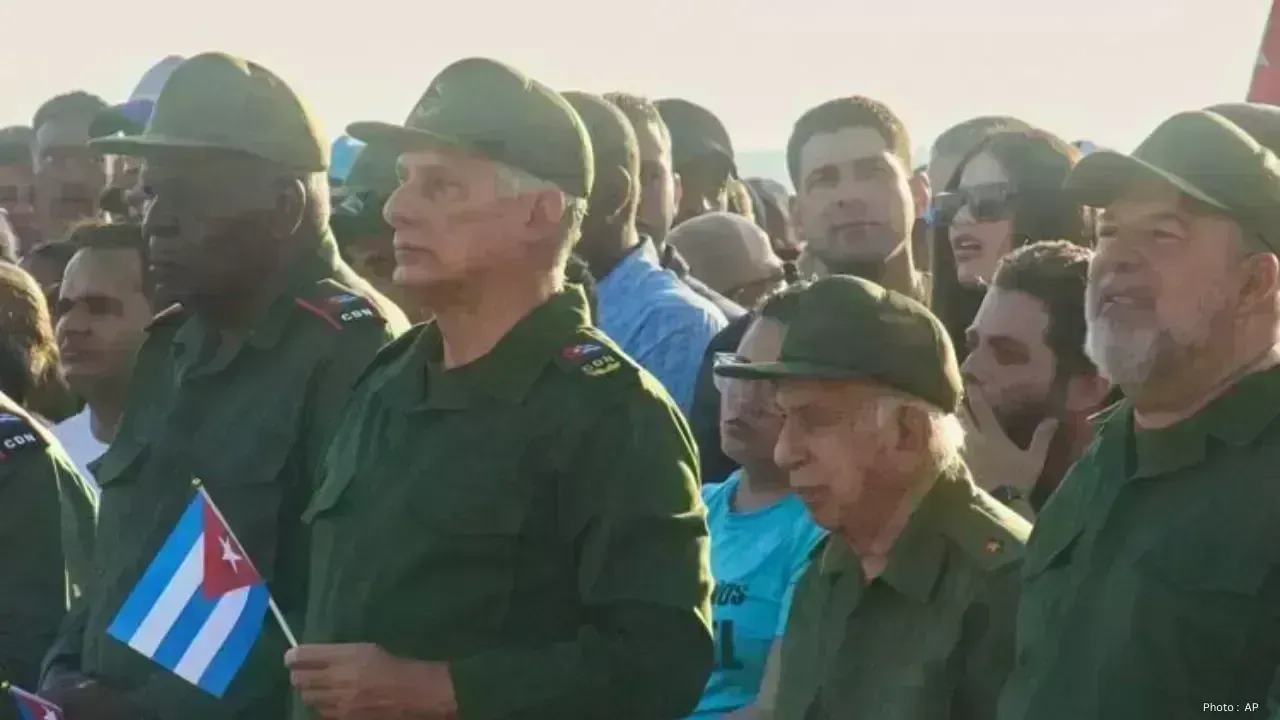
Cuban President Miguel Díaz-Canel has become the latest target of United States sanctions as Washington continues its efforts to increase pressure on the island’s leadership. The move marks another chapter in the long and often difficult relationship between the two neighboring countries, a relationship shaped by decades of political disagreements, economic restrictions, and diplomatic disputes.
The latest action reflects the American government's continued focus on human rights, political freedoms, and governance issues in Cuba. Officials in Washington argue that stronger measures are necessary to hold senior leaders accountable and encourage changes in policies that have drawn international criticism.
The decision comes at a time when Cuba is facing significant economic challenges. Rising costs, shortages of essential goods, limited access to foreign currency, and ongoing financial difficulties have created hardship for many citizens. These problems have contributed to public frustration and increased attention on the country's political and economic direction.
According to reports, the sanctions are aimed directly at the Cuban leader and are part of a broader strategy intended to influence the country's governing structure. While such measures typically focus on restricting financial transactions, travel privileges, or access to certain assets, their broader purpose is often political rather than economic.
Relations between Washington and Havana have experienced periods of both cooperation and conflict over the years. Efforts to improve ties have occasionally emerged, but major differences regarding political systems, civil liberties, and economic policies have repeatedly created obstacles to lasting progress.
Supporters of the sanctions argue that pressure from the international community can encourage reforms and greater respect for democratic principles. They believe that targeted restrictions send a message to government officials while avoiding direct harm to ordinary citizens.
Critics, however, question whether such actions achieve their intended goals. Some analysts argue that sanctions may deepen existing tensions and make diplomatic engagement more difficult. Others believe that economic pressure can indirectly affect the broader population, even when measures are designed to focus on specific leaders or institutions.
The government in Havana has historically rejected accusations related to human rights and governance concerns. Cuban officials frequently describe sanctions as interference in domestic affairs and argue that external pressure contributes to economic challenges faced by the country.
The latest development is likely to draw attention across Latin America and beyond. Many nations continue to monitor relations between the two countries because of their historical significance and their influence on regional politics. Decisions made by either side often have broader diplomatic consequences throughout the region.
Economic conditions remain a major concern for many Cuban families. Limited resources and financial difficulties have affected daily life in various parts of the country. As a result, any new restrictions imposed by foreign governments are often closely examined for their potential impact on the economy.
For the United States, the sanctions demonstrate a continued commitment to policies that emphasize accountability and political reform. American officials have repeatedly stated that concerns about freedoms and human rights remain central to their approach toward Cuba.
At the same time, observers note that long-term solutions may require a combination of pressure, dialogue, and diplomatic engagement. International disputes involving sanctions rarely produce immediate results, and meaningful political change often takes time.
The situation also highlights the ongoing debate about the effectiveness of sanctions as a foreign policy tool. Governments around the world frequently use economic and political measures to influence behavior, but experts remain divided over how successful these approaches are in achieving lasting outcomes.
Businesses and investors with interests in the region are also paying attention to developments. Changes in diplomatic relations can influence trade opportunities, investment decisions, and broader economic activity. Stability in international relations often plays an important role in encouraging growth and cooperation.
The latest action against Miguel Díaz-Canel reflects the continuing differences between the United States and Cuba on key political issues. While Washington views sanctions as a means of promoting accountability, Havana sees them as unjustified external pressure. The outcome of this latest dispute remains uncertain, but it is clear that relations between the two countries continue to be shaped by longstanding disagreements and competing visions for the future.
As both sides move forward, the international community will closely watch whether increased pressure leads to meaningful changes or simply adds another layer to a complex and enduring diplomatic relationship.





Achieve Radiant Skin with This Simple Rice Flour Treatment
Transform your skincare routine! Discover how a rice flour mix can restore your skin's glow without

Meta Unveils Subscription Plans for Instagram, Facebook, and WhatsApp
Meta introduces new subscription plans for users of Instagram, Facebook, and WhatsApp, featuring enh

Suvarna Joy on Education Leadership, Resilience, and Building Purpose Through Adversity in the UAE
Suvarna Joy shares her journey of education leadership, motherhood, faith, and resilience within the

Anticipated Dates for UAE Eid Al Adha 2026 Unveiled by Astronomical Experts
Experts predict Eid Al Adha 2026 in the UAE to start on May 27, prompting early holiday planning amo

DAE Achieves Remarkable Growth in Q1 2026 With Record Revenue
Dubai Aerospace Enterprise announces impressive financial results for Q1 2026, reflecting a surge in

Price Increase for Sony PS5 in Southeast Asia Effective May 1
Sony announces a price increase for the PS5 across Southeast Asia starting May 1, 2026, impacting ga




