Post by : Saif Nasser
A serious situation has developed in the Caribbean Sea. The U.S. Navy is now holding two men who survived a military strike on a small vessel suspected of carrying drugs. The attack happened on Thursday, and it reportedly destroyed the boat and killed two others on board.
This event has drawn global attention because it is linked to a larger U.S. military operation near Venezuela, a country already in conflict with Washington. Some experts say these two men could be the first prisoners of war in what President Donald Trump has called a fight against “narcoterrorism.”
Background of the Strike
According to sources who spoke to Reuters, the U.S. military carried out an operation targeting what it believed to be a drug-carrying submarine-like vessel in the Caribbean Sea. Such semi-submersible boats are often used by drug traffickers to hide from radar and transport illegal substances.
President Trump later said the vessel was “built to carry massive amounts of drugs”, but he did not confirm how many people were killed or rescued.
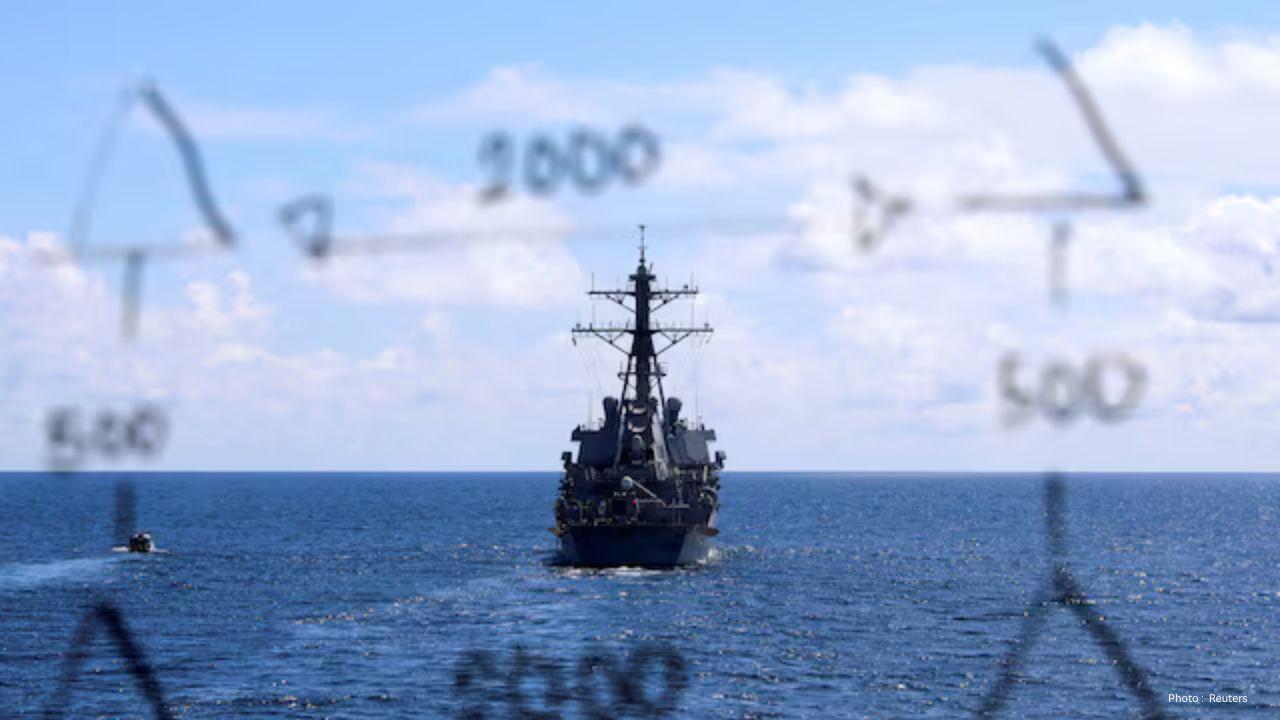
After the strike, a U.S. Navy helicopter was sent to the area. It picked up two survivors from the damaged vessel and brought them to a U.S. warship stationed nearby.
Who Are the Survivors?
So far, U.S. officials have not revealed the names or nationalities of the two survivors. However, three independent sources said they were rescued alive and are currently being held on the Navy ship. It is not clear whether they are drug traffickers or connected to the Venezuelan government.
If the U.S. officially classifies them as prisoners of war, it would mark the first time since President Trump declared a military conflict against “narcoterrorist threats” from Venezuela that such captures have occurred.
Growing Military Tension in the Caribbean
This latest strike is part of a larger military buildup by the United States in the Caribbean region. Over the past few months, the U.S. has deployed:
Guided missile destroyers
F-35 fighter jets
A nuclear submarine
And around 6,500 American troops
President Trump has repeatedly accused Venezuela’s government, led by President Nicolás Maduro, of helping drug traffickers and allowing narcotics to move freely through its waters.
In a speech earlier this week, Trump also confirmed that he had authorized the CIA to carry out secret operations inside Venezuela, which has caused further tension between the two countries.
Venezuela’s Reaction
The Venezuelan government quickly condemned the U.S. attack. In a letter sent to the United Nations Security Council, Venezuela’s Ambassador Samuel Moncada called the strikes “illegal and dangerous.” He asked the U.N. to support Venezuela’s right to control its own territory and seas.
Caracas officials say the U.S. actions are part of a plan to weaken or overthrow President Maduro’s government. They accuse Washington of trying to create chaos under the excuse of fighting drugs.
Legal and Political Concerns
This strike has also raised serious legal questions in the United States.
According to reports seen by Reuters, the Pentagon recently told Congress that President Trump has decided the United States is now “engaged in a non-international armed conflict” in the Caribbean region.
This means the U.S. government is using military laws of war rather than normal law enforcement rules — a move that some Democratic lawmakers and legal experts strongly oppose.
Critics argue that these military strikes and killings may violate international law, especially since they are taking place near another nation’s borders without its permission.
Change in Military Command
Another surprising development is that these counter-narcotics operations will no longer be led by U.S. Southern Command, the Miami-based unit responsible for Latin American military activities.
Instead, a new task force has been formed under the II Marine Expeditionary Force, which is based at Camp Lejeune, North Carolina. This group specializes in quick overseas missions and could be used for more aggressive operations.
On Thursday, Defense Secretary Pete Hegseth also announced that the admiral in charge of Southern Command will step down at the end of the year — two years before his term was supposed to end. The timing of this move has led to new questions about the internal decisions behind these strikes.
Concerns from Lawmakers and Experts
Human rights groups and lawmakers in Washington have expressed worry about the lack of transparency. They have asked for proof that the people targeted in these strikes were indeed involved in drug trafficking and not civilians or fishermen.
In earlier strikes near Venezuela, U.S. military footage showed small boats being blown up completely. The Trump administration claimed 27 suspected traffickers were killed in those operations, but no survivors or physical evidence were presented publicly.
Now, with two living survivors in U.S. custody, many observers say Washington will face pressure to explain what really happened and how the laws of war are being applied.
International Response
Other Latin American countries have stayed mostly silent, though some — like Colombia and Panama — are known to cooperate with U.S. naval operations against drug routes in the Caribbean.
However, Cuba and Nicaragua, both allies of Venezuela, have criticized the U.S. actions, calling them provocations that risk starting a regional conflict.
Meanwhile, U.N. diplomats are reportedly discussing whether this issue should be taken up formally by the Security Council, especially since the U.S. and Venezuela have completely different interpretations of what happened.
What Happens Next
As of now, the two survivors remain on a U.S. Navy ship somewhere in the Caribbean Sea. The Pentagon has not released any pictures or statements about their condition. It is also unclear whether they will be handed over to U.S. law enforcement, international courts, or kept as prisoners of war under military law.
Analysts say this case could become a key test for the Trump administration — showing how far the U.S. is willing to go in using military force against drug trafficking networks.
If the operation is seen as lawful and effective, it could strengthen Trump’s campaign against narcotics in Latin America. But if questions about legality and civilian deaths grow stronger, it might damage U.S. credibility in the region.

The Impact of Consistent Small Investments on Wealth Building
Discover how investing small amounts regularly can positively transform your financial future over t

7.5 Magnitude Earthquake Strikes Japan, Tsunami Alerts Issued
Japan experiences a hefty 7.5 quake, prompting tsunami alerts and safety measures. Stay updated on a
Reopening of the Strait of Hormuz: New Regulations to Impact Global Trade
Iran reopens the strategic Strait of Hormuz with new regulations affecting oil transport and global

Top 10 Must-See Attractions in NYC for First-Time Explorers
Discover essential experiences for first-time visitors to NYC, including attractions, culture, and i

Starbucks Engages Boyu Capital for Major Chinese Expansion
Starbucks teams up with Boyu Capital, selling a majority stake to boost growth and adapt to the Chin
Three Individuals Charged in Massive Meth Trafficking Case in Malaysia
In Malaysia, a married couple and another suspect are charged with trafficking 510kg of meth, facing