Post by : Mina Rahman
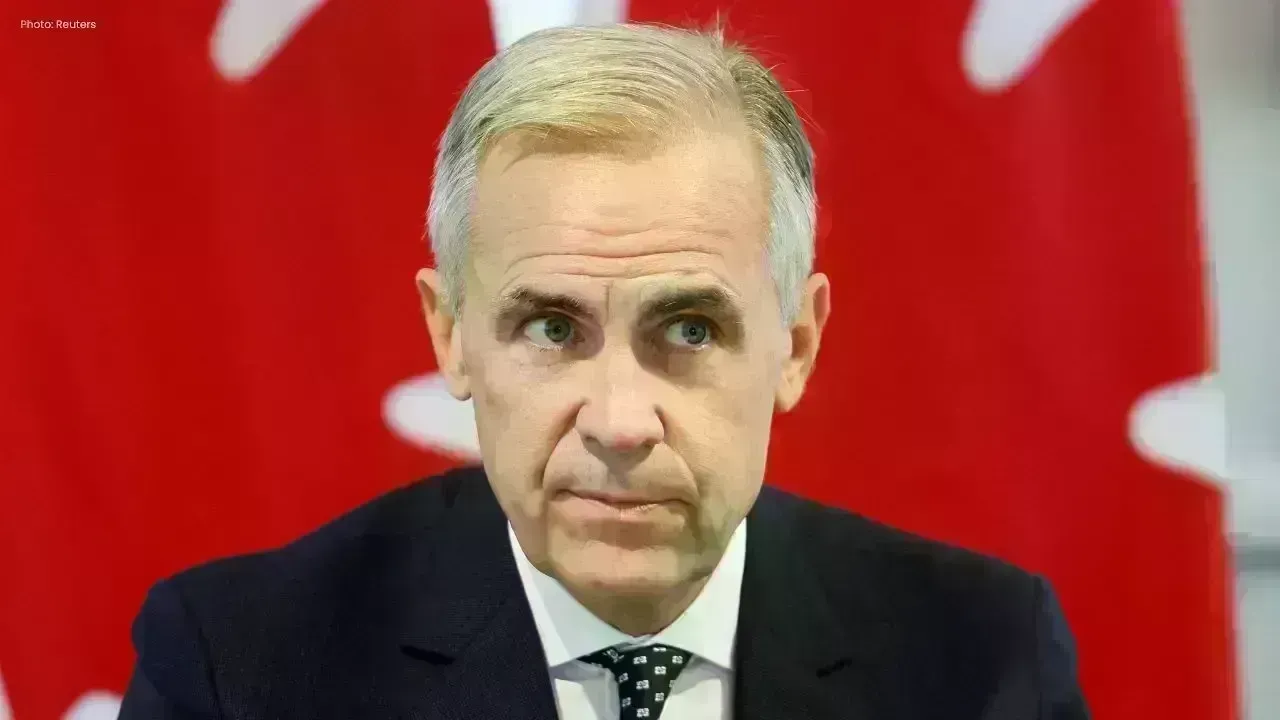
The head of UNAIDS is urging Prime Minister Mark Carney to reconsider his government's plans to reduce foreign aid and health funding, citing significant risks to global equality and the progress made against critical diseases.
During the G20 summit in Johannesburg, Winnie Byanyima, the UNAIDS executive director, appealed to Canada and other donor countries to uphold their international obligations.
"To Prime Minister Carney, Canada, and all donors, I say: remain committed," Byanyima expressed in an interview. "Without global cooperation, disparities among nations will only worsen, creating a more perilous environment as inequalities grow."
Her remarks follow Canada's announcement of its first-ever reduction in its contributions to the Global Fund, a major funding body against AIDS, tuberculosis, and malaria, with the new pledge being 17% lower than in 2022.
The Global Fund supplies critical resources such as mosquito nets and HIV treatments in some of the most impoverished regions globally. Advocates warn that this cut will be most detrimental for countries with vulnerable health systems that heavily rely on donor assistance.
These funding reductions align with the federal budget's decision to slash $2.7 billion in foreign aid over four years, contradicting Carney's earlier campaign promise to maintain aid levels.
Officials defend the cuts as a reversion to pre-pandemic aid spending. During COVID-19, Ottawa increased funding to tackle health crises and disease progression. Notably, the U.S. has also enacted significant reductions in its aid this year.
Byanyima arrived at the summit to unveil a comprehensive report by South Africa highlighting the widening divide between affluent and impoverished nations. The report cautions that economic disparity breeds civil unrest, weakens political unity, and fosters instability.
It calls upon governments to adopt policies aimed at reducing income inequality, enhancing social protections, and recalibrating global financial frameworks that hinder developing nations, aggravated by rising interest rates and climate-related disasters.
Byanyima pointed out Norway as a prime example of long-term commitment to equality, emphasizing Prime Minister Jonas Gahr Støre’s observation about the economic advantages gained through women's workforce participation compared to past oil revenues.
“Reducing inequality both between and within countries leads to more robust economies,” she explained. She also motivated Canada to engage in international efforts to combat tax evasion and illicit financial activities.
Responding to concerns about the funding cuts, Carney justified the government's strategy, stating that while Canada's Global Fund pledge is smaller, its proportion of the fund's total budget has actually risen due to the fund itself facing a decreased budget.
“We’ve made pragmatic decisions to revert our aid budget to pre-COVID levels while still focusing our support where it has the greatest impact, particularly on the African continent,” stated Carney in Johannesburg.
Foreign Affairs Minister Anita Anand supported these statements, asserting that Canada will continue to be a significant donor.
“Canada's contributions remain important, material, and substantial,” Anand proclaimed. “Africa is our largest recipient of international aid, and that support will persist.”
However, critics characterize this shift as a distressing deviation from Canada’s established role in endorsing human rights and development. Bloc Québécois MP Alexis Brunelle-Duceppe expressed concern over an emerging trend that links foreign aid more closely to trade interests.
These funding prospects coincide with preparations for World AIDS Day on Monday, when advocates highlight the world's capabilities in ending the HIV epidemic but lament insufficient financial resources to provide vital treatments to all in need.
Economist Jayati Ghosh, who co-presented the inequality report with Byanyima, argued that Canada should back reforms that empower developing nations to manufacture essential medications. She highlighted that stringent intellectual property regulations keep drug prices elevated, blocking poorer nations from producing their own treatments.
This issue became particularly pronounced during the COVID-19 pandemic, as many low-income countries faced extended delays for vaccines, often receiving fewer doses than guaranteed while being barred from local production.
“Governments must look beyond foreign aid,” Ghosh urged. “They must examine the global regulations that they support, which worsen conditions for developing countries.”









Rashmika Mandanna and Vijay Deverakonda to Tie the Knot on February 26
Rashmika Mandanna and Vijay Deverakonda are set to marry in an intimate Udaipur ceremony on February

FIFA Upholds 2026 World Cup Ticket Pricing Despite Fan Dissatisfaction
FIFA defends its ticket pricing for the 2026 World Cup, introducing a $60 tier to enhance affordabil

Trump Asserts Role in India-Pakistan Conflict Resolution, India Refutes Claims
Trump asserts he facilitated peace between India and Pakistan, but India firmly denies any US involv

Telangana Women Tragically Killed in California Car Accident, Families Request Assistance
Two Telangana women in the US die in a tragic car crash, prompting families to seek government suppo

Dhurandhar Achieves Remarkable Success, Surpassing ₹1100 Cr Worldwide
Ranveer Singh's Dhurandhar continues its box office dominance, crossing ₹1100 crore globally and sur

Asian Markets Climb as Dollar Weakens and Silver Surpasses $80 on Rate Cut Anticipation
Asian equities hit six-week highs while silver crosses $80, buoyed by expectations of Federal Reserv