Post by : Saif Nasser
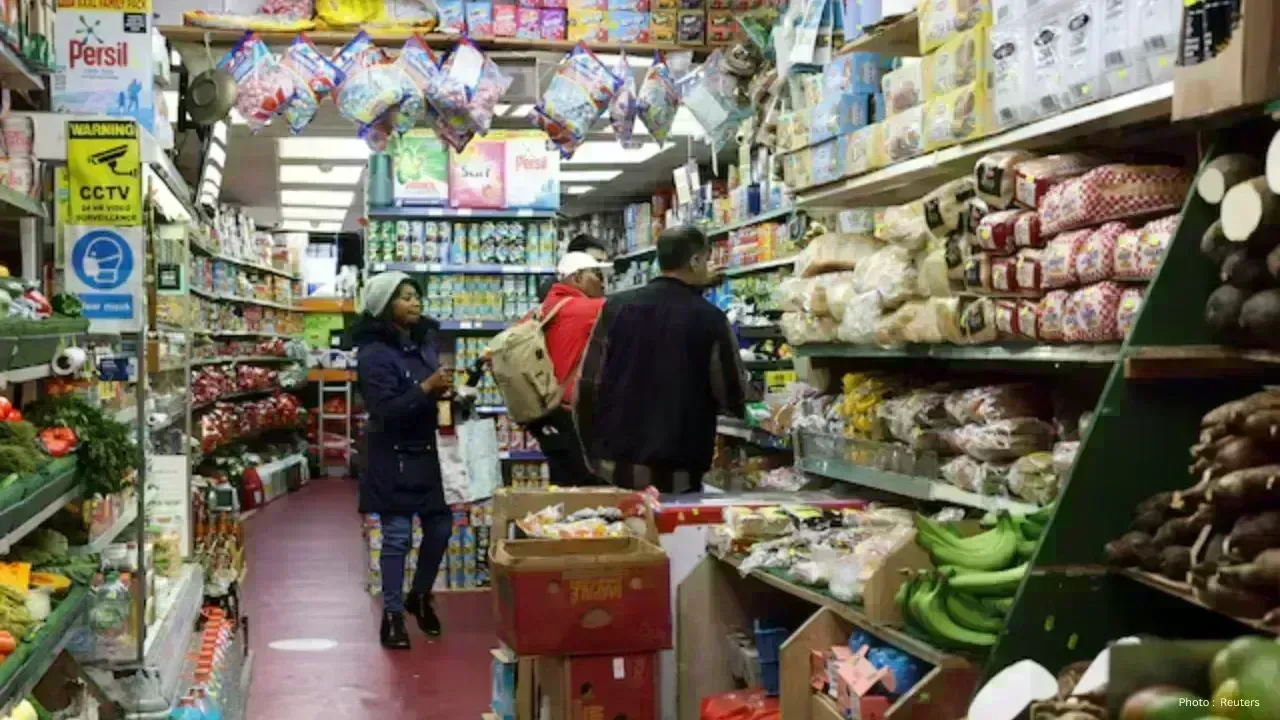
Grocery price inflation in the United Kingdom has shown signs of slowing, offering temporary relief to households that have struggled with rising living costs over the past few years. However, economic experts warn that international conflicts and global supply concerns could still influence food prices in the coming months.
Recent market data suggests that the pace of increase in supermarket prices has eased compared to earlier periods when inflation placed heavy pressure on consumers. Lower growth in grocery costs has brought some comfort to families dealing with expensive energy bills, housing costs, and other daily expenses.
Retail analysts say improved supply conditions and stronger competition among supermarkets have helped slow the rise in food prices. Promotional discounts, stable agricultural production, and adjustments in supply chains have also contributed to the gradual improvement seen across several product categories.
Despite the positive signs, experts believe the situation remains uncertain because international developments can quickly affect global markets. Ongoing geopolitical conflicts and disruptions linked to shipping routes or energy supplies may still create future pressure on transportation and production costs.
The United Kingdom has faced significant inflation challenges since the pandemic period, with food and household expenses becoming a major concern for millions of citizens. Rising prices affected consumer spending habits, forcing many families to reduce unnecessary purchases and search for cheaper alternatives.
Economic observers note that grocery inflation plays an important role in public confidence because food is a daily necessity. Even small increases in supermarket prices can strongly affect household budgets, especially for lower-income families.
Supermarkets across Britain have been competing aggressively to attract customers during the cost-of-living crisis. Retail chains introduced price cuts, loyalty offers, and promotional campaigns to maintain consumer demand while facing pressure from suppliers and transportation costs.
Industry experts believe lower inflation does not necessarily mean prices are returning to earlier levels. In many cases, products remain expensive compared to previous years, but the speed of price increases has started to slow.
Global energy markets also continue influencing food costs because fuel prices affect transportation, manufacturing, and agricultural operations. Any disruption in oil or shipping sectors can quickly impact supply chains and increase operational expenses for businesses.
Economic uncertainty linked to international conflicts remains another important factor. Financial markets closely monitor geopolitical developments because instability can affect trade routes, commodity prices, and overall economic confidence.
Consumers in Britain continue to adjust spending habits as inflation remains higher than many households would prefer. Shoppers are increasingly comparing prices, purchasing store-brand products, and reducing non-essential spending to manage monthly expenses.
Food producers and retailers are also facing challenges related to labor costs, climate conditions, and changing supply demands. Agricultural sectors across Europe have experienced pressure from weather-related issues and rising operational expenses during recent years.
Economists say slowing grocery inflation could provide some support to the wider economy by improving consumer confidence and reducing pressure on household finances. However, they also warn that long-term stability depends on international market conditions and domestic economic policies.
The Bank of England and government officials continue monitoring inflation closely because price stability remains one of the most important economic priorities. Policymakers are expected to remain cautious while evaluating interest rates and broader economic conditions.
Retail experts believe supermarkets will continue focusing on affordability as competition in the sector remains strong. Consumers are likely to remain price-sensitive until living costs show more consistent improvement across multiple areas of the economy.
The latest inflation figures highlight the close connection between local food prices and global economic developments. Events taking place far from Britain can still influence supply chains, transportation systems, and retail costs within the country.
Households across the United Kingdom are expected to continue watching grocery prices carefully in the coming months. Any future rise in energy costs or international trade disruptions could again place pressure on supermarket prices and consumer budgets.
The recent easing in grocery inflation therefore provides cautious optimism rather than complete economic relief. While conditions have improved compared to earlier periods of sharp price growth, uncertainty in global markets means consumers and businesses remain alert about future cost changes.










Meta Unveils Subscription Plans for Instagram, Facebook, and WhatsApp
Meta introduces new subscription plans for users of Instagram, Facebook, and WhatsApp, featuring enh

Suvarna Joy on Education Leadership, Resilience, and Building Purpose Through Adversity in the UAE
Suvarna Joy shares her journey of education leadership, motherhood, faith, and resilience within the

Anticipated Dates for UAE Eid Al Adha 2026 Unveiled by Astronomical Experts
Experts predict Eid Al Adha 2026 in the UAE to start on May 27, prompting early holiday planning amo

DAE Achieves Remarkable Growth in Q1 2026 With Record Revenue
Dubai Aerospace Enterprise announces impressive financial results for Q1 2026, reflecting a surge in

Price Increase for Sony PS5 in Southeast Asia Effective May 1
Sony announces a price increase for the PS5 across Southeast Asia starting May 1, 2026, impacting ga

Potential ‘Super El Niño’ in 2026: Understanding the Climate Risks
Could a Super El Niño emerge in 2026? Discover its implications and potential global climate impacts




