Post by : Anees Nasser
Once upon a time, a “strong password” seemed adequate. By mixing numbers, symbols, and uppercase letters, users felt secure. But that sense of security is now outdated.
Data breaches have become commonplace. Password databases are exposed regularly. Phishing attacks appear legitimate. Malware can track your keystrokes. When a password gets compromised, it swiftly circulates in underground markets. Hackers are no longer guessing passwords; they are purchasing them.
The focus has shifted from “Is my password secure?” to “How soon will my password be compromised?”
And for many, this answer is alarming.
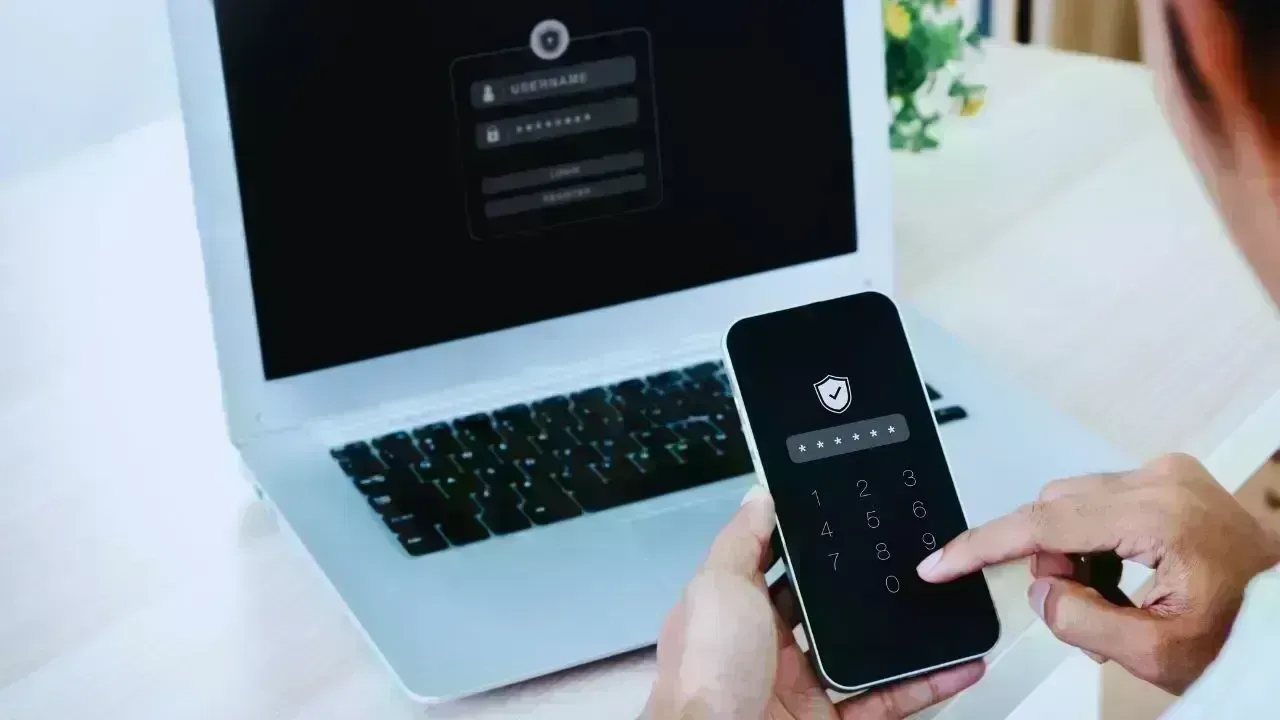
Implementing two-factor authentication establishes an additional verification step between an intruder and your account. Even if they acquire your password, they require a second piece of evidence—typically your phone, a fingerprint, or a temporary code.
Now, your account needs two distinct forms of identification rather than just one.
The second verification can come from:
A shortcode generated for one-time use
A notification approval sent to your device
Biometric verification such as a fingerprint or facial recognition
Utilizing a hardware security key
A system for backup codes
This effectively transforms a single lock into a more secure two-door system.
Hackers tend to shy away from accounts protected by two-factor authentication for a straightforward reason: it complicates their automated attacks.
Many instances of account theft rely on automation, employing scripts to test countless passwords against various sites. When a second, real-time code is requested, the attack falters, as machines cannot receive text messages or confirm logins.
Two-factor authentication doesn’t render hacking impossible.
Rather, it decelerates the process.
And slowing down crime reduces its occurrence.
Initial attacks rarely target bank accounts. Instead, they focus on the softer targets.
Such as:
Once compromised, attackers gain access to reset passwords on other sites through email. A single weak account can turn into the master key for your entire online existence.
Typically, individuals don’t lose data first.
They lose access.
While malware is conspicuous, data leaks operate stealthily.
Once your details are compromised:
Hackers are patient.
They bide their time.
They methodically sift through accounts.
They monitor your actions.
A year later, compromised accounts can still face breaches because many individuals neglect to change their passwords.
Thankfully, two-factor authentication provides a buffer.
Even leaked passwords lose their potency.
Many assume that only financial institutions require robust security.
That’s a misconception.
An online shopping account contains your home address.
An Uber Eats app reveals your daily patterns.
A social media profile discloses your connections.
An email account controls identity recoveries.
A cloud storage service holds sensitive documents.
Hackers no longer solely pursue bank assets.
They target identities.
And those identities stem from seemingly harmless apps.
Resistance to two-factor authentication isn’t usually due to complexity.
It's often rooted in perceptions of inconvenience.
That extra verification step can feel bothersome when:
A login could have been seamless.
A tap introduces a delay.
An app prompts for a code.
But such inconvenience is precisely what criminals seek to avoid.
If a security measure feels overly smooth, it may be frail.
Protection that requires a minor inconvenience tends to be more effective.
Individuals impacted by cyberattacks often say:
“I never believed it would happen to me.”
Many people presume:
Hackers show little concern for individual identity.
They focus on what exploits can yield.
Automation doesn’t discriminate.
When an account gets hijacked:
Irreplaceable memories disappear.
Funds may be transferred without consent.
Contact networks may be compromised.
Your name may be tarnished.
Data may be irretrievably lost.
And recovery often drags on.
Sometimes, it can’t be achieved at all.
Two-factor authentication doesn’t merely safeguard accounts.
It shields your precious memories.
Using text messages for verification surpasses relying on passwords alone.
However, attackers can now compromise phone numbers through SIM swapping.
Superior security approaches consist of:
Authentication via dedicated applications
Utilizing physical security keys
Device-level security verification
The more robust the second verification element, the better protected your account is.
When activating two-factor authentication, users often neglect to save their backup codes.
This can be perilous.
If you misplace your phone and lack backups, you risk permanent lockout.
Best practices include:
Printing out backup codes
Saving them in a secure offline location
Creating multiple copies
Utilizing secure storage options
Security practices devoid of recovery options equate to a risk.
Many mistakenly believe that strong security is only necessary for tech experts.
That’s an erroneous belief.
Cybersecurity has become as fundamental as securely locking your door.
No specialized knowledge is necessary.
All that’s needed is the intent to act.
Financial losses can be reversed.
However, trust can be irreparably damaged.
When accounts are compromised:
Victims often feel violated.
They may experience shame.
Feelings of helplessness and anxiety arise.
There’s an overwhelming sense of exposure.
Hacking feels deeply personal.
Because indeed, it is.
Your digital persona is intertwined with your real-world identity.
Just like you secure doors at night, your accounts require that same vigilance.
Two-factor authentication should be implemented for:
Email accounts
Banking applications
Payment platforms
Social media
Cloud storage facilities
E-commerce sites
Work-related systems
Security is not discretionary.
It is essential routine.
In the absence of reliable security methods:
Identity theft will proliferate
Online scams will escalate
Digital trust will dissipate
Privacy will fade
Financial confidence will wane
The internet is poised to become a perilous space.
Unless users evolve.
When robust verification measures are implemented:
Fraudulent activities are more challenging
Personal privacy strengthens
Access becomes more secure
Trust is rebuilt
Assurance is restored
Minor adjustments lead to significant protection.
Two-factor authentication can no longer be seen as optional.
It’s imperative.
Not merely due to a sense of impending danger.
But because the threat is already present.
Every log-in serves as a portal.
And each portal demands protection.
The second verification factor acts as your last line of defense.
Utilize it.
DISCLAIMER
This article is for general informational purposes only and does not constitute technical or cybersecurity advice. Readers are encouraged to consult qualified professionals for personalized digital security recommendations.










Anticipated Dates for UAE Eid Al Adha 2026 Unveiled by Astronomical Experts
Experts predict Eid Al Adha 2026 in the UAE to start on May 27, prompting early holiday planning amo

DAE Achieves Remarkable Growth in Q1 2026 With Record Revenue
Dubai Aerospace Enterprise announces impressive financial results for Q1 2026, reflecting a surge in

Price Increase for Sony PS5 in Southeast Asia Effective May 1
Sony announces a price increase for the PS5 across Southeast Asia starting May 1, 2026, impacting ga

Potential ‘Super El Niño’ in 2026: Understanding the Climate Risks
Could a Super El Niño emerge in 2026? Discover its implications and potential global climate impacts

Global Energy Crisis Intensifies: Markets React to Oil Supply Challenges
Markets are on edge as oil disruptions escalate, influencing prices and economic stability. Explore

Must-See Tourist Spots in London You Can't Overlook
Explore London's essential attractions, from royal landmarks to vibrant markets, ensuring an unforge




