Post by : Saif Nasser
President Donald Trump has stepped back from his threat to impose heavy tariffs on European allies over Greenland, marking a sudden change in tone after days of rising tension. The decision came after Trump reached an understanding with NATO leaders on a possible future deal focused on Arctic security. This move helped calm fears of a major dispute between the United States and Europe.
Earlier, Trump had warned that he would impose tariffs on Denmark and seven other European countries unless they agreed to negotiations that could lead to U.S. control over Greenland. The planned tariffs were set to start at 10 percent next month and rise to 25 percent by June. Many European leaders strongly rejected the idea, saying Greenland is not for sale and belongs to the Kingdom of Denmark.
Trump announced the reversal on his social media platform, saying he and NATO’s secretary general had agreed on a framework for future cooperation in the Arctic. He gave few details but said discussions were continuing, including talks linked to a new U.S. missile defense system called the Golden Dome. This system would place U.S. weapons in space for the first time and is expected to cost $175 billion.
One idea discussed among NATO members, according to European officials, is allowing the United States to expand its military presence in Greenland by building more bases. Greenland already hosts a major U.S. military base, and American officials argue the island is important for monitoring threats from Russia and China in the Arctic. It is still unclear whether this idea is part of the framework Trump mentioned.
Trump has a history of threatening tariffs and then backing down. Earlier this year, he announced broad import taxes on many countries but eased his stance after markets reacted sharply. This time, however, his comments caused deeper concern because they appeared to challenge NATO itself, one of the world’s strongest military alliances.
Speaking at the World Economic Forum in Davos, Switzerland, Trump said the U.S. had done far more for Europe over many decades and described Greenland as a small request in return. He said he would not use force to take the island but warned that the U.S. would remember those who refused to cooperate. These remarks alarmed European leaders and raised fears of a serious break within NATO.
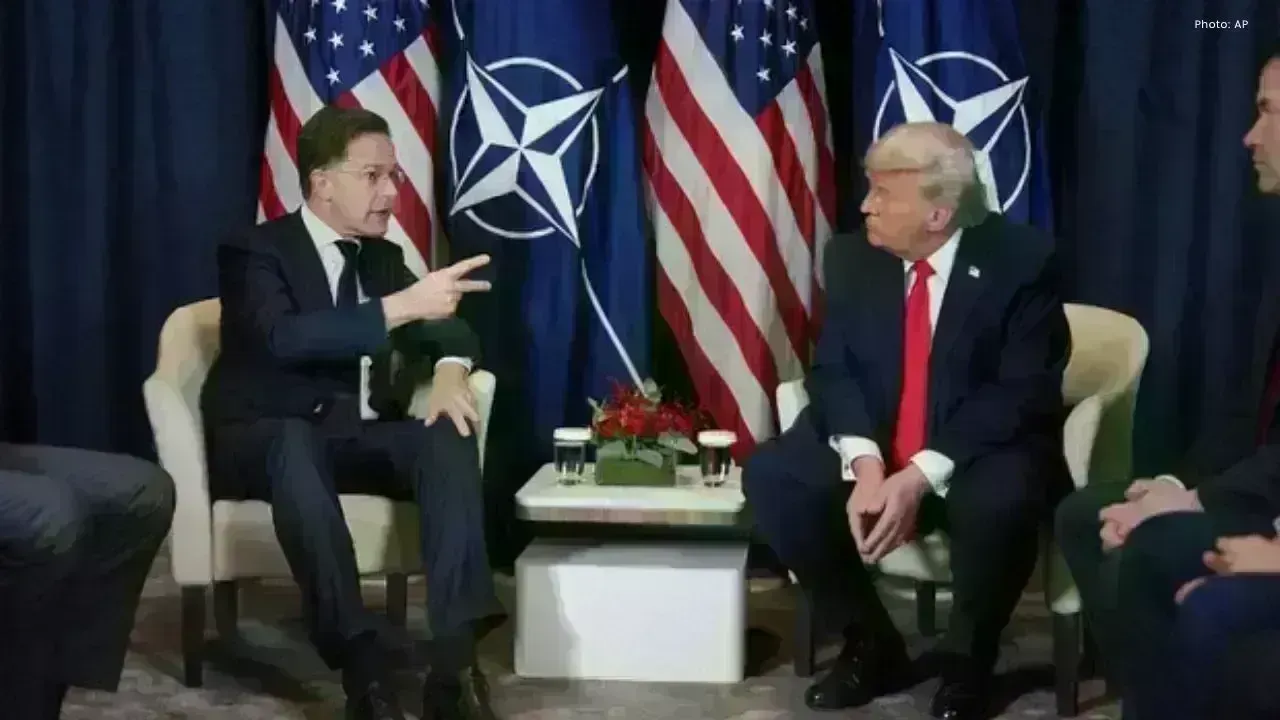
NATO Secretary General Mark Rutte responded by clearly stating that the alliance would stand by the United States if it were ever attacked. Shortly after that assurance, Trump announced he was canceling the tariffs. Denmark welcomed the move, with its foreign minister saying it was positive that Trump ruled out taking Greenland by force and paused what he called a trade war with Europe.
Trump says his interest in Greenland is based on national security. He argues that control of the island is important as global powers increase their presence in the Arctic. Still, Denmark and other NATO members have insisted that Danish sovereignty over Greenland is a firm red line that cannot be crossed.
The tension has also been felt in Greenland itself. The local government urged citizens to prepare for possible crises and released a guide advising people to keep enough food, water, and supplies for five days. Some residents said Trump’s words felt threatening, even if they believed he was unlikely to act. Many described his comments as disrespectful to the people of Greenland.
Financial markets reacted positively to Trump’s decision to drop the tariff threat, recovering after earlier losses. U.S. officials were also relieved, as they feared the dispute could damage wider foreign policy goals and weaken alliances.
While Trump’s speech in Davos was meant to focus on economic issues at home, Greenland dominated his remarks. He even mistakenly referred to Greenland as Iceland several times, drawing criticism and confusion. Despite the reversal on tariffs, the situation shows how quickly global tensions can rise when trade threats and security concerns mix.
For now, Trump’s decision has eased immediate pressure on U.S.-European relations. However, questions remain about future talks on Arctic security and how far the United States will push its interests in the region. The episode highlights the fragile balance between diplomacy, national security, and alliance trust in a changing world.



7.5 Magnitude Earthquake Strikes Japan, Tsunami Alerts Issued
Japan experiences a hefty 7.5 quake, prompting tsunami alerts and safety measures. Stay updated on a

Reopening of the Strait of Hormuz: New Regulations to Impact Global Trade
Iran reopens the strategic Strait of Hormuz with new regulations affecting oil transport and global

Top 10 Must-See Attractions in NYC for First-Time Explorers
Discover essential experiences for first-time visitors to NYC, including attractions, culture, and i

Starbucks Engages Boyu Capital for Major Chinese Expansion
Starbucks teams up with Boyu Capital, selling a majority stake to boost growth and adapt to the Chin

Three Individuals Charged in Massive Meth Trafficking Case in Malaysia
In Malaysia, a married couple and another suspect are charged with trafficking 510kg of meth, facing