Post by : Saif Nasser
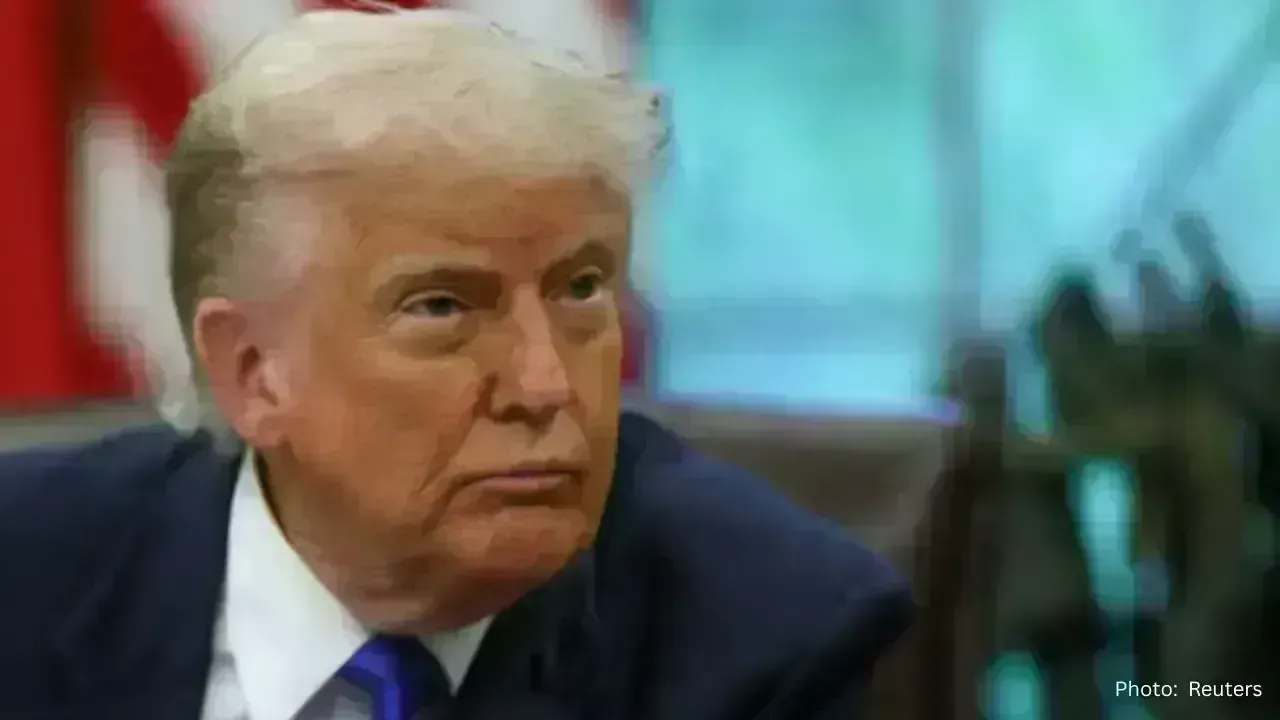
U.S. President Donald Trump has announced a tough new trade warning aimed at Iran and its global partners. He said that any country doing business with Iran will now face a 25% tariff on all trade with the United States. The move comes as Iran faces its biggest anti-government protests in years and Washington considers how to respond.
Trump made the announcement on social media, calling the order “final and conclusive.” However, no formal document explaining the policy has yet appeared on the White House website. The administration has also not clarified the legal authority behind the move or whether it will apply to every country that trades with Iran.
Tariffs are paid by U.S. companies that import goods from foreign countries. This means the cost of the tariff would likely fall on American businesses and consumers, while also pressuring foreign governments to rethink their ties with Iran.
Iran has been under heavy U.S. sanctions for many years. As a major oil producer, it exports most of its crude oil to China, with Turkey, Iraq, the United Arab Emirates, and India also among its key trading partners. The new tariff threat could place these countries in a difficult position, forcing them to choose between trade with Iran and access to the U.S. market.
China reacted quickly to Trump’s statement. The Chinese embassy in Washington criticized the plan, saying it opposes what it called illegal and unfair sanctions. A spokesperson warned that trade wars help no one and said China would take steps to protect its own interests.
Trump’s announcement comes at a tense moment for Iran. The country is seeing widespread protests that began over rising prices and economic hardship. These protests have since turned into strong calls for an end to clerical rule. A U.S.-based human rights group says nearly 600 people have died since the demonstrations began in late December, including protesters and security forces.
At the same time, Trump has sent mixed signals. While increasing pressure with tariff threats and warnings of possible military action, he has also said that diplomacy remains his first choice. U.S. officials have confirmed that communication channels with Tehran are still open, and Trump has suggested the U.S. could meet Iranian officials.
This approach reflects a pattern seen throughout Trump’s second term. He has frequently used tariffs as a tool to influence other countries, whether over trade disputes or political disagreements. However, his trade strategy is now facing legal challenges, with the U.S. Supreme Court reviewing the legality of several existing tariffs.
Critics argue that broad tariffs could hurt the global economy and strain U.S. relations with allies. Supporters say strong economic pressure is necessary to push Iran’s leaders toward change, especially during a time of internal unrest.
As Iran’s crisis deepens and global reactions unfold, Trump’s tariff threat adds another layer of uncertainty. The coming weeks will show whether this move leads to negotiations, legal battles, or further tension in an already unstable region.




The Impact of Consistent Small Investments on Wealth Building
Discover how investing small amounts regularly can positively transform your financial future over t

7.5 Magnitude Earthquake Strikes Japan, Tsunami Alerts Issued
Japan experiences a hefty 7.5 quake, prompting tsunami alerts and safety measures. Stay updated on a

Reopening of the Strait of Hormuz: New Regulations to Impact Global Trade
Iran reopens the strategic Strait of Hormuz with new regulations affecting oil transport and global

Top 10 Must-See Attractions in NYC for First-Time Explorers
Discover essential experiences for first-time visitors to NYC, including attractions, culture, and i

Starbucks Engages Boyu Capital for Major Chinese Expansion
Starbucks teams up with Boyu Capital, selling a majority stake to boost growth and adapt to the Chin

Three Individuals Charged in Massive Meth Trafficking Case in Malaysia
In Malaysia, a married couple and another suspect are charged with trafficking 510kg of meth, facing