Post by : Anees Nasser
Historically, air conditioning symbolized comfort and progress. A cool dwelling indicated status and ensured safety from rising temperatures. Now, extreme heat has redefined cooling as a necessity for survival, highlighting its implications for the environment.
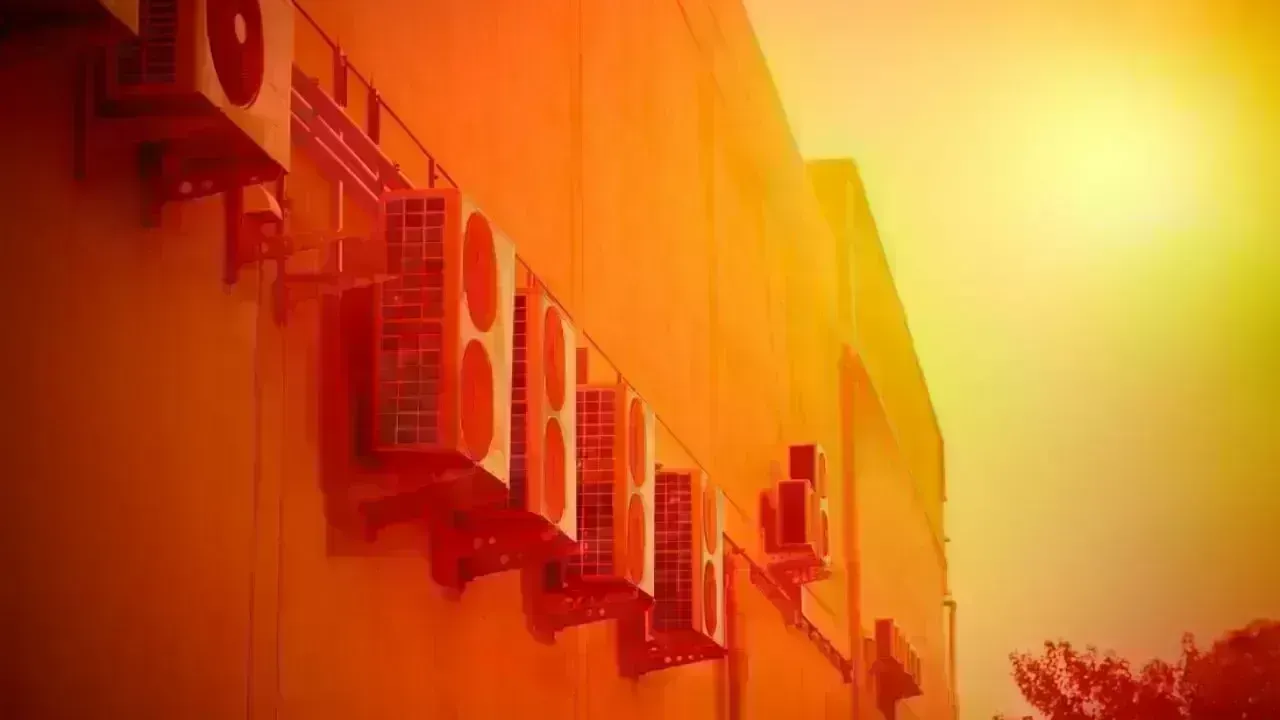
Every new air conditioner installed contributes to increasing electricity demand. Prolonged usage heightens energy consumption, much of which is still derived from fossil fuels. Consequently, we face a paradox where the act of cooling exacerbates heat through emissions.
The focus on cooling has transformed it into a global environmental issue.
As the planet heats up, more individuals rely on air conditioning, which in turn releases heat into the atmosphere and requires electricity predominantly sourced from non-renewable energy. Each chilling degree indoors translates to an increase in heat outside.
Urban areas develop what researchers term "heat pockets," where concrete absorbs and gradually emits heat. When air conditioners direct warm air into these hot streets, urban temperatures soar, necessitating even greater reliance on cooling systems, leading to a vicious cycle.
While individuals seek to cool their homes, they collectively contribute to warming their cities.
Although the global population steadily increases, the demand for electricity, especially from cooling systems, is escalating at a much faster pace. In hotter regions, summer electricity loads have hit record levels. Power grids are becoming stressed, leading to frequent blackouts and unreliable cooling just when it’s essential.
Air conditioning consumption directly influences national energy policies, pushing governments to construct additional power plants to avert shortages. These facilities, in turn, contribute more emissions to the environment, thereby exacerbating climate risks.
Electricity demand is relentless, and so is its climate impact.
Most residential buildings were designed for climates that no longer exist. They often lack the structural integrity to endure prolonged heat, with windows, roofs, and walls that trap and radiate heat long after the sun sets.
Urban development frequently prioritizes expediency over sustainability. Housing projects often favor quick construction over crucial aspects like insulation and ventilation, which would mitigate heat retention. Consequently, apartments heat up during summer afternoons.
In such a scenario, air conditioning becomes the primary defense against stifling heat.
Cooling systems depend on refrigerants — chemicals that facilitate heat absorption and release. When these leak, they can be astronomically more damaging to climate than carbon dioxide.
Even negligible leaks from countless systems can result in significant environmental harm. Disposal practices often release these harmful substances directly into the atmosphere, worsening the situation.
Most people remain unaware of this damage, but the atmosphere retains the memory.
Nations with growing economies are witnessing an increase in air conditioner sales. This economic uplift enables more households to purchase cooling mechanisms, especially in already warming regions, creating a paradox where development heightens climate stress.
Governments face a dilemma: while cooling is lifesaving during heat waves for vulnerable populations, unchecked growth in demand risks overwhelming energy systems. Authorities grapple with issues of sustainability, equity, and essential survival as cooling policy merges with environmental policy.
Climate impacts are not equitably distributed. Wealthier individuals can afford air conditioning, while underprivileged communities must endure extreme heat without respite. Many informal settlements lack reliable electricity and proper insulation, resulting in life-threatening heat exposure.
Heat-related illnesses disproportionately afflict those without cooling, prompting migration patterns as individuals flee overheating areas in search of more livable climates.
Injustice regarding climate originates within households.
Rising temperatures are rendering cooling systems essential infrastructure. Hospitals, schools, and elder care facilities depend on air conditioning not merely for comfort but for survival. Heat stress can lead to organ failure, dehydration, and cardiovascular issues.
With climate change, cooling is evolving into a health-centric issue. Extreme heat dictates who can live safely and who cannot.
Heat is no longer perceived as a seasonal concern.
It is fundamentally a health issue.
Engineers are tirelessly working to develop modern, efficient, and green cooling solutions. Innovations like intelligent thermostats, solar-powered cooling, reflective roofing, and alternative refrigerants are emerging.
Some innovative designs optimize energy consumption by adjusting based on occupancy, while others store cooling for later use, alleviating the burden during peak energy demands. These advancements inspire hope, but their uptake remains slow and costly.
Technology can facilitate change, but only with accessibility.
Even as authorities deliberate on policies and industries revamp their systems, individual household decisions retain significance. Cooling frequency, temperature settings, and home maintenance can all influence energy requirements.
Small modifications can mitigate damage. Enhanced insulation reduces reliance on cooling systems. Natural ventilation can be effective if harnessed correctly. Choosing energy-efficient devices contributes to lower energy usage. Utilizing shaded curtains can prevent excess heat from entering the home.
Every home can make an impactful change.
Urban planning is evolving. Future cities will prioritize airflow, shade, and reflective surfaces, while green spaces will be integral to city infrastructure rather than mere aesthetics. Public cooling areas are projected to be developed like public parks.
Architectural strategies will shift from combating climate to collaborating with it. Cities that resist adaptation risk becoming unbearable heat islands.
Climate change demands a reimagining of urban designs.
Failure to address the surging demand for cooling risks creating fragile energy systems. Power outages can disrupt businesses, educational institutions, and public transport, culminating in expenditures of billions for rebuilding infrastructure. Healthcare systems struggle under the weight of heat-induced emergencies.
What may seem inexpensive to disregard now could manifest as unaffordable challenges in the future.
Climate change carries its financial consequences.
Cooling should not be villainized; it is essential.
However, how we implement cooling will determine our future's viability. Public dialogue must extend beyond mere comfort and delve into its wider consequences. Understanding energy consumption at home is key to climate literacy.
Awareness is the pivotal step toward solution.
Home cooling has evolved beyond just a means to escape the heat. It's now intricately linked with global challenges concerning energy consumption, environmental impact, and social justice. Every air conditioning unit is intricately connected to broader planetary dynamics.
The real question isn't about deserving comfort.
It's about ensuring that comfort can persist alongside responsible practices.
Ultimately, the climate will provide the answers.
DISCLAIMER
This article serves for informational purposes only. It is not intended to replace professional environmental or energy advice. Readers are urged to adhere to official climate recommendations and green building practices while considering home improvements.










Anticipated Dates for UAE Eid Al Adha 2026 Unveiled by Astronomical Experts
Experts predict Eid Al Adha 2026 in the UAE to start on May 27, prompting early holiday planning amo

DAE Achieves Remarkable Growth in Q1 2026 With Record Revenue
Dubai Aerospace Enterprise announces impressive financial results for Q1 2026, reflecting a surge in

Price Increase for Sony PS5 in Southeast Asia Effective May 1
Sony announces a price increase for the PS5 across Southeast Asia starting May 1, 2026, impacting ga

Potential ‘Super El Niño’ in 2026: Understanding the Climate Risks
Could a Super El Niño emerge in 2026? Discover its implications and potential global climate impacts

Global Energy Crisis Intensifies: Markets React to Oil Supply Challenges
Markets are on edge as oil disruptions escalate, influencing prices and economic stability. Explore

Must-See Tourist Spots in London You Can't Overlook
Explore London's essential attractions, from royal landmarks to vibrant markets, ensuring an unforge




