
Post by : Anees Nasser
The vision of traveling to space has long been ingrained in human aspirations, often portrayed in fiction as a distant goal. Yet, with recent breakthroughs in aerospace technology and major investments from private enterprises, this dream is becoming increasingly tangible. The potential for private space stations and orbital hotels is fast approaching, reshaping our understanding of travel beyond Earth.
Initially, space tourism was an exclusive affair limited to astronauts and a small group of affluent individuals. The early 2000s marked the debut of private space tourists who ventured to the International Space Station (ISS) aboard Russian Soyuz crafts. These expensive missions catered to a very niche clientele.
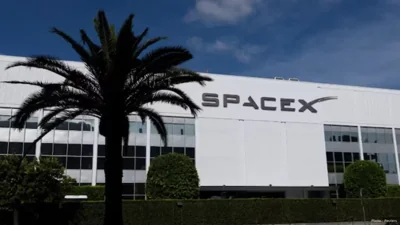
However, the scene has radically transformed over recent years. Enterprises such as SpaceX, Blue Origin, and Virgin Galactic have innovated technologies, enabling more regular and affordable space travel. These advancements open the door to private space stations and hotels that promise exceptional experiences for tourists beyond the confines of Earth’s atmosphere.
The ISS has functioned as a cornerstone for scientific endeavors and global collaboration in space for over twenty years. Yet, with NASA planning to retire the ISS by 2030, there is a significant opportunity for private firms to assume responsibilities in low-Earth orbit.
Several private companies are diligently working to establish commercial space stations:
Axiom Space: Set to launch a commercial space station by 2028, initially as an ISS module, eventually evolving into an independent entity that will cater to researchers and tourists alike.
Orbital Reef: A joint venture between Blue Origin and Sierra Space, Orbital Reef is conceived as a versatile commercial hub in space, supporting scientific, manufacturing, and tourism activities.
Starlab: This modular space station is being developed by Voyager Technologies in collaboration with Airbus, intended for scientific research and commercial use, with plans for launch using SpaceX’s Starship.
These endeavors indicate a progressive shift towards privatization in space, allowing commercial entities to undertake functions once reserved for governmental space agencies.
The idea of space hotels is rapidly gaining traction, with an array of companies presenting designs for accommodations in orbit:
Voyager Station: Developed by Orbital Assembly Corporation, this luxury space hotel is designed to host up to 400 guests and includes artificial gravity for a more comfortable experience.
Pioneer Station: A more compact and cost-effective option from Orbital Assembly Corporation, Pioneer Station will host 28 guests and aims to commence operations earlier than Voyager Station.
These space hotels promise extraordinary experiences, offering views of Earth from space, the sensation of microgravity, and the excitement of cosmic travel. They highlight the evolution of tourism, broadening the scope of where and how we explore.
The establishment of private space stations and hotels comes with considerable technological obstacles. Key considerations include:
Life Support Systems: Ensuring a stable supply of breathable air, clean water, and food is vital for extended stays in space.
Radiation Protection: Increased exposure to cosmic radiation in space necessitates robust shielding to safeguard travelers’ health.
Artificial Gravity: The effects of prolonged microgravity, such as muscle atrophy and diminished bone density, call for solutions like creating artificial gravity through centrifugal force.
Spacecraft Design: Developing safe and efficient spacecraft for transporting tourists to and from space is essential, considering factors such as launch, re-entry, and safety protocols.
Companies like SpaceX and Blue Origin are leading the charge in tackling these challenges, focusing on reusable launch systems and human-capable spacecraft.
Creating private space stations and hotels demands significant financial investment. The costs linked to research, development, construction, and operational efficiency are substantial. Nevertheless, the potential for revenue through tourism, scientific contracts, and manufacturing activities in space is a compelling business proposition.
Regulatory frameworks will play an indispensable role in shaping the future of space tourism. International treaties and domestic policies must address issues such as space traffic management, liability concerns, and environmental protections.
As we look to the future, the prospects for space tourism appear bright. With advancements in technology, lower launch expenses, and increasing public enthusiasm, space tourism is on the brink of becoming mainstream. By the mid-2030s, projections suggest that a network of commercial space stations could accommodate hundreds of residents, researchers, and tourists, crafting an orbital economy that extends human reach beyond Earth.
The emergence of private space stations and hotels signifies a pivotal advancement in our ability to explore and commercialize space. Despite existing challenges, the substantial progress made indicates that the possibility of off-Earth tourism is not merely a dream, but a forthcoming reality.
This article provides insights into current initiatives surrounding private space stations and tourism, refraining from endorsing any specific entities while aiming to educate readers on the developments and obstacles present in this evolving landscape.








Anticipated Dates for UAE Eid Al Adha 2026 Unveiled by Astronomical Experts
Experts predict Eid Al Adha 2026 in the UAE to start on May 27, prompting early holiday planning amo

DAE Achieves Remarkable Growth in Q1 2026 With Record Revenue
Dubai Aerospace Enterprise announces impressive financial results for Q1 2026, reflecting a surge in

Price Increase for Sony PS5 in Southeast Asia Effective May 1
Sony announces a price increase for the PS5 across Southeast Asia starting May 1, 2026, impacting ga

Potential ‘Super El Niño’ in 2026: Understanding the Climate Risks
Could a Super El Niño emerge in 2026? Discover its implications and potential global climate impacts

Global Energy Crisis Intensifies: Markets React to Oil Supply Challenges
Markets are on edge as oil disruptions escalate, influencing prices and economic stability. Explore

Must-See Tourist Spots in London You Can't Overlook
Explore London's essential attractions, from royal landmarks to vibrant markets, ensuring an unforge




