Post by : Shweta
The SMILE mission, set to launch in 2026, emphasizes a critical issue in Europe’s space landscape: the stark contrast between innovative scientific ventures and obsolete space weather monitoring systems. While experts gear up for this advanced mission, the primary spacecraft utilized for solar storm alerts dates back to 1995, surpassing its expected operational lifespan by decades.
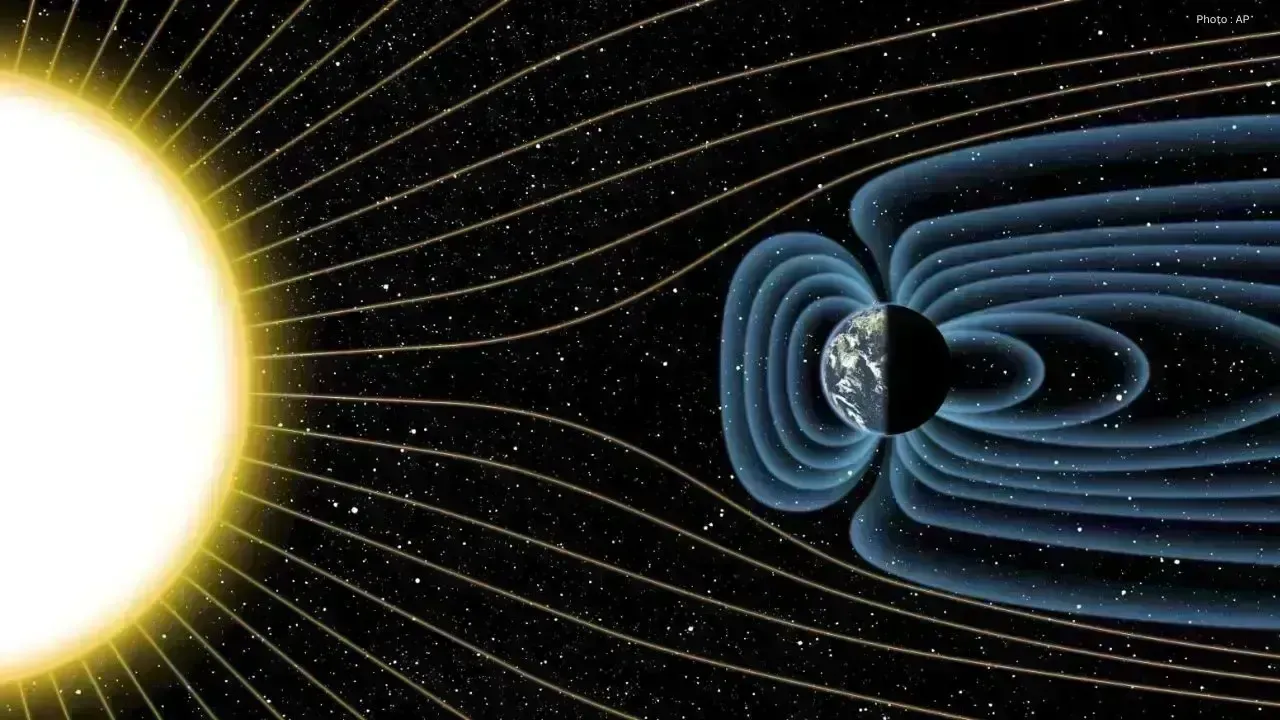
SMILE, which stands for Solar wind Magnetosphere Ionosphere Link Explorer, marks a collaborative effort between the European Space Agency and the Chinese Academy of Sciences. This spacecraft aims to provide intricate visuals of the interactions between solar wind and Earth’s magnetosphere, which acts as a protective barrier against harmful solar particles.
This mission is anticipated to enhance our comprehension of space weather phenomena, particularly solar storms that can potentially disrupt satellite operations, communication networks, GPS, air travel, and power grids on Earth. SMILE is seen as a significant advancement in heliophysics and space weather science, employing imaging technology that is unprecedented in this realm.
However, experts in space policy caution that the enthusiasm for SMILE brings to light a notable operational deficiency. Current European and global forecasting mechanisms are heavily reliant on older spacecraft like SOHO—launched in 1995 by ESA and NASA—which was intended for a much shorter mission duration yet has been functioning for almost three decades beyond its retirement target.
Despite its age, SOHO plays a crucial role in tracking solar activity and supplying data essential for issuing early alerts regarding hazardous solar storms. With today's societies increasingly relying on sophisticated satellites and digital communication networks, the urgency for robust solar storm warnings is paramount.
Analysts highlight that this situation encapsulates a widespread concern among space agencies: while scientific exploration missions often attract substantial funding and global attention, the continued financial support for essential long-term operational systems struggles to keep pace. In other terms, agencies might prioritize groundbreaking scientific projects while the invaluable monitoring infrastructure ages without comprehensive replacement strategies.
Experts are vocal about the potentially serious consequences of losing effective solar monitoring capabilities. A significant geomagnetic storm akin to historical events could throttle aviation, damage satellites, disrupt internet services, and cause large-scale electrical failures if warning systems falter or face limitations.
The ESA, alongside other global partners, is devising new strategies for space weather monitoring; however, maintaining consistent operational coverage poses both technical and financial challenges. The construction, launch, and seamless operation of monitoring systems necessitate extensive coordination and long-term funding commitments.
This has grown increasingly pressing as public and private sectors widen their satellite networks and space infrastructures. Experts contend that modern economies face greater risks from solar storms now than when older equipment like SOHO was first put into space.
As Europe embarks on ambitious projects such as SMILE, the juxtaposition of state-of-the-art research initiatives against the backdrop of fading operational systems becomes ever more apparent. Observers in the realm of space policy warn that the challenge moving forward is to ensure that scientific advancement is complemented by adequate investments in dependable, long-term monitoring systems crucial for safeguarding essential infrastructure on Earth.







Anticipated Dates for UAE Eid Al Adha 2026 Unveiled by Astronomical Experts
Experts predict Eid Al Adha 2026 in the UAE to start on May 27, prompting early holiday planning amo

DAE Achieves Remarkable Growth in Q1 2026 With Record Revenue
Dubai Aerospace Enterprise announces impressive financial results for Q1 2026, reflecting a surge in

Price Increase for Sony PS5 in Southeast Asia Effective May 1
Sony announces a price increase for the PS5 across Southeast Asia starting May 1, 2026, impacting ga

Potential ‘Super El Niño’ in 2026: Understanding the Climate Risks
Could a Super El Niño emerge in 2026? Discover its implications and potential global climate impacts

Global Energy Crisis Intensifies: Markets React to Oil Supply Challenges
Markets are on edge as oil disruptions escalate, influencing prices and economic stability. Explore

Must-See Tourist Spots in London You Can't Overlook
Explore London's essential attractions, from royal landmarks to vibrant markets, ensuring an unforge




