Post by : Shweta
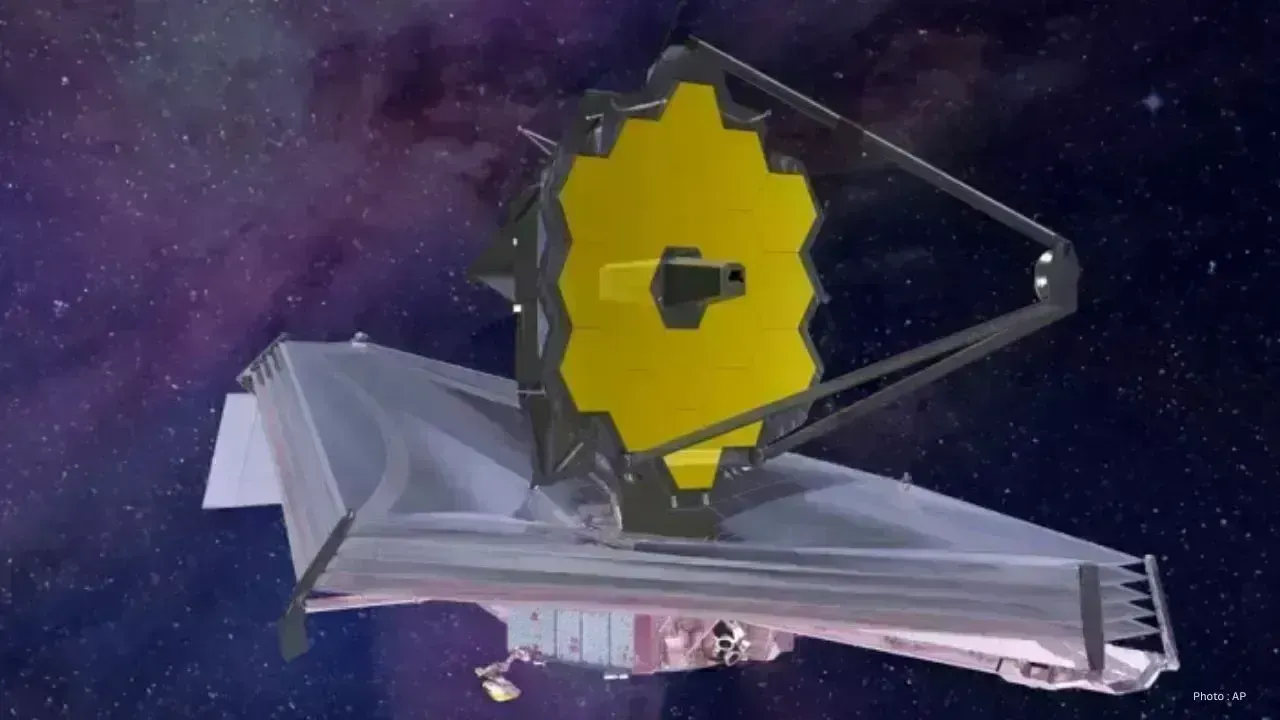
The imminent SMILE mission, a collaboration between the European Space Agency and the Chinese Academy of Sciences, is capturing attention not just for its scientific ambitions but also for illuminating significant rifts in Western space policy towards China. Slated for launch in 2026, the mission centers on heliophysics — examining the dynamics between the Sun, solar wind, and Earth’s magnetic environment.
SMILE, an acronym for Solar wind Magnetosphere Ionosphere Link Explorer, aims to deepen scientific understanding of how solar phenomena impact Earth’s magnetic field and its space weather systems. Researchers anticipate that the mission will enhance insights into solar storms, which pose risks to satellites, power infrastructure, navigation technologies, and global communications.
Although European and Chinese researchers have cooperated on the project for years, it has also underscored the differing stances held by Europe and the United States toward scientific collaboration with China. The 2011 Wolf Amendment restricts the National Aeronautics and Space Administration from engaging in bilateral partnerships with Chinese government-associated space entities unless specifically sanctioned by Congress.
Introduced due to fears about national security, technology transfer risks, and espionage related to China’s space pursuits, the Wolf Amendment has imposed stringent legal barriers on NASA’s direct interactions with Chinese space entities, including collaborative research and technology exchanges.
In contrast, ESA has embraced a more flexible strategy toward selective cooperative ventures with China on scientific and exploratory missions. European officials maintain that international scientific collaboration can thrive in lower-risk areas, particularly in climate science, astronomy, and missions aimed at peaceful exploration.
Analysts view the SMILE mission as a manifestation of the wider geopolitical divide between American and European perspectives on China. While the United States increasingly perceives technological cooperation with China as a security challenge, many European nations are striving to balance security considerations with scientific and economic collaboration.
Experts suggest that this divergence in policy has become more pronounced amid growing global competition in space. Over the last two decades, China has enhanced its space prowess, establishing its own space station, advancing lunar exploration, expanding satellite networks, and embarking on Mars missions. Beijing is also ramping up investments in deep-space research and international collaborations.
Some specialists in space policy argue that restrictions like the Wolf Amendment could stifle opportunities for global scientific collaboration in areas where shared knowledge could be mutually beneficial. Others contend that stringent regulations remain vital due to the dual-use nature of advanced space technologies that serve both civilian and military purposes.
The SMILE mission is poised to carry advanced imaging technologies that can observe interactions between solar particles and Earth’s magnetosphere in unprecedented ways. Scientists are optimistic that the mission will yield crucial new insights about space weather phenomena and refine forecasting methods for satellite operators and infrastructure networks.
As the launch date in 2026 draws near, the mission increasingly symbolizes more than a scientific collaboration. Observers suggest it also signifies the rising fragmentation in global technology and research policies, where allies in Europe and North America may have overlapping strategic interests, yet adhere to distinctly different regulations when engaging with China in scientific and space endeavors.









Anticipated Dates for UAE Eid Al Adha 2026 Unveiled by Astronomical Experts
Experts predict Eid Al Adha 2026 in the UAE to start on May 27, prompting early holiday planning amo

DAE Achieves Remarkable Growth in Q1 2026 With Record Revenue
Dubai Aerospace Enterprise announces impressive financial results for Q1 2026, reflecting a surge in

Price Increase for Sony PS5 in Southeast Asia Effective May 1
Sony announces a price increase for the PS5 across Southeast Asia starting May 1, 2026, impacting ga

Potential ‘Super El Niño’ in 2026: Understanding the Climate Risks
Could a Super El Niño emerge in 2026? Discover its implications and potential global climate impacts

Global Energy Crisis Intensifies: Markets React to Oil Supply Challenges
Markets are on edge as oil disruptions escalate, influencing prices and economic stability. Explore

Must-See Tourist Spots in London You Can't Overlook
Explore London's essential attractions, from royal landmarks to vibrant markets, ensuring an unforge




