Post by : Shakul
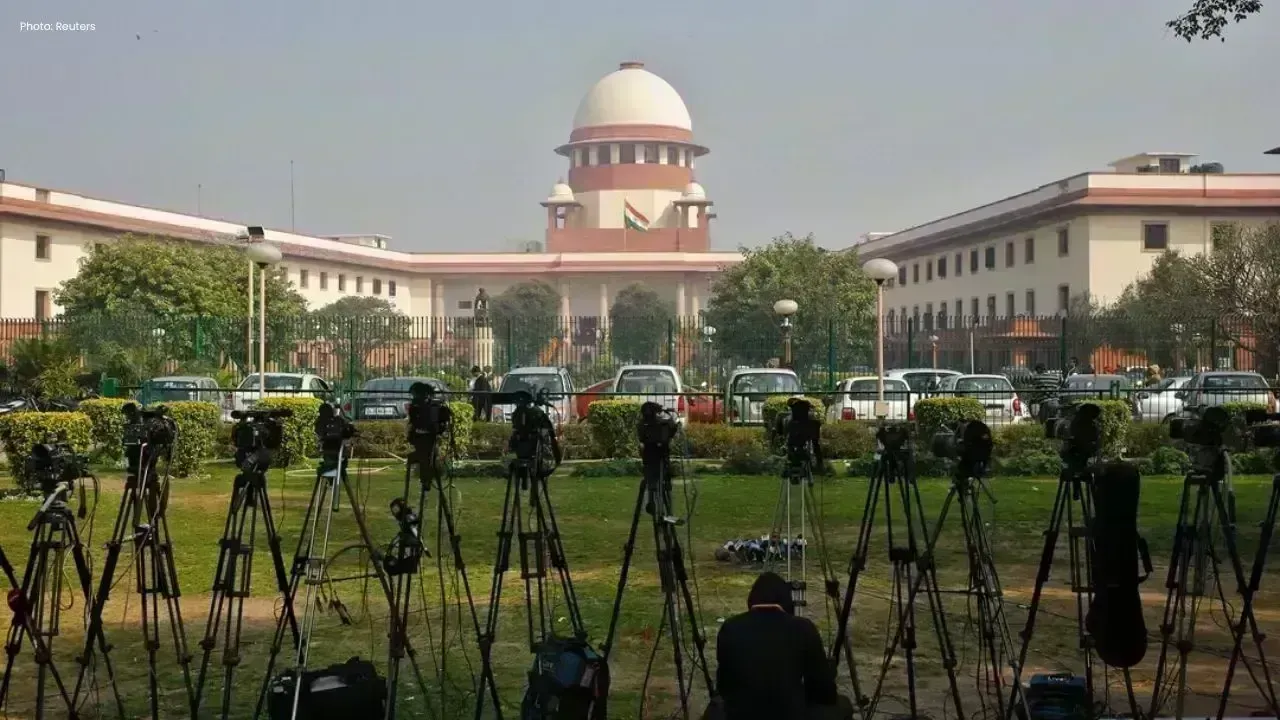
The Supreme Court of India is set to delve into the issues related to the Central Board of Secondary Education's new three-language requirement for Class 9 students. This ruling is slated to take effect by July 1, 2026, igniting discussions on whether educational institutions and learners are adequately equipped for this change.
A bench of three judges, chaired by Chief Justice Surya Kant, revealed that their main focus extends beyond the policy itself to the practical difficulties that accompany its implementation. The Bench pointed out that challenges such as teacher shortages, limited textbook availability, and inadequate infrastructure must be examined to determine if the policy places excessive demands on students and educational institutions.
According to the new CBSE guidelines, students initiating Class 9 will be required to undertake studies in three languages as part of an updated educational framework. Proponents argue that this approach encourages multilingual education, enhances communication capabilities, and aligns with broader educational reforms intended to safeguard linguistic diversity across the nation.
Conversely, opponents assert that many schools, particularly in rural and under-resourced regions, could struggle to comply with the new regulations effectively. Concerns have been voiced by educational experts and parents regarding the adequacy of qualified language instructors and suitable learning materials for the diverse array of regional and foreign languages included in the policy.
During the session, the Supreme Court underscored the necessity of assessing the actual circumstances prior to endorsing a large-scale rollout of the policy. The Bench expressed doubts about whether schools currently have the administrative and educational capacity to accommodate the additional language obligations without compromising the quality of students' learning experiences.
Legal analysts believe this case may have far-reaching effects on the future of educational reforms in India, especially those concerning the National Education Policy and the promotion of multilingual learning. The court’s scrutiny may significantly influence how educational leaders reconcile policy objectives with real-world implementation challenges.
The case has garnered substantial interest from educators, school leaders, and parents nationwide as educational institutions strategize for the coming academic year. The Supreme Court is expected to scrutinize whether the policy can be executed equitably and effectively without imposing an undue academic load on students.
Observers of education speculate that the ruling may set precedents for future debates regarding curriculum enhancements, hiring practices for teachers, the availability of textbooks, and policies surrounding language education in India’s schooling system.







Meta Unveils Subscription Plans for Instagram, Facebook, and WhatsApp
Meta introduces new subscription plans for users of Instagram, Facebook, and WhatsApp, featuring enh

Suvarna Joy on Education Leadership, Resilience, and Building Purpose Through Adversity in the UAE
Suvarna Joy shares her journey of education leadership, motherhood, faith, and resilience within the

Anticipated Dates for UAE Eid Al Adha 2026 Unveiled by Astronomical Experts
Experts predict Eid Al Adha 2026 in the UAE to start on May 27, prompting early holiday planning amo

DAE Achieves Remarkable Growth in Q1 2026 With Record Revenue
Dubai Aerospace Enterprise announces impressive financial results for Q1 2026, reflecting a surge in

Price Increase for Sony PS5 in Southeast Asia Effective May 1
Sony announces a price increase for the PS5 across Southeast Asia starting May 1, 2026, impacting ga

Potential ‘Super El Niño’ in 2026: Understanding the Climate Risks
Could a Super El Niño emerge in 2026? Discover its implications and potential global climate impacts




