Post by : Priya
Photo:Reuters
In a world that increasingly relies on technology and clean energy, South Korea has introduced a powerful innovation that could change the future of batteries forever. A team of South Korean scientists has developed the world’s first fully recyclable battery—a major scientific breakthrough that could help reduce global electronic waste and reshape how we build and use batteries.
This new battery, which was designed by researchers at the Korea Advanced Institute of Science and Technology (KAIST), can be taken apart and rebuilt with almost no material loss. It offers the same performance as today’s best batteries but with one big difference: it can be completely reused.
This is not just a new product—it is a new way of thinking about energy, waste, and sustainability.
What Makes This Battery Special?
Batteries are everywhere. We use them in our smartphones, laptops, electric vehicles (EVs), home appliances, and even in large solar energy systems. However, while battery use has increased, so has battery waste.
Most current batteries are difficult to recycle. They include toxic materials, heavy metals, and adhesives that are hard to separate. Traditional recycling methods involve high temperatures and harmful chemicals, which can be expensive and dangerous.
But this new battery developed in South Korea changes everything.
It is built with a unique structure and eco-friendly materials. The team used a water-based binder instead of harmful adhesives. This allows the battery to be safely disassembled at room temperature without burning or chemical treatment. Once opened, the key parts of the battery—such as the electrodes, separator, and electrolyte—can be collected and reused without losing performance.
In simple terms, this battery works just as well as a regular one, but you don’t have to throw it away when it’s done. You can take it apart, clean the pieces, and use them again to make a new battery.
Why This Matters for the World
The environmental impact of batteries has become a serious concern. Each year, millions of tons of batteries are thrown away globally. Many of these end up in landfills or are burned, releasing harmful substances into the air, water, and soil. Lithium, cobalt, and nickel—essential battery materials—are mined in large amounts, often in unsafe or unethical conditions.
As more people buy electric vehicles and renewable energy systems, the need for better battery solutions becomes urgent.
A fully recyclable battery is a big step forward. It offers three key advantages:
How It Works: Inside the New Battery
Let’s take a closer look at the science behind this battery.
Traditional batteries use glue-like substances to hold parts together. These substances are hard to break down, making recycling a costly and messy process. The South Korean researchers used a mild, water-based binder that allows the battery to be broken down simply by soaking it in water.
Once soaked, the battery’s parts separate naturally. These include:
In tests, the recovered materials were used to build new batteries, which performed just as well as the original ones. The process can be repeated multiple times with little to no loss in efficiency.
This is a major improvement over current recycling methods, which often destroy part of the battery in the process, making full recovery impossible.
What It Means for Electric Vehicles and Smart Devices
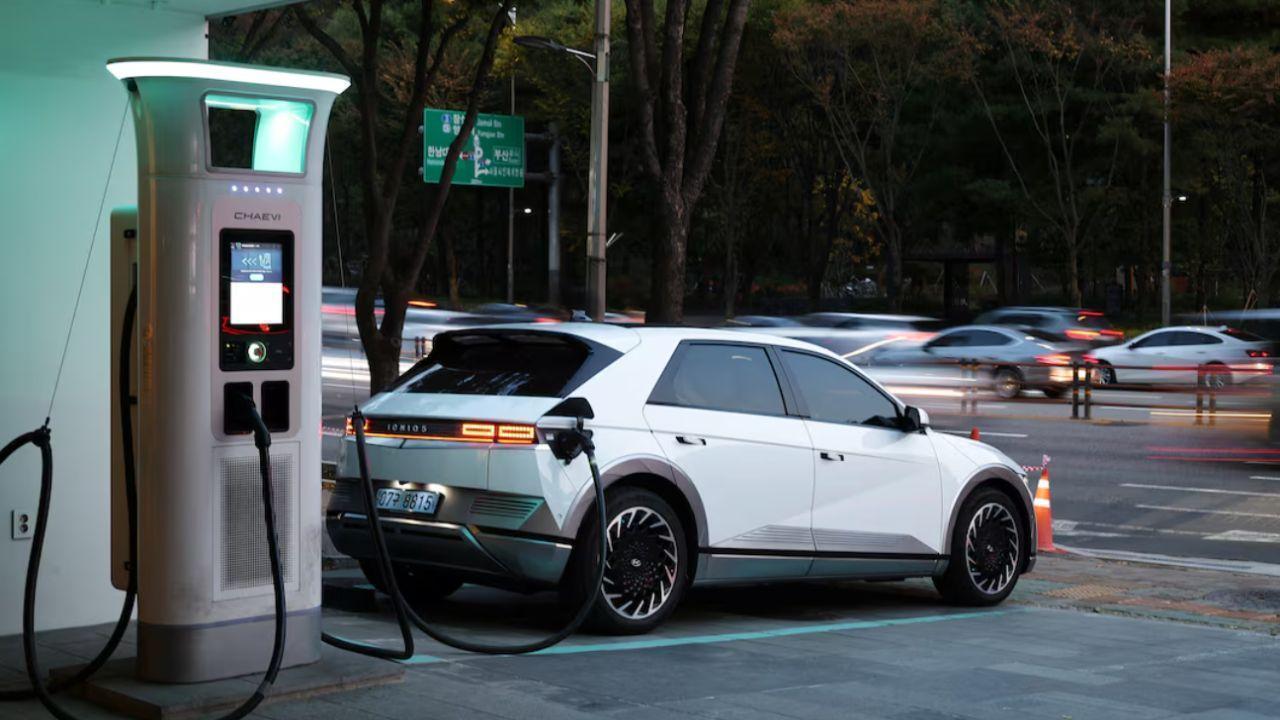
Electric vehicles (EVs) are a key part of the world’s clean energy future. But EVs need powerful, long-lasting batteries—and lots of them. One of the biggest challenges is how to deal with old EV batteries, which are large, heavy, and often toxic.
The new South Korean battery could be the solution.
If car makers adopt this design, used EV batteries could be recycled easily and cheaply. This would make EVs more affordable, more sustainable, and more attractive to buyers. It would also help countries reduce dependence on battery imports or risky mining operations abroad.
The same applies to smartphones, tablets, laptops, and home batteries. Companies would be able to reuse materials locally, cutting down both costs and waste.








Anticipated Dates for UAE Eid Al Adha 2026 Unveiled by Astronomical Experts
Experts predict Eid Al Adha 2026 in the UAE to start on May 27, prompting early holiday planning amo

DAE Achieves Remarkable Growth in Q1 2026 With Record Revenue
Dubai Aerospace Enterprise announces impressive financial results for Q1 2026, reflecting a surge in

Price Increase for Sony PS5 in Southeast Asia Effective May 1
Sony announces a price increase for the PS5 across Southeast Asia starting May 1, 2026, impacting ga

Potential ‘Super El Niño’ in 2026: Understanding the Climate Risks
Could a Super El Niño emerge in 2026? Discover its implications and potential global climate impacts

Global Energy Crisis Intensifies: Markets React to Oil Supply Challenges
Markets are on edge as oil disruptions escalate, influencing prices and economic stability. Explore

Must-See Tourist Spots in London You Can't Overlook
Explore London's essential attractions, from royal landmarks to vibrant markets, ensuring an unforge




