Post by : Saif Nasser
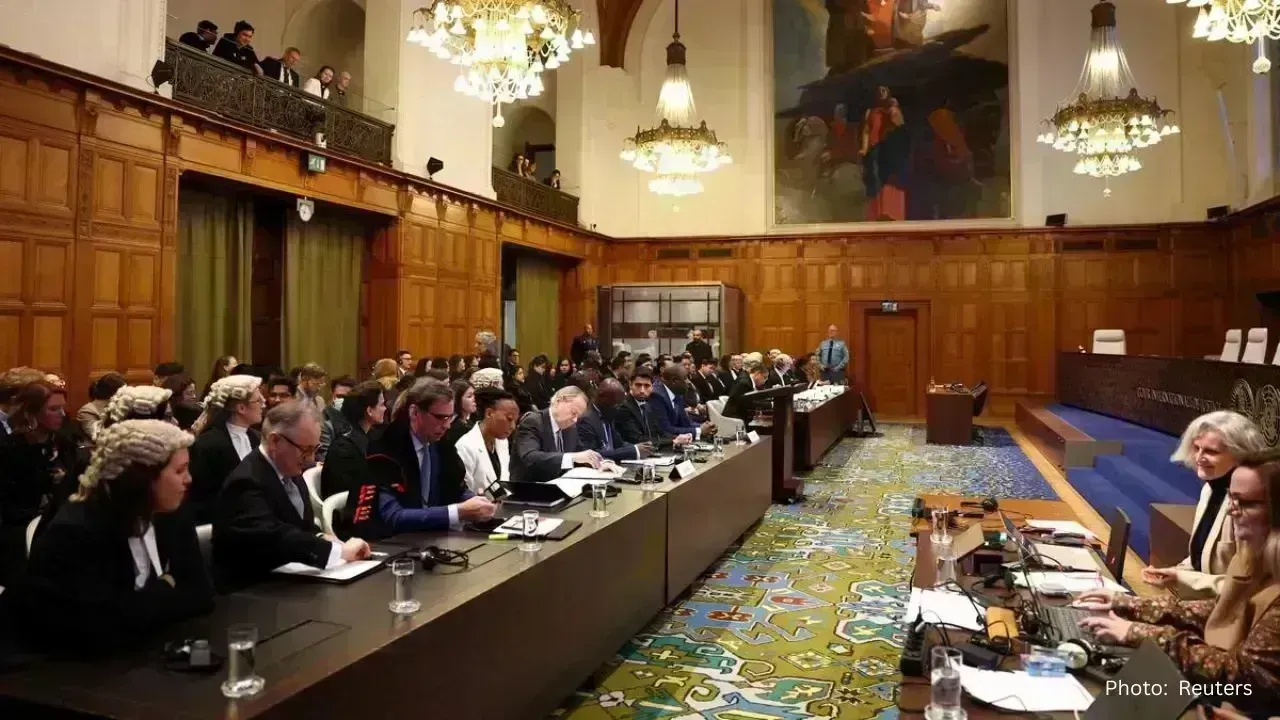
The world is once again watching the Rohingya crisis closely as a historic legal case has officially begun at the International Court of Justice (ICJ), the United Nations’ highest court. On January 12, 2026, judges in The Hague opened hearings in a case that accuses Myanmar of committing genocide against the Rohingya, a Muslim minority group.
This case is special because it is the first genocide case that the ICJ will hear fully in more than ten years. Legal experts say the decision in this matter could affect how genocide cases are judged in the future, not just for Myanmar but also for other conflicts around the world.
The case was filed in 2019 by Gambia, a small West African country. Gambia brought the case on behalf of the Rohingya people, arguing that Myanmar’s military carried out acts meant to destroy the group. These claims focus mainly on a military operation in 2017 in Myanmar’s Rakhine state. During that time, soldiers carried out raids that forced more than 730,000 Rohingya to flee across the border into Bangladesh.
Many refugees who escaped described horrific scenes. They spoke of villages being burned, people being killed, women being raped, and families being torn apart. Later, a United Nations fact-finding mission said there was strong evidence that the military’s actions included acts of genocide.
Myanmar has strongly denied these claims. The country says its military operation was a legal response to attacks by armed militants. Myanmar leaders argue that the accusations are unfair and do not show the full picture of what happened on the ground.
Despite these denials, Rohingya survivors say this case gives them hope after many years of pain and silence. Some victims traveled to The Hague to witness the start of the hearings. They say they want the court to officially recognize what they suffered and to send a clear message that such crimes should never happen again.
The hearings are expected to last about three weeks. For the first time, Rohingya victims will have their stories presented before an international court, although parts of the process will be closed to protect privacy and safety.
The case also comes at a tense time for Myanmar. Since a military takeover in 2021, the country has faced ongoing violence, protests, and political unrest. Recent elections held by the military authorities have been criticized by the United Nations and human rights groups as unfair.
Many experts believe the ICJ’s ruling will have a wide impact. It may help shape how genocide is defined, how evidence is judged, and how justice is delivered for victims around the world. For the Rohingya people, this case represents a long-awaited chance to be heard and to seek accountability at the highest level of international law.
As the hearings continue, the global community will be watching closely, knowing that the outcome could mark an important step toward justice, truth, and responsibility.









DAE Achieves Remarkable Growth in Q1 2026 With Record Revenue
Dubai Aerospace Enterprise announces impressive financial results for Q1 2026, reflecting a surge in

Price Increase for Sony PS5 in Southeast Asia Effective May 1
Sony announces a price increase for the PS5 across Southeast Asia starting May 1, 2026, impacting ga

Potential ‘Super El Niño’ in 2026: Understanding the Climate Risks
Could a Super El Niño emerge in 2026? Discover its implications and potential global climate impacts

Global Energy Crisis Intensifies: Markets React to Oil Supply Challenges
Markets are on edge as oil disruptions escalate, influencing prices and economic stability. Explore

Must-See Tourist Spots in London You Can't Overlook
Explore London's essential attractions, from royal landmarks to vibrant markets, ensuring an unforge

Ultimate Guide to Snagging Cheap Flights in 2026
Unlock the secrets to booking affordable flights in 2026 with insightful tips and strategies tailore




