Post by : Saif Nasser
One year after the devastating Jeju Air plane crash, the pain of loss remains as sharp as ever for the families of the victims. Instead of finding comfort in clear answers and accountability, they are facing silence, delays, and growing doubts about whether the investigation can be trusted. The failure to release even a basic progress report on the crash has turned grief into anger and sorrow into frustration.
On December 29, 2024, a Jeju Air Boeing 737-800 was forced to make an emergency belly landing at Muan International Airport in South Korea. According to early findings, both engines were damaged by bird strikes during the flight. After landing, the aircraft overshot the runway and crashed into a concrete embankment beyond its end. The plane burst into flames, killing 179 of the 181 people on board. Only two passengers survived. It was the worst aviation disaster ever recorded on South Korean soil.
Soon after the crash, the government-led Aviation and Railway Accident Investigation Board released a preliminary report. That report mainly focused on the bird strikes and decisions made by the pilots, including shutting down one engine. Families of the victims felt the report placed unfair blame on the pilots while failing to properly examine other factors that could have made the crash far more deadly. Many questioned why the airport’s design and safety measures were not discussed in detail.
Under international aviation rules, a final accident report is expected within one year. If that is not possible, authorities are required to publish an interim report on the anniversary of the crash, explaining what progress has been made and highlighting any safety concerns. As the one-year mark arrived, families waited anxiously for such an update. None came.
Officials later said the investigation board was not ready to release the report because of proposed legal changes aimed at ensuring the board’s independence. While independence is important, families argue that delays without transparency only damage public trust. For them, the lack of communication feels like being ignored once again.
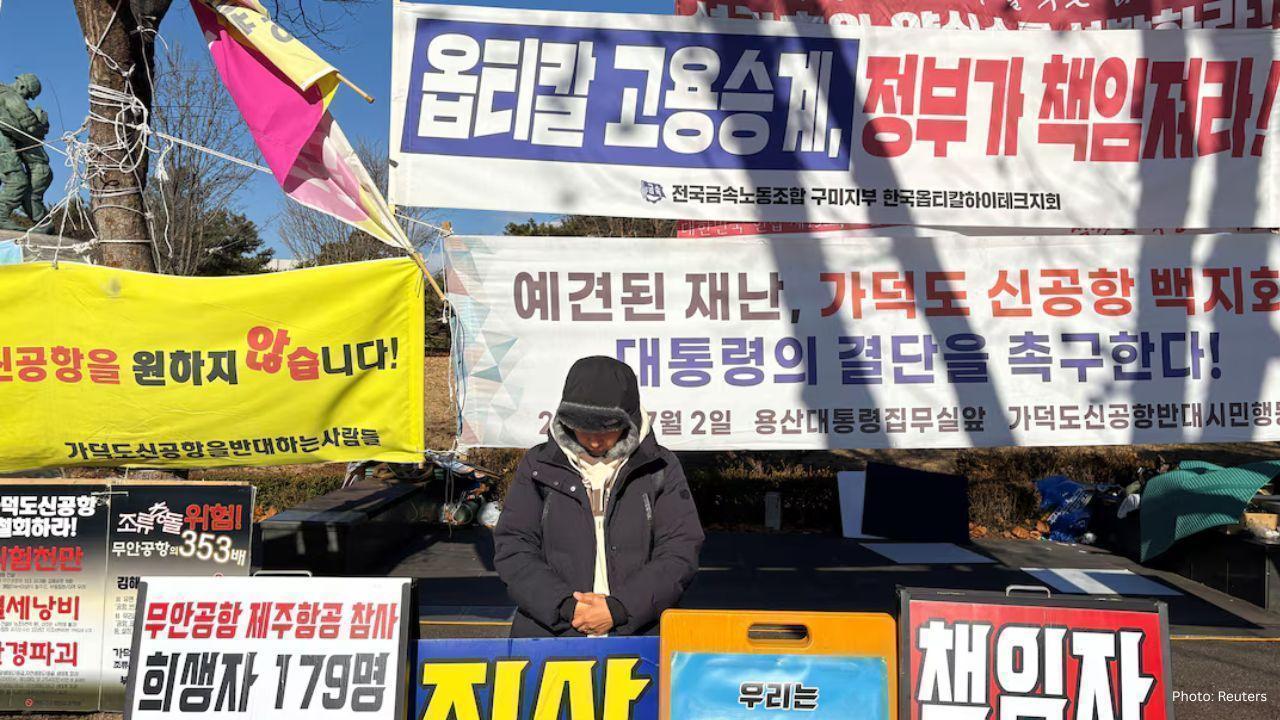
Ryu Kum-ji, who lost both her parents in the crash, has become a symbol of the families’ struggle. On Christmas Day, she staged a solo protest near the presidential office in Seoul. Other family members shaved their heads and joined demonstrations, demanding an independent and transparent investigation. Their message is clear: they want the truth, no matter how uncomfortable it may be.
One issue that has deeply troubled families is the concrete embankment at the end of the runway. Aviation safety standards in South Korea and around the world require such structures to be built so they can break apart easily during an impact. This design reduces damage and increases the chances of survival. A recent report by South Korea’s anti-corruption agency confirmed that the embankment at Muan airport did not meet these safety standards. Because it was solid concrete, it likely caused severe damage to the aircraft and contributed to the high number of deaths.
This finding has intensified concerns about government responsibility. The transport ministry, which oversees airport safety, also supervises the investigation board. Families worry that this creates a conflict of interest and that official mistakes may be downplayed or hidden. They believe that safety failures on the ground may have turned a serious accident into a deadly disaster.
In response to mounting pressure, South Korea’s parliament has decided to launch an independent investigation into the crash. Lawmakers are also considering changes that would move oversight of accident investigations away from the transport ministry and place it under the prime minister’s office. A senior transport official has admitted that the government’s efforts may not have been sufficient and has promised to listen more closely to the families’ concerns.
Despite these promises, trust remains fragile. Public hearings planned earlier this month were postponed at the request of families and lawmakers, who said more fairness and clarity were needed. Police are also continuing their own investigation into the accident.
The Jeju Air tragedy is no longer just about a single crash. It has become a test of honesty, responsibility, and respect for human life. Air travel relies on public confidence, and that confidence can only exist when authorities act openly, admit mistakes, and put safety above image.
The families of the victims are not asking for punishment without proof. They are asking for honesty, accountability, and a sincere apology if errors were made. One year later, their questions remain unanswered. How the government responds now will determine whether this tragedy leads to real change or becomes another painful example of delayed justice.





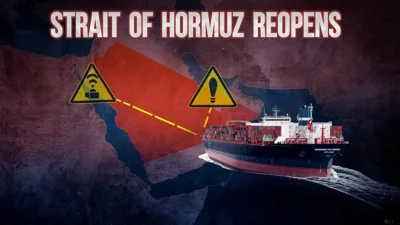
Reopening of the Strait of Hormuz: New Regulations to Impact Global Trade
Iran reopens the strategic Strait of Hormuz with new regulations affecting oil transport and global

Top 10 Must-See Attractions in NYC for First-Time Explorers
Discover essential experiences for first-time visitors to NYC, including attractions, culture, and i

Starbucks Engages Boyu Capital for Major Chinese Expansion
Starbucks teams up with Boyu Capital, selling a majority stake to boost growth and adapt to the Chin

Three Individuals Charged in Massive Meth Trafficking Case in Malaysia
In Malaysia, a married couple and another suspect are charged with trafficking 510kg of meth, facing
Singapore Police Revisit Geylang Murder Scene with Suspect
In Geylang, police return a murder suspect to the scene of a crime involving the fatal stabbing of a