Post by : Shweta
The discussion regarding whether a province can legally separate from Canada has resurfaced, particularly with recent debates in Alberta regarding its sovereignty and independence. Legal analysts and constitutional experts assert that Canadian law prohibits any province from unilaterally opting to leave. Such a move would necessitate a protracted constitutional process involving negotiations with the federal government and other provinces.
This issue primarily stems from the landmark 1998 Supreme Court of Canada ruling known as the “Reference re Secession of Quebec.” The court's decision unequivocally established that a province lacks the legal authority to proclaim independence unilaterally under both Canadian and international law. However, the court also delineated that, should a province conduct a referendum with a clear majority favoring separation, the federal government would have the obligation to engage in negotiations.
In the aftermath of the Supreme Court ruling, the Canadian government enacted the Clarity Act in 2000. This legislation grants Parliament the authority to assess the clarity of a referendum question on separation and to determine whether the outcome reflects a decisive majority. Notably, the Act does not stipulate a defined percentage for separation, meaning the federal government would evaluate the political landscape prior to acknowledging any referendum result.
Legal experts assert that even if a referendum favored independence, the separation process would be laden with complexities. Essential national matters—such as borders, citizenship, Indigenous treaty rights, trade agreements, currency, natural resources, military duties, and federal debt—would all require meticulous negotiation among governments. Likely constitutional amendments would also necessitate consent from Parliament and several provinces.
Historically, discussions of separation have been mostly linked to Quebec, which held independence referendums in 1980 and 1995, both of which were ultimately rejected by the electorate. The 1995 vote was particularly contentious, with the “No” side narrowly prevailing. These events prompted federal authorities to seek clarification from the Supreme Court on the legality of a province's ability to separate from Canada.
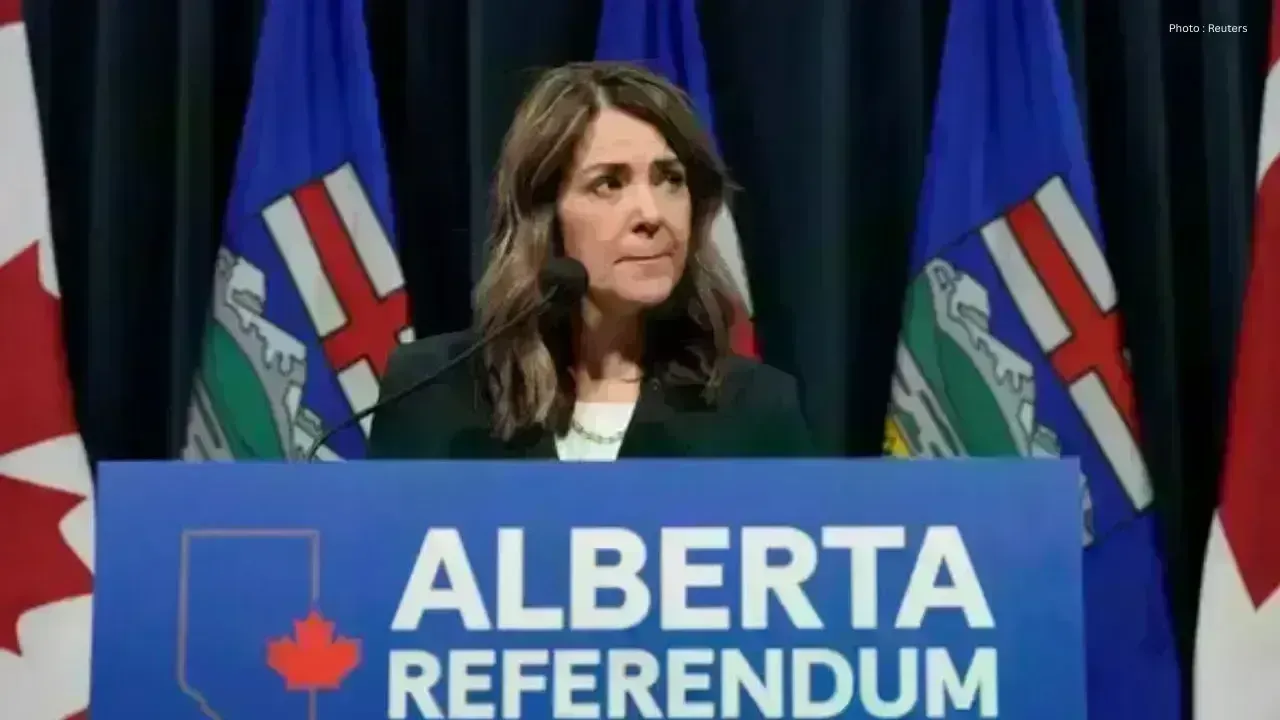
In recent years, Alberta has seen rising separation sentiments, with various political factions claiming the province has faced inequities from the federal government regarding energy policy, environmental regulations, and taxation. Some advocates for separation argue that Alberta deserves increased control over its resources and provincial affairs. Nevertheless, Premier Danielle Smith has consistently expressed her commitment to a united Canada despite these ongoing discussions.
Experts caution that the topic of separation can induce instability for businesses, investors, and financial markets. Many corporations favor stable political scenarios prior to committing substantial investments, and economists warn that lingering uncertainty could impact employment, trade, and economic development. Analysts emphasize that Canada’s provinces maintain extensive interconnections through banking systems, transportation frameworks, trade agreements, and federal institutions.
Compounding these challenges are the rights of Indigenous communities. Legal scholars indicate that Indigenous nations might play a pivotal role in any prospective separation dialogue since many treaties were established directly with the Canadian government, not with the provinces. Several Indigenous leaders have previously asserted that their constitutional rights must be safeguarded in future negotiations.
Political analysts suggest that while discussions of separation might persist in certain provinces, the actual act of leaving Canada would be legally intricate, politically delicate, and economically multifaceted. Currently, Canadian law firmly establishes that no province can simply separate through a singular vote or declaration. Any trajectory toward independence would require extensive negotiations, constitutional amendments, and consensus among multiple tiers of government nationwide.









Meta Unveils Subscription Plans for Instagram, Facebook, and WhatsApp
Meta introduces new subscription plans for users of Instagram, Facebook, and WhatsApp, featuring enh

Suvarna Joy on Education Leadership, Resilience, and Building Purpose Through Adversity in the UAE
Suvarna Joy shares her journey of education leadership, motherhood, faith, and resilience within the

Anticipated Dates for UAE Eid Al Adha 2026 Unveiled by Astronomical Experts
Experts predict Eid Al Adha 2026 in the UAE to start on May 27, prompting early holiday planning amo

DAE Achieves Remarkable Growth in Q1 2026 With Record Revenue
Dubai Aerospace Enterprise announces impressive financial results for Q1 2026, reflecting a surge in

Price Increase for Sony PS5 in Southeast Asia Effective May 1
Sony announces a price increase for the PS5 across Southeast Asia starting May 1, 2026, impacting ga

Potential ‘Super El Niño’ in 2026: Understanding the Climate Risks
Could a Super El Niño emerge in 2026? Discover its implications and potential global climate impacts




