Post by : Saif Nasser
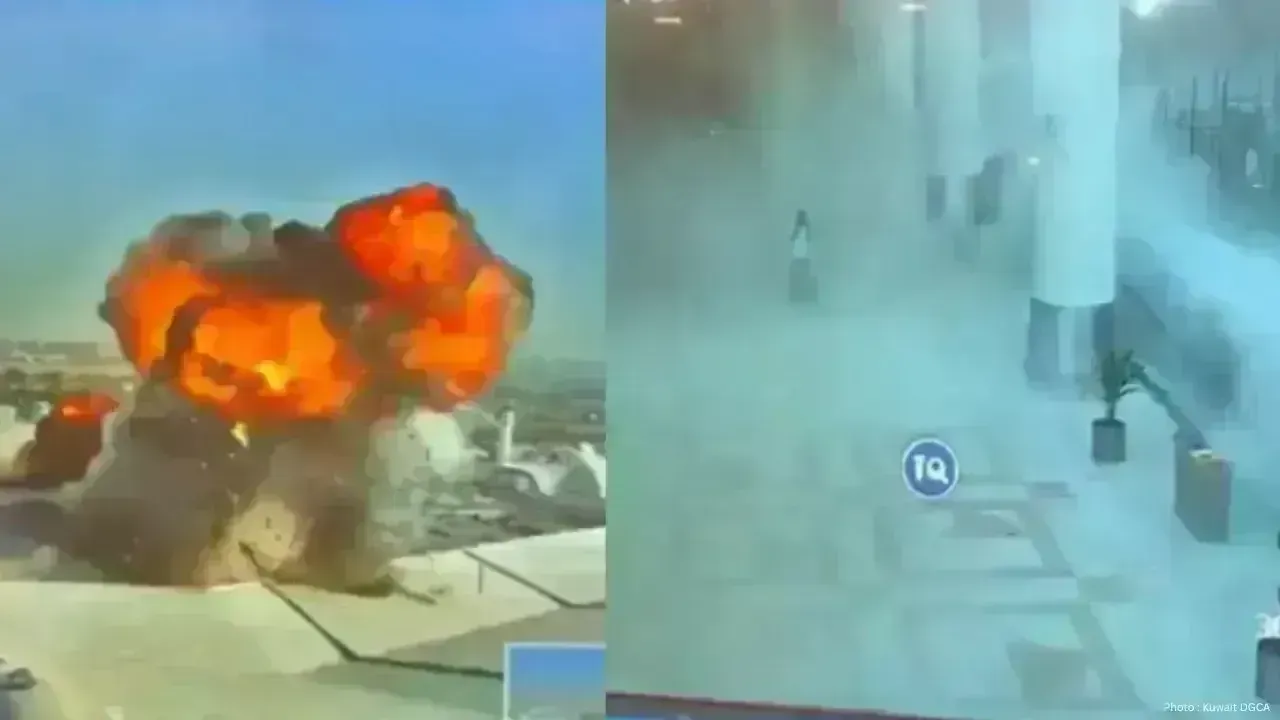
Kuwait's aviation infrastructure has come under intense attention following reports of an attack involving a drone that struck near Kuwait Airport, causing damage and triggering concerns about regional security. Images and videos circulating after the incident showed scenes of destruction and confusion, drawing widespread attention across the Middle East and beyond.
The reported strike occurred during a period of heightened instability in the region, where ongoing military tensions have increased concerns about the safety of critical infrastructure. Airports are among the most important facilities in any country, serving as vital hubs for transportation, trade, tourism, and economic activity. Any incident affecting such locations naturally attracts significant public and international interest.
Authorities moved quickly to assess the situation and evaluate the extent of the damage. Emergency teams responded to the affected area while officials worked to ensure the safety of travelers, airport personnel, and nearby residents. Security agencies also began reviewing available evidence to better understand the circumstances surrounding the attack.
The incident has renewed discussions about the growing role of drone technology in modern conflicts. Unmanned aerial systems have become increasingly common in military operations due to their ability to travel long distances and strike targets without placing personnel directly at risk. As these technologies become more advanced, governments around the world are investing heavily in detection and defense systems.
Aviation security experts often describe airports as critical national assets because they support both domestic and international connectivity. Any disruption to airport operations can affect passenger movement, cargo transportation, business activities, and tourism. Even limited damage can create operational challenges and require extensive security reviews.
Regional governments are closely monitoring developments following the reported attack. Gulf countries have invested significantly in strengthening security infrastructure over the years, recognizing the importance of protecting transportation networks, energy facilities, and public institutions from potential threats.
The event also highlights the broader challenges facing nations during periods of geopolitical uncertainty. Security concerns often extend beyond military installations, affecting civilian infrastructure that plays an essential role in daily life. Protecting these facilities has become a major priority for governments seeking to maintain stability and public confidence.
Economic implications may also emerge from incidents involving critical infrastructure. Airports contribute significantly to trade, tourism, and investment by connecting countries to global markets. Any threat to operational continuity can influence business activity and raise concerns among travelers and commercial operators.
Industry experts note that modern airports operate within highly coordinated systems involving airlines, logistics companies, security agencies, and government authorities. Maintaining uninterrupted operations requires careful planning and rapid responses when unexpected events occur. Emergency preparedness therefore remains a central part of airport management strategies worldwide.
Public safety remains the most immediate concern during such incidents. Authorities generally focus on securing affected areas, assisting those impacted, and conducting thorough investigations. Clear communication with the public is also essential in reducing uncertainty and preventing the spread of misinformation.
The attack has further intensified discussions about regional stability. Security developments in one country can influence neighboring states because of the close political, economic, and transportation links that connect the Gulf region. As a result, governments often coordinate closely on matters related to defense and public safety.
Advancements in defensive technologies have become increasingly important as threats evolve. Radar systems, surveillance networks, and counter-drone capabilities are now considered essential components of modern security planning. Many countries continue investing in these areas to strengthen protection for critical infrastructure.
Diplomatic efforts aimed at reducing regional tensions are also likely to remain a priority. Political leaders understand that long-term stability depends not only on security measures but also on dialogue and cooperation between nations. Reducing the risk of escalation remains a key objective for governments across the region.
The incident serves as a reminder of the challenges associated with maintaining security in an increasingly complex geopolitical environment. Critical infrastructure requires constant vigilance, advanced technology, and effective coordination between multiple agencies to address emerging threats.
Kuwait's response to the reported attack will be closely watched as investigations continue and authorities assess the full impact of the incident. The event underscores the importance of strong security systems, regional cooperation, and preparedness in protecting vital facilities. As developments unfold, attention will remain focused on efforts to safeguard transportation networks and maintain stability across the Gulf region.








Achieve Radiant Skin with This Simple Rice Flour Treatment
Transform your skincare routine! Discover how a rice flour mix can restore your skin's glow without

Meta Unveils Subscription Plans for Instagram, Facebook, and WhatsApp
Meta introduces new subscription plans for users of Instagram, Facebook, and WhatsApp, featuring enh

Suvarna Joy on Education Leadership, Resilience, and Building Purpose Through Adversity in the UAE
Suvarna Joy shares her journey of education leadership, motherhood, faith, and resilience within the

Anticipated Dates for UAE Eid Al Adha 2026 Unveiled by Astronomical Experts
Experts predict Eid Al Adha 2026 in the UAE to start on May 27, prompting early holiday planning amo

DAE Achieves Remarkable Growth in Q1 2026 With Record Revenue
Dubai Aerospace Enterprise announces impressive financial results for Q1 2026, reflecting a surge in

Price Increase for Sony PS5 in Southeast Asia Effective May 1
Sony announces a price increase for the PS5 across Southeast Asia starting May 1, 2026, impacting ga




