Post by : Priya
Photo:Reuters
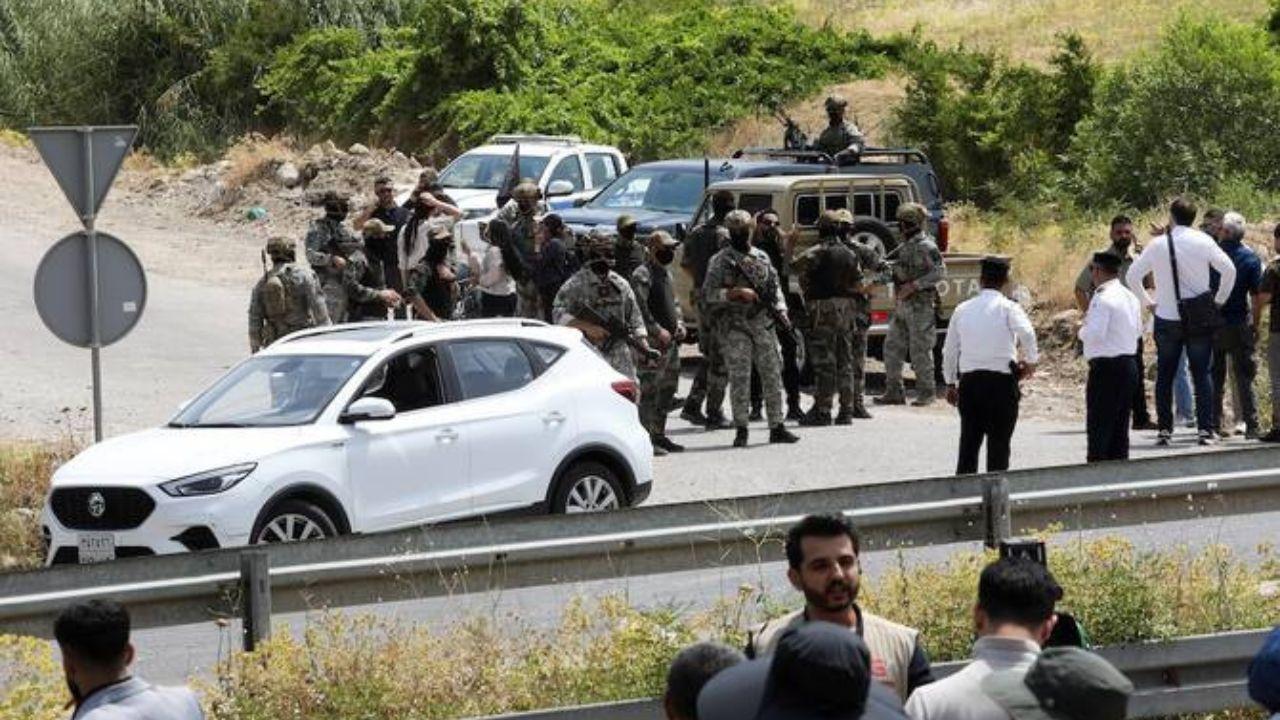
In a development that could signal a turning point in decades of conflict, Kurdish militants from the Kurdistan Workers' Party (PKK) have begun surrendering their weapons in remote caves located in northern Iraq. This gesture, though limited in scope for now, is being viewed as a possible first step towards long-term peace in a region long troubled by violence, political instability, and ethnic tensions.
The PKK, known for its armed struggle against the Turkish state since the 1980s, has maintained a strong presence in the mountainous areas along the Iraq-Turkey border. For years, these rugged terrains have served as a refuge for fighters and a base for launching cross-border operations. With the reported disarmament now underway in these same mountains, many wonder whether a new chapter is beginning.
Historical Background: The PKK Conflict and Its Reach
The PKK was founded in 1978 by Abdullah Öcalan and other Kurdish activists who sought greater rights and recognition for the Kurdish people in Turkey. What started as a political movement later turned into an armed insurgency in 1984. Since then, the PKK has fought against the Turkish government in a conflict that has claimed over 40,000 lives.
The Turkish government classifies the PKK as a terrorist organization, a label also adopted by the United States and the European Union. In contrast, some Kurdish groups and sympathizers view the PKK as a resistance movement fighting for the rights of an oppressed people.
In the early 1990s, the PKK expanded its operations into northern Iraq, using the Qandil Mountains as a safe haven. These remote areas, difficult for security forces to reach, became ideal for training camps and launching operations. Over time, this presence created serious concerns for Iraq and neighboring countries, especially Turkey.
The Disarmament: What We Know So Far
According to local sources and regional media, several PKK fighters have begun turning in their weapons inside cave complexes in the northern Iraqi mountains. Though the exact number of militants involved remains unclear, the gesture appears to be organized and is not the result of direct military pressure.
The disarmament began quietly, with no official announcement from the PKK leadership. However, images and video clips have emerged showing fighters placing rifles, ammunition, and other military gear on the ground in symbolic surrender. These actions are taking place under the supervision of Kurdish community elders and local mediators, who are reportedly facilitating the process.
This move is particularly significant because it is happening without an official ceasefire or public negotiation, raising hopes that a silent shift may be occurring within the PKK's strategic vision.
Iraq’s Role and Position
The Iraqi government has long objected to the presence of foreign armed groups within its borders. The PKK’s presence in the north has been a source of tension between Iraq and Turkey, especially when Turkish forces carry out military operations across the border.
Following the reports of disarmament, Baghdad issued a brief but positive statement, saying:
"The Iraqi government supports all efforts that contribute to peace and the removal of illegal armed forces from Iraqi territory. We hope this step leads to further disarmament and dialogue."
This cautious optimism reflects Iraq’s balancing act — it wants to maintain good relations with Turkey while also respecting the complex ethnic and political dynamics in its northern Kurdish region.
Kurdish Authorities React with Caution
The Kurdistan Regional Government (KRG), which governs Iraq’s semi-autonomous Kurdish region, has been careful in its public comments. While Kurdish leaders have not endorsed the PKK’s actions directly, they have expressed hope that this will lead to a more peaceful and stable region.
A Kurdish official, speaking on the condition of anonymity, said:
“This is a sensitive matter. Any reduction in violence is welcome, but we must see a complete and sincere effort from all sides.”
The KRG has often been caught between the PKK, the Turkish government, and local Kurdish citizens who are tired of conflict. Many residents in border areas have suffered displacement, economic hardship, and fear due to military clashes and airstrikes.
Turkey’s Strategic Interest
Turkey, which sees the PKK as its top national security threat, has not officially commented on the disarmament reports. However, military analysts say Turkish forces are closely monitoring the developments. Turkish surveillance drones are frequently active over northern Iraq, and airstrikes continue to target PKK positions.
If the disarmament effort is genuine and widespread, Turkey may consider opening a new political dialogue. However, any sign of insincerity or regrouping by the PKK could trigger a strong military response.
Some analysts believe that Turkey’s growing diplomatic and trade interests in Iraq — especially energy deals with the KRG — could push Ankara to consider non-military options, if peace appears possible.
International Response and UN Reaction
The United Nations mission in Iraq (UNAMI) has welcomed the news of disarmament and called on all parties to prioritize peace. In a statement issued from Baghdad, the UN said:
"We encourage efforts toward disarmament and peaceful dialogue. Stability in northern Iraq is essential for long-term regional peace and development."
The United States and European Union have not issued official responses yet, but their previous positions align with efforts that reduce violence and promote negotiation.
Why Now? Possible Reasons Behind the Disarmament
Several factors may have contributed to the PKK’s current decision to begin surrendering weapons:
Military Pressure: Ongoing Turkish operations have weakened PKK infrastructure in the region, making it harder to operate.
Internal Changes: The PKK leadership may be going through a strategic shift, possibly reconsidering armed struggle as the primary path forward.
Diplomatic Isolation: The PKK faces increased diplomatic pressure and may be looking for ways to soften its image and regain some international sympathy.
Civilian Fatigue: Years of fighting have taken a toll on civilian populations in Kurdish areas of Iraq and Turkey. Local communities may be pushing for peace more strongly than ever before.
Changing Regional Politics: With new alignments forming in the Middle East, some groups are reconsidering long-term strategies to fit into a new political map.
Local Reactions: Hope and Skepticism
In villages near the Qandil Mountains, where many have lived under the shadow of conflict, the mood is mixed. Some welcome the move with cautious hope, while others fear it may be temporary.
A resident in Ranya, a town near the affected area, told local reporters:
“We are tired of the sound of planes and gunfire. If they are laying down arms, then let it be for good. We want peace for our children.”
Others worry that the PKK may be using the disarmament as a tactical move, not a true step toward ending hostilities.



7.5 Magnitude Earthquake Strikes Japan, Tsunami Alerts Issued
Japan experiences a hefty 7.5 quake, prompting tsunami alerts and safety measures. Stay updated on a
Reopening of the Strait of Hormuz: New Regulations to Impact Global Trade
Iran reopens the strategic Strait of Hormuz with new regulations affecting oil transport and global

Top 10 Must-See Attractions in NYC for First-Time Explorers
Discover essential experiences for first-time visitors to NYC, including attractions, culture, and i

Starbucks Engages Boyu Capital for Major Chinese Expansion
Starbucks teams up with Boyu Capital, selling a majority stake to boost growth and adapt to the Chin

Three Individuals Charged in Massive Meth Trafficking Case in Malaysia
In Malaysia, a married couple and another suspect are charged with trafficking 510kg of meth, facing