
Post by : Saif Nasser
Israel has carried out fresh airstrikes along the Syria–Lebanon border and in southern Lebanon, killing at least two people and injuring many others. The attacks have raised serious concerns because they happened despite a ceasefire that was meant to reduce violence in the region.
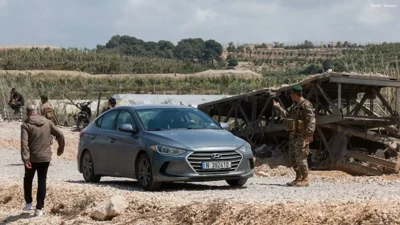
According to Lebanese officials, Israeli warplanes bombed four border crossings between Syria and Lebanon. These crossings are often used by civilians and traders, but Israel claims they are also used by Hezbollah to move weapons into Lebanon. Israel says the strikes were aimed at stopping arms smuggling that could threaten its security.
On the same day, Israeli strikes also hit areas in southern Lebanon. Two people were killed when vehicles were targeted in separate incidents. Nearly 20 others were injured, including civilians who were nearby at the time of the attacks. The wounded were taken to hospitals, and some were reported to be in serious condition.
Lebanon’s government strongly condemned the strikes. Officials said the attacks violated Lebanese sovereignty and put innocent lives at risk. The Lebanese health ministry said civilians continue to suffer because of repeated military actions in the south, where people already live under constant fear.
These attacks come despite a ceasefire agreement reached earlier to stop fighting between Israel and Hezbollah. The agreement was supposed to prevent cross-border attacks and protect civilians on both sides. However, continued strikes have shown how fragile the ceasefire remains.
Israel argues that Hezbollah has not fully followed the terms of the ceasefire, especially when it comes to weapons. Hezbollah has also accused Israel of repeatedly breaking the agreement by carrying out airstrikes and surveillance flights over Lebanon.
The ongoing violence has made life very difficult for people living near the border. Many families in southern Lebanon have already lost homes, livelihoods, and loved ones in past conflicts. Each new strike brings fresh fear and uncertainty, forcing people to stay alert and prepared for emergencies.
The Lebanese army has said it is trying to maintain stability in the region, but repeated attacks make this task harder. International observers have warned that continued violence could push the region back into a wider conflict.
Calls for restraint and respect for ceasefire agreements have grown louder from regional and global leaders. They stress that lasting peace can only come through dialogue, not airstrikes. For now, however, tensions remain high, and civilians continue to pay the heaviest price.






7.5 Magnitude Earthquake Strikes Japan, Tsunami Alerts Issued
Japan experiences a hefty 7.5 quake, prompting tsunami alerts and safety measures. Stay updated on a

Reopening of the Strait of Hormuz: New Regulations to Impact Global Trade
Iran reopens the strategic Strait of Hormuz with new regulations affecting oil transport and global

Top 10 Must-See Attractions in NYC for First-Time Explorers
Discover essential experiences for first-time visitors to NYC, including attractions, culture, and i

Starbucks Engages Boyu Capital for Major Chinese Expansion
Starbucks teams up with Boyu Capital, selling a majority stake to boost growth and adapt to the Chin

Three Individuals Charged in Massive Meth Trafficking Case in Malaysia
In Malaysia, a married couple and another suspect are charged with trafficking 510kg of meth, facing