Post by : Bianca Suleiman
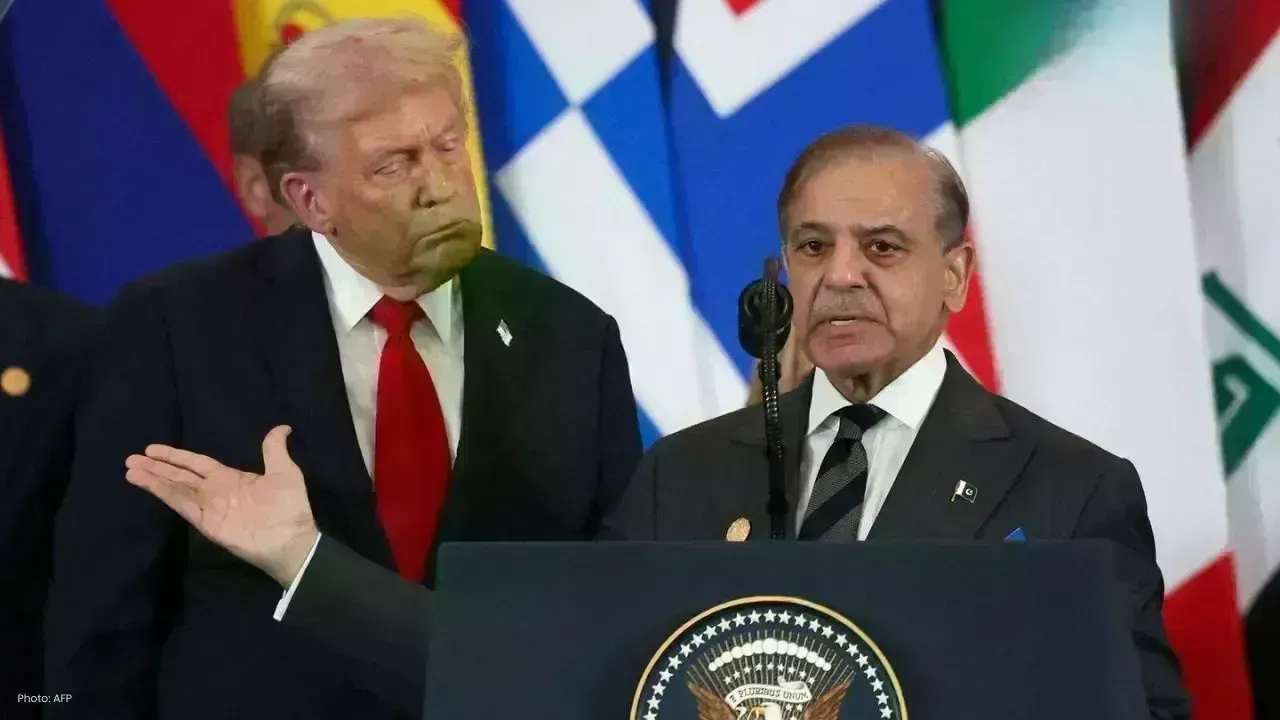
The Indian government is currently weighing U.S. President Donald Trump’s invitation to participate in the U.S.-led Gaza “Board of Peace” as foreign policy analysts in New Delhi advise a thorough examination of the board’s legitimacy and its adherence to international law.
On January 21, 2026, a number of nations, including Saudi Arabia, Türkiye, Egypt, Jordan, Indonesia, Pakistan, Qatar, and the UAE, announced their intentions to join the board, a move that has also been welcomed by Israeli Prime Minister Benjamin Netanyahu.
Diplomatic sources in New Delhi indicate that Indian and Israeli representatives are engaged in discussions concerning potential visits by Prime Minister Narendra Modi to Israel as well as a reciprocal visit from Prime Minister Netanyahu to India in the weeks ahead. This dialogue fits into India’s broader strategy in West Asia amid the Israel-Palestine conflict.
India is scheduled to host the Foreign Ministers from the Arab League's 22 member states on January 30, with discussions anticipated to revolve around the Gaza peace initiative endorsed by the U.S.
Both President Sheikh Mohamed bin Zayed of the UAE and Prime Minister Netanyahu publicly accepted the board’s invitation during the same announcement. Modi is also preparing for a tour of West Asia next month, including a possible visit to Israel, having last visited in 2017, while he went to Palestine in 2018. Meanwhile, Netanyahu's visit to India has faced multiple postponements over the past year.
The peace board proposal has been disseminated to around 60 nations, including India, Russia, China, Brazil, Argentina, Pakistan, and various European and West Asian countries. The Ministry of External Affairs in India has indicated that deliberations are ongoing.
Analysts pointed out the necessity for India to align its historic support for a two-state solution with its commitments to the Palestinian populace prior to joining the board. Former Ambassador Anil Trigunayat remarked that achieving peace in Gaza would aid civilians, asserting that India could make a significant contribution to humanitarian efforts, although he expressed reservations about the proposed corporate governance structure and the indicated $1 billion fee for a permanent seat.
Former Foreign Secretary Nirupama Menon Rao emphasized that India’s involvement must honor international regulations, possess a defined and limited mandate, and align with United Nations principles. She suggested that New Delhi would likely pursue further clarification before reaching a final verdict.
Countries such as Argentina, Canada, Kazakhstan, Uzbekistan, and Morocco have also agreed to join the board, while Ukraine and the UK have raised objections regarding the inclusion of Russian President Vladimir Putin.
The United States has proposed that President Donald Trump chair the board, featuring members like U.S. Secretary of State Marco Rubio, negotiator Steve Witkoff, Jared Kushner, former UK Prime Minister Tony Blair, financier Marc Rowan, World Bank President Ajay Banga, and Robert Gabriel from the U.S. National Security Council.






7.5 Magnitude Earthquake Strikes Japan, Tsunami Alerts Issued
Japan experiences a hefty 7.5 quake, prompting tsunami alerts and safety measures. Stay updated on a
Reopening of the Strait of Hormuz: New Regulations to Impact Global Trade
Iran reopens the strategic Strait of Hormuz with new regulations affecting oil transport and global

Top 10 Must-See Attractions in NYC for First-Time Explorers
Discover essential experiences for first-time visitors to NYC, including attractions, culture, and i

Starbucks Engages Boyu Capital for Major Chinese Expansion
Starbucks teams up with Boyu Capital, selling a majority stake to boost growth and adapt to the Chin

Three Individuals Charged in Massive Meth Trafficking Case in Malaysia
In Malaysia, a married couple and another suspect are charged with trafficking 510kg of meth, facing