Post by : Bianca Suleiman
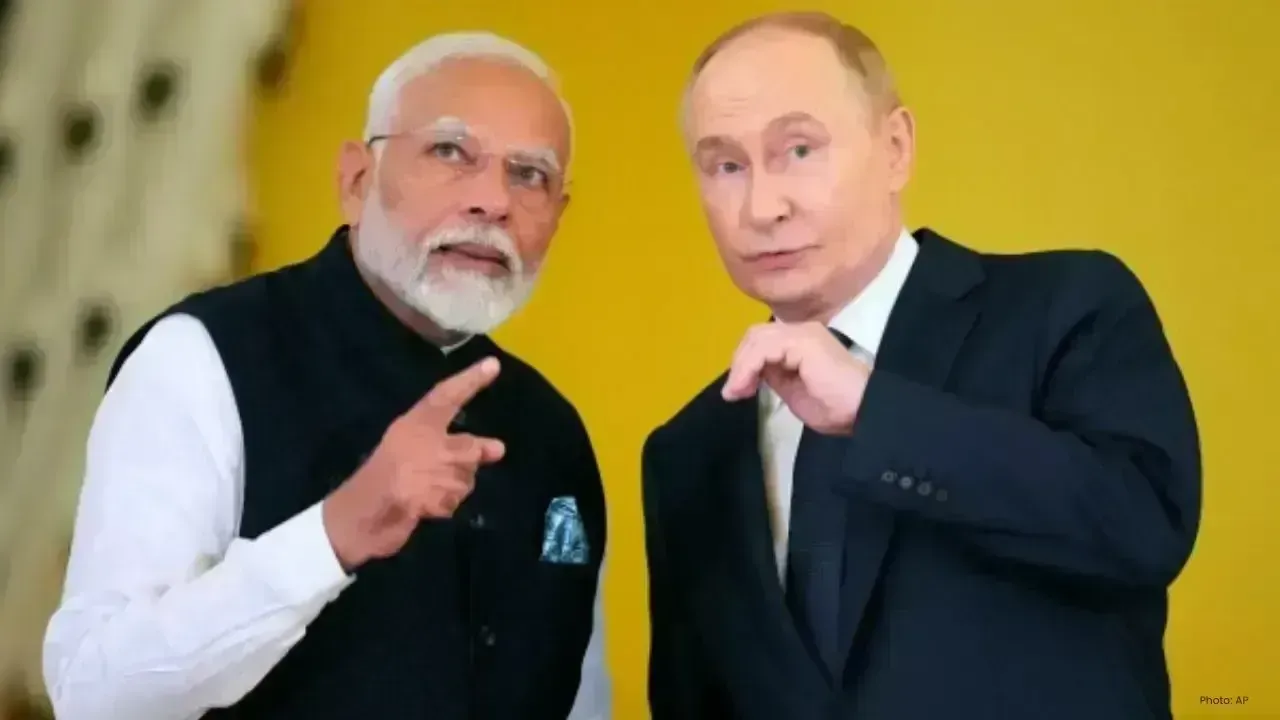
Russian President Vladimir Putin has landed in New Delhi for a significant two-day state visit, poised to redefine the next chapter of India–Russia collaboration in energy, defense, and labor mobility. This visit comes at a crucial juncture as the relationship between India and the United States faces challenges, with Washington tightening its watch on Russian oil purchases amidst the ongoing Ukraine conflict that continues to reshape global alliances.
Upon arrival, Putin was greeted with complete state protocol and proceeded to the annual bilateral summit with Prime Minister Narendra Modi — a longstanding tradition that remains essential to their partnership. However, this year's meeting brings heightened stakes.
While India and Russia have historically enjoyed a close alliance since the Soviet Union era, their current ties are increasingly influenced by shifting economic dynamics, sanctions, and strategic rivalries. India’s economy is rapidly growing, now exceeding an expansion rate of 8%, making it an attractive market for Russian exports, especially amid discounted crude oil prices. Before the Ukraine conflict, Russian oil constituted merely 2.5% of India’s total imports, skyrocketing to around 35% post-invasion as India seized the opportunity of reduced prices.
This dramatic change has satisfied Indian refiners but has strained relations with Washington. The Trump administration's imposition of a 25% tariff on Indian products due to ongoing Russian oil purchases led New Delhi to reduce its orders recently. Putin's visit intends to reverse this trend, with Moscow keen on retaining one of its vital energy partners.
Defense collaboration is another focal point of the talks. Russia has historically been India's principal military supplier, and despite India's attempts to diversify, crucial defense systems such as Sukhoi-30 fighter jets and S-400 air defense units continue to depend heavily on Russian technology. With Pakistan deploying Chinese fifth-generation fighters this year, India is likely to explore alternatives like the Su-57 and the latest S-500 defense systems. However, ongoing delays and sanctions affecting Russian supply chains may pose challenges that Modi could address directly.
Concerns about trade imbalances also loom large. Bilateral trade has surged beyond $68 billion, primarily driven by India's oil imports, resulting in a substantial surplus for Russia. New Delhi is pressing for broader access to Russian markets for Indian products such as electronics, seafood, and garments, where India's footprint remains unexpectedly limited.
This visit serves as a broader geopolitical statement. For the Kremlin, aligning with Modi counters Western efforts aimed at isolating Russia. For India, welcoming Putin while maintaining robust ties with the US and Europe necessitates a delicate balance. This diplomatic balancing act is evident, showcasing both parties' commitment to preserving their longstanding partnership.
As formal discussions commence, the summit prioritizes tangible cooperation — including oil flows, defense provisions, new trade routes, and labor exchanges, rather than lofty political declarations. The results may significantly impact how India navigates its strategic independence amid rapidly changing global alignments.



Anticipated Dates for UAE Eid Al Adha 2026 Unveiled by Astronomical Experts
Experts predict Eid Al Adha 2026 in the UAE to start on May 27, prompting early holiday planning amo

DAE Achieves Remarkable Growth in Q1 2026 With Record Revenue
Dubai Aerospace Enterprise announces impressive financial results for Q1 2026, reflecting a surge in

Price Increase for Sony PS5 in Southeast Asia Effective May 1
Sony announces a price increase for the PS5 across Southeast Asia starting May 1, 2026, impacting ga

Potential ‘Super El Niño’ in 2026: Understanding the Climate Risks
Could a Super El Niño emerge in 2026? Discover its implications and potential global climate impacts

Global Energy Crisis Intensifies: Markets React to Oil Supply Challenges
Markets are on edge as oil disruptions escalate, influencing prices and economic stability. Explore

Must-See Tourist Spots in London You Can't Overlook
Explore London's essential attractions, from royal landmarks to vibrant markets, ensuring an unforge




