Post by : Saif Nasser
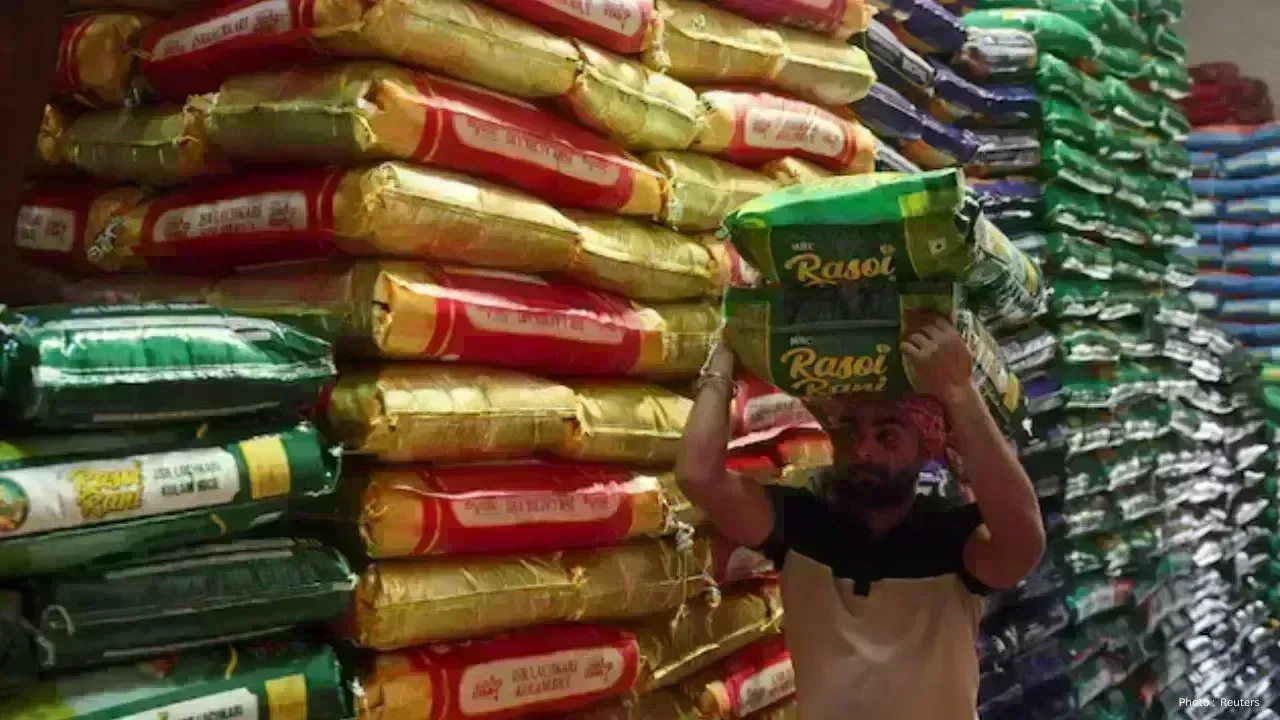
India’s rice exports have reportedly declined as regional conflict and shipping disruptions affected basmati rice trade with Gulf countries. The slowdown has raised concerns among exporters, traders, and agricultural businesses that depend heavily on overseas demand for Indian rice products.
India is one of the world’s largest rice exporters and plays a major role in supplying food grains to international markets. Basmati rice, known for its aroma and quality, is especially popular in Gulf nations where demand remains consistently high.
According to trade reports, recent geopolitical instability and transportation challenges have slowed the movement of cargo shipments toward important overseas destinations. Shipping uncertainty, higher freight costs, and delays at trade routes have affected export operations during recent weeks.
Exporters say the disruption has created difficulties for businesses that rely on timely delivery schedules. Delays in shipping can increase storage costs, affect contracts, and reduce confidence among international buyers.
Agricultural trade experts believe the decline highlights how global conflicts can directly affect food supply chains and international commerce. Even when production remains stable, transportation disruptions can create major problems for exporters and importers.
India’s rice industry supports millions of farmers, traders, transport workers, and processing businesses across several states. Changes in export demand therefore influence both rural incomes and agricultural markets.
Basmati rice exports are considered particularly important because they generate valuable foreign exchange earnings for the country. Gulf countries remain among the largest buyers of premium Indian rice varieties due to strong consumer demand and cultural food preferences.
Trade analysts say shipping disruptions often increase transportation expenses, insurance costs, and delivery uncertainty. These factors can reduce profit margins for exporters and raise prices for buyers in importing countries.
The situation also reflects the close connection between global politics and international food trade. Events taking place in one region can quickly influence shipping networks, commodity prices, and supply chains across multiple countries.
Farmers and exporters are now closely monitoring developments in global trade routes and regional security conditions. Many businesses are hoping for stability so that normal export operations can continue without prolonged delays.
Economic experts believe agriculture exports play an important role in supporting India’s economy. Strong overseas demand helps increase rural earnings and strengthens the country’s position in global food markets.
The decline in shipments may also affect international buyers who depend on Indian rice supplies. Importers often prefer stable delivery schedules to maintain food distribution and retail operations within domestic markets.
Shipping companies and logistics operators are also facing pressure because rising operational risks can affect transportation planning and cargo movement efficiency. Trade disruptions in important maritime routes often influence several industries beyond agriculture alone.
Government authorities and export organizations are expected to continue reviewing the situation carefully. Maintaining smooth trade operations remains important for protecting both domestic agricultural interests and international business relationships.
Experts note that global food markets have already faced pressure in recent years because of climate conditions, inflation, supply chain disruptions, and international conflicts. Additional trade interruptions may further increase uncertainty in agricultural markets.
Consumers in importing countries could also feel the impact if transportation problems continue for an extended period. Reduced supply availability sometimes contributes to higher retail prices and limited product access.
Despite the current challenges, India’s agricultural sector remains one of the strongest contributors to global food supply. Exporters are hopeful that improved shipping conditions and stable trade routes will help restore normal export activity in the coming months.
Trade observers believe diversification of shipping networks and stronger logistics planning may become increasingly important for exporters dealing with uncertain international conditions. Businesses are likely to focus more on risk management and alternative transportation arrangements.
The recent decline in rice exports demonstrates how closely connected agriculture, trade, and global stability have become. Even temporary disruptions in shipping routes can create significant economic effects for producers, exporters, and consumers around the world.
As international markets continue responding to geopolitical developments, the agricultural sector will remain highly dependent on stable transportation systems and uninterrupted global trade networks.








Meta Unveils Subscription Plans for Instagram, Facebook, and WhatsApp
Meta introduces new subscription plans for users of Instagram, Facebook, and WhatsApp, featuring enh

Suvarna Joy on Education Leadership, Resilience, and Building Purpose Through Adversity in the UAE
Suvarna Joy shares her journey of education leadership, motherhood, faith, and resilience within the

Anticipated Dates for UAE Eid Al Adha 2026 Unveiled by Astronomical Experts
Experts predict Eid Al Adha 2026 in the UAE to start on May 27, prompting early holiday planning amo

DAE Achieves Remarkable Growth in Q1 2026 With Record Revenue
Dubai Aerospace Enterprise announces impressive financial results for Q1 2026, reflecting a surge in

Price Increase for Sony PS5 in Southeast Asia Effective May 1
Sony announces a price increase for the PS5 across Southeast Asia starting May 1, 2026, impacting ga

Potential ‘Super El Niño’ in 2026: Understanding the Climate Risks
Could a Super El Niño emerge in 2026? Discover its implications and potential global climate impacts




