Post by : Anees Nasser
India has achieved a remarkable milestone in its renewable energy journey, recording 31.25 GW of new clean energy capacity, which illustrates the rapid transformation of its power sector. This accomplishment highlights years of strong policy backing, participation from the private sector, and a growing demand for sustainable energy solutions.
The recent capacity addition not only enhances India’s electricity supply but also solidifies its position as one of the fastest-growing renewable energy markets globally. Central to this growth is solar energy, which is reshaping the nation's energy landscape.
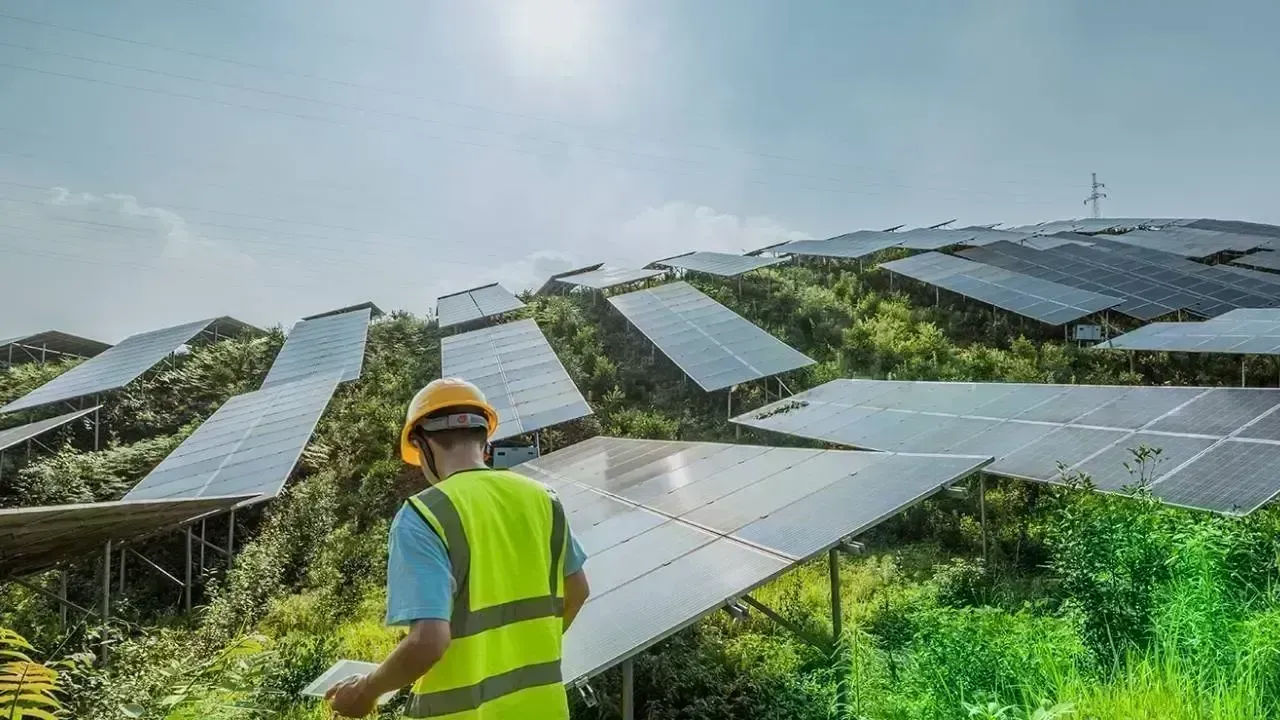
Solar energy has emerged as the dominant contributor to the new capacity. Utility-scale solar parks, rooftop solar solutions, and hybrid projects have collectively driven this growth, showcasing solar's cost-effectiveness and scalability.
The decline in prices of solar panels, along with enhancements in efficiency and quicker project timelines, have made solar the preferred option among both public and private developers. Consequently, several regions have experienced a considerable increase in solar installations throughout the year.
While solar took the lead, wind energy also played a crucial role in the overall capacity growth. Projects in coastal and high-wind areas continued to expand, fueled by initiatives to upgrade existing sites and hybrid wind-solar developments.
Additional renewable sources like small hydro and biomass made incremental contributions, diversifying the clean energy landscape.
India’s aggressive renewable energy targets have been pivotal in accelerating capacity additions. Clear long-term objectives have instilled confidence among investors, encouraging extensive participation across the sector.
Supportive measures concerning land allocations, grid interconnections, and competitive bidding have mitigated project risks, facilitating quicker implementation.
Incentives for domestic manufacturing have enhanced local production of solar panels and related components. This strategy has decreased reliance on imports, led to job creation, and reinforced the renewable energy ecosystem.
The initiative aligns with broader economic goals while further promoting clean energy advancements.
Solar’s rapid ascent can be attributed to its decreasing costs. Solar tariffs have become increasingly competitive, often outpricing traditional fossil fuel generation.
This price advantage has motivated utilities and industries to enter into long-term solar power purchasing agreements, ensuring a consistent demand for new projects.
Solar facilities can be developed faster than many alternative power generation methods. Large solar parks can be established in relatively short durations, making solar a compelling choice to address rising electricity demands.
This ability to scale rapidly has been crucial in achieving record annual capacity growth.
States with significant solar resources and proactive policies have emerged as major players in the clean energy boom. Abundant land, favorable solar conditions, and streamlined processes have expedited solar installations.
These states have become focal points for renewable energy investments, attracting interest from both domestic and global developers.
In addition to established renewable leaders, newer regions are also witnessing significant development. Enhanced grid infrastructures and aligned policies have supported broader engagement in clean energy initiatives.
This geographic spread enhances grid stability and mitigates regional electricity discrepancies.
The introduction of 31.25 GW of clean energy greatly reduces the country’s dependence on imported fossil fuels. This transition boosts energy security and protects the economy from fluctuations in global fuel prices.
As renewable investments increase, overall generation costs are expected to decrease and supply stability should improve.
The renewable sector has become a significant employment generator. Opportunities span various levels, from manufacturing and construction to operations and maintenance.
Supporting sectors like energy storage, grid management, and green hydrogen are also experiencing heightened activity.
As the renewable capacity expands, managing intermittency presents a significant challenge. The reliance on weather for solar and wind generation emphasizes the need for advanced grid management and forecasting.
Investments in smart grid technology and flexible generating sources are becoming vital.
Battery storage and pumped hydro technologies are becoming critical for the clean energy framework. These solutions enable more effective utilization of renewable power and improve grid reliability during peak demand.
Significant growth in energy storage capacity is anticipated in conjunction with renewable expansion over the coming years.
The notable addition of clean energy aligns well with India’s long-term climate objectives. Enhancing renewable capacity is essential in the process of decreasing carbon emissions and transitioning to a sustainable economy.
Every year of substantial capacity growth brings India closer to its sustainability goals.
India’s renewable growth reinforces its status as a global leader in clean energy initiatives. The speed and magnitude of this growth serve as an exemplary model for other emerging markets aiming for sustainable developmental paths.
Despite the progress made, challenges related to land acquisition and transmission infrastructure still exist. Navigating these obstacles is critical to maintaining high growth in the coming years.
Large-scale renewable initiatives necessitate considerable capital investments. Although investor interest remains robust, securing timely financing and effective execution is crucial.
It is likely that solar power will continue to be the main driving force behind India's clean energy advancement. With ongoing innovations and cost reductions, solar installations are expected to see further acceleration.
Future developments are expected to increasingly emphasize hybrid projects that integrate solar, wind, and storage solutions. These approaches promise enhanced reliability and better grid alignment.
The addition of 31.25 GW in clean energy signifies more than just a numerical target; it embodies a pivotal transition towards a sustainable energy future, driven by solar growth, supportive governmental policies, and heightened investor confidence.
While there are obstacles to address, the momentum gained this year lays a solid groundwork for ongoing development. As solar power leads the charge, India's clean energy narrative is entering a transformative phase marked by growth, resilience, and global significance.
This article is intended solely for informational purposes. The energy capacity data presented herein is based on reported information and may be revised as official updates become accessible.










Anticipated Dates for UAE Eid Al Adha 2026 Unveiled by Astronomical Experts
Experts predict Eid Al Adha 2026 in the UAE to start on May 27, prompting early holiday planning amo

DAE Achieves Remarkable Growth in Q1 2026 With Record Revenue
Dubai Aerospace Enterprise announces impressive financial results for Q1 2026, reflecting a surge in

Price Increase for Sony PS5 in Southeast Asia Effective May 1
Sony announces a price increase for the PS5 across Southeast Asia starting May 1, 2026, impacting ga

Potential ‘Super El Niño’ in 2026: Understanding the Climate Risks
Could a Super El Niño emerge in 2026? Discover its implications and potential global climate impacts

Global Energy Crisis Intensifies: Markets React to Oil Supply Challenges
Markets are on edge as oil disruptions escalate, influencing prices and economic stability. Explore

Must-See Tourist Spots in London You Can't Overlook
Explore London's essential attractions, from royal landmarks to vibrant markets, ensuring an unforge




