Post by : Mara Rahim
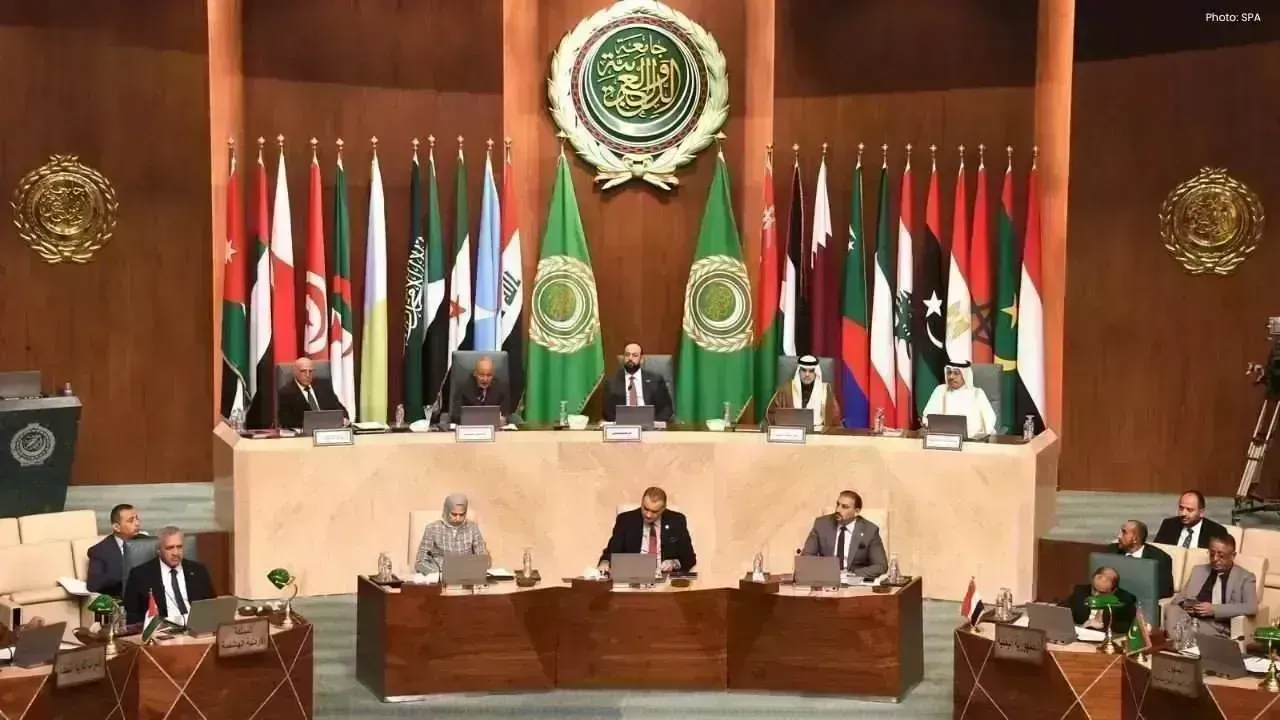
Yesterday, the Council of Arab Information Ministers convened for its 55th session at the Arab League’s headquarters in Cairo. The meeting was presided over by Hamza Al-Mustafa, Syria's Minister of Information, who took over from Bahrain's Ramzan bin Abdullah Al-Noaimi. Attending was the Arab League Secretary-General, Ahmed Aboul Gheit.
Saudi Arabia’s representation, currently at the helm of the Executive Office of the Council, included Khalid Al-Ghamdi, the Undersecretary of the Ministry of Media for International Media Relations. Ambassador Abdulaziz bin Abdullah Al-Matar represented the Kingdom as the Permanent Representative to the Arab League.
Central to the agenda was the Palestinian issue, along with discussions surrounding the Arab Media Code of Ethics, advancements in the Arab media agenda overseas, and the media's role in combating terrorism. The dialogue aims to bolster the media's duty in promoting reliable information and enhancing public awareness.
Additional pivotal topics encompassed the Arab media strategy for sustainable development 2030, fostering media literacy, the environmental media initiative, and integrating artificial intelligence within Arab media. Ministers also ventured into discussions on Arab-Chinese media collaboration and the “Arab Media Capital” initiative, which seeks to elevate the regional media infrastructure and promote collaboration among Arab nations.
The council is anticipated to approve a new executive office composition for the forthcoming two years, alongside adopting resolutions that aim to enhance cooperative media strategies among Arab states.
Saudi Arabia’s proactive role underscores its dedication to strengthening Arab media's influence and portraying a constructive societal role. The emphasis on ethics, innovation, and cooperative initiatives illustrates the Kingdom’s objective to advocate for responsible media practices that facilitate public awareness and development.
The growing significance of technology in media was underscored during the session. Emphasis was placed on discussions surrounding artificial intelligence and digital advancements, highlighting the need for Arab media to adapt while upholding ethical and cultural values. Ministers articulated that embracing new technologies can significantly enhance media quality, reach, and reliability.
The assembly of this council signifies a collective effort by Arab nations to address challenges like misinformation, regional turmoil, and advancing sustainable development through media. The session reinforced the essentiality of coordinated strategies, training initiatives, and collaborative efforts to maintain Arab media's influence, responsibility, and innovation.
In conclusion, the 55th meeting of the Council of Arab Information Ministers signifies a pivotal step in steering the future of Arab media. By honing in on ethics, innovation, and collaborative strategies, the council aims to enhance media's societal role and support sustainable development aspirations throughout the Arab region.







The Impact of Consistent Small Investments on Wealth Building
Discover how investing small amounts regularly can positively transform your financial future over t

7.5 Magnitude Earthquake Strikes Japan, Tsunami Alerts Issued
Japan experiences a hefty 7.5 quake, prompting tsunami alerts and safety measures. Stay updated on a

Reopening of the Strait of Hormuz: New Regulations to Impact Global Trade
Iran reopens the strategic Strait of Hormuz with new regulations affecting oil transport and global

Top 10 Must-See Attractions in NYC for First-Time Explorers
Discover essential experiences for first-time visitors to NYC, including attractions, culture, and i

Starbucks Engages Boyu Capital for Major Chinese Expansion
Starbucks teams up with Boyu Capital, selling a majority stake to boost growth and adapt to the Chin

Three Individuals Charged in Massive Meth Trafficking Case in Malaysia
In Malaysia, a married couple and another suspect are charged with trafficking 510kg of meth, facing