Post by : Priya
Photo:AP
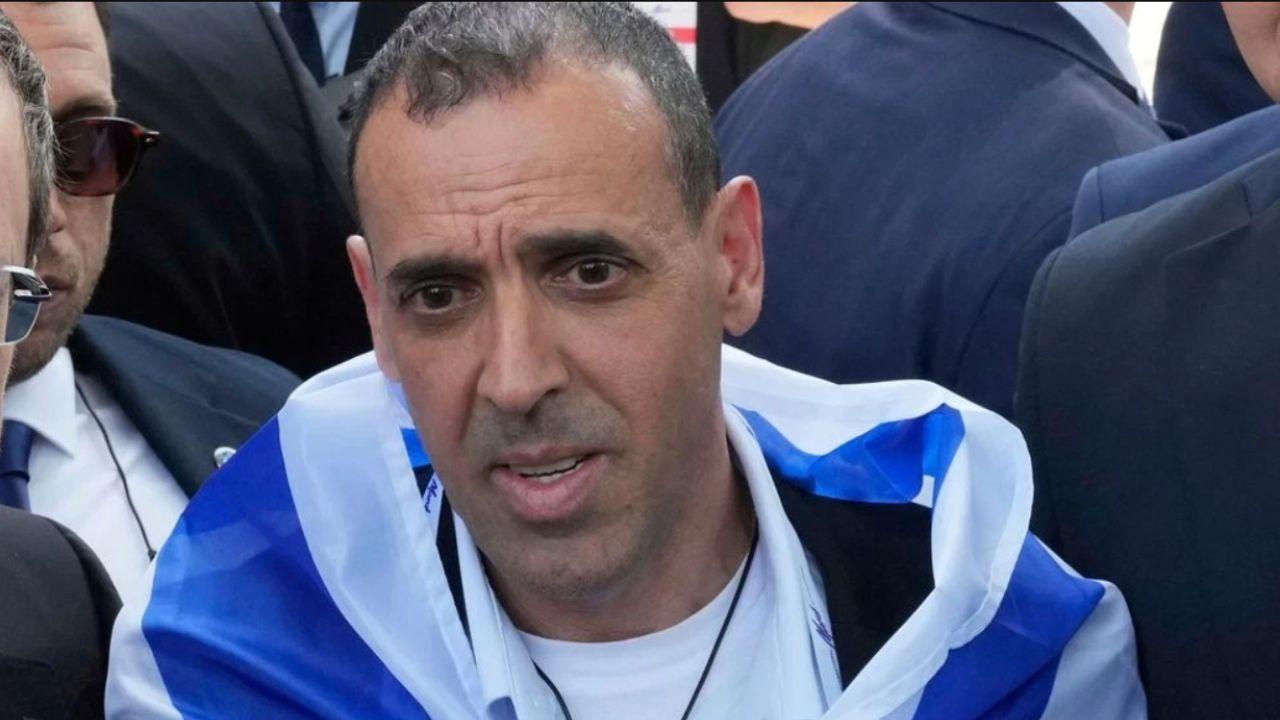
In times of war, stories of human pain often get buried beneath headlines and political statements. But now, one man’s voice is rising from the darkness. Eli Sharabi, a former hostage held by Hamas in Gaza, is sharing his powerful and heartbreaking story with the world. His memoir, titled Hostage, is set to be released in the United States and is already drawing global attention.
This editorial takes a closer look at the background of Eli Sharabi’s story, the events that led to his capture, the purpose behind his memoir, and the growing interest it has gained ahead of its American release. This is not just a book—it is a testimony of suffering, survival, and strength.
Who Is Eli Sharabi?
Eli Sharabi is an Israeli civilian who became a household name after the tragic events of October 7, 2023. On that day, Hamas launched a large-scale attack on southern Israel, including his hometown. During the chaos, Eli and his brother Yossi were taken hostage and transported into Gaza.
What happened next changed his life forever.
Eli spent months in captivity under the control of Hamas militants. While he survived the ordeal, his brother Yossi was not as fortunate. He died during captivity—a loss that continues to haunt Eli. Now, through his memoir, Eli is telling their story to the world.
The Tragedy of October 7: How It All Began
The events of October 7, 2023, marked one of the darkest days in recent Israeli history. Armed militants from Hamas crossed the border from Gaza and attacked Israeli communities, resulting in hundreds of deaths and the kidnapping of more than 200 people, including men, women, and children.
Eli Sharabi was among those kidnapped from the town of Nir Yitzhak. According to Israeli officials, the attack was planned and carried out with brutal force. Families were separated, homes were destroyed, and entire communities were left in fear and mourning.
For many hostages like Eli, that day was the beginning of a long and terrifying journey.
Life in Captivity: A World of Fear and Silence
In Hostage, Eli describes the horrifying conditions he endured while being held in the tunnels beneath Gaza. These tunnels are part of a vast underground network used by Hamas to move fighters and weapons—and, in this case, to hide hostages.
There was little food, no light, and constant fear of death. Eli was cut off from the outside world, not knowing if he would ever see his family again. The guards were cruel, the environment suffocating, and hope seemed far away.
Eli’s story paints a vivid picture of what life in captivity feels like. It is not just about physical suffering—it is about mental isolation, emotional pain, and the battle to stay alive when everything feels lost.
The Loss of His Brother: A Wound That Will Not Heal
One of the most heartbreaking parts of Eli’s memoir is the story of his brother, Yossi. Both were kidnapped together, but only one returned home.
During his captivity, Eli learned that Yossi had died. The news broke him. In interviews and public speeches since his release, Eli has spoken openly about the pain of losing his brother. He has described Yossi as a strong, kind-hearted man who didn’t deserve such a tragic end.
This personal loss is one of the driving forces behind Hostage. Eli has said that he wants the world to know who Yossi was and to honor his memory by telling the truth.
From Trauma to Testimony: Why Eli Wrote “Hostage”
After his release, Eli Sharabi faced a choice. He could try to move on in silence—or he could speak out. He chose the latter.
Hostage is more than a book. It is a mission. Eli believes that by sharing his story, he can raise awareness about the ongoing plight of hostages and their families. He wants people to understand the pain that continues long after the headlines fade.
His goal is to give voice to those who are still missing and to pressure world leaders to act. For Eli, writing was a way to heal, but it was also a way to fight back.
What the Memoir Reveals: Truths from the Underground
Eli’s book is filled with raw and honest reflections. He talks about:
The daily struggle to survive: From limited food to poor hygiene, Eli describes the grim reality of life inside Gaza’s tunnels.
The psychological toll: He shares how fear, loneliness, and uncertainty broke down even the strongest minds.
The bond with other hostages: Despite being in hellish conditions, the hostages formed a kind of silent support system, reminding each other that they were still human.
Memories of home: What kept Eli going were the memories of his family, his wife, and his children. Even in darkness, those memories were a source of light.
International Response: What the World Is Saying
The release of Hostage in the United States is expected to spark international discussion. In Israel, the memoir has already received widespread attention, with many praising Eli for his bravery.
Human rights groups, political leaders, and authors have shown interest in the book. Some see it as a call to action—to do more for hostages still in captivity. Others see it as an important piece of history that needs to be remembered and studied.
Book reviewers have described Hostage as “deeply moving,” “raw and unforgettable,” and “a wake-up call for the world.”
Political Impact: Keeping the Hostage Issue Alive
Eli Sharabi has become a powerful voice in the campaign to rescue remaining hostages. Since his release, he has taken part in marches, spoken in front of the Knesset (Israel’s parliament), and met with world leaders.
He is using the memoir as part of a larger effort to keep the issue in the spotlight. Eli believes that as long as people are still missing, silence is not an option. His story is a reminder that behind every negotiation, every political deal, and every ceasefire, real lives are at stake.
Why the U.S. Release Matters
With growing interest in human rights stories and real-life memoirs, Hostage could reach bestseller lists and spark important conversations about war, peace, and justice.
A Human Face to the Headlines
In many ways, Eli’s memoir does something that news reports cannot: it brings the reader inside the experience. It doesn’t just say, “hostages were taken.” It says, “this is what it felt like to be taken.”
By sharing his voice, Eli helps people connect with the issue on a human level. This is not about statistics. It is about real people, real families, and real suffering.










DAE Achieves Remarkable Growth in Q1 2026 With Record Revenue
Dubai Aerospace Enterprise announces impressive financial results for Q1 2026, reflecting a surge in

Price Increase for Sony PS5 in Southeast Asia Effective May 1
Sony announces a price increase for the PS5 across Southeast Asia starting May 1, 2026, impacting ga

Potential ‘Super El Niño’ in 2026: Understanding the Climate Risks
Could a Super El Niño emerge in 2026? Discover its implications and potential global climate impacts

Global Energy Crisis Intensifies: Markets React to Oil Supply Challenges
Markets are on edge as oil disruptions escalate, influencing prices and economic stability. Explore

Must-See Tourist Spots in London You Can't Overlook
Explore London's essential attractions, from royal landmarks to vibrant markets, ensuring an unforge

Ultimate Guide to Snagging Cheap Flights in 2026
Unlock the secrets to booking affordable flights in 2026 with insightful tips and strategies tailore




